
Strong Enough to Win, Yet Not Wanting to Win: The True Power of Patience
When insulted, most of us feel wounded pride and react. But the Buddha taught that patience is strength, a victory over oneself. The lesson from Dhammapada verse 83 helps us understand the true meaning of patience so we can live in peace.
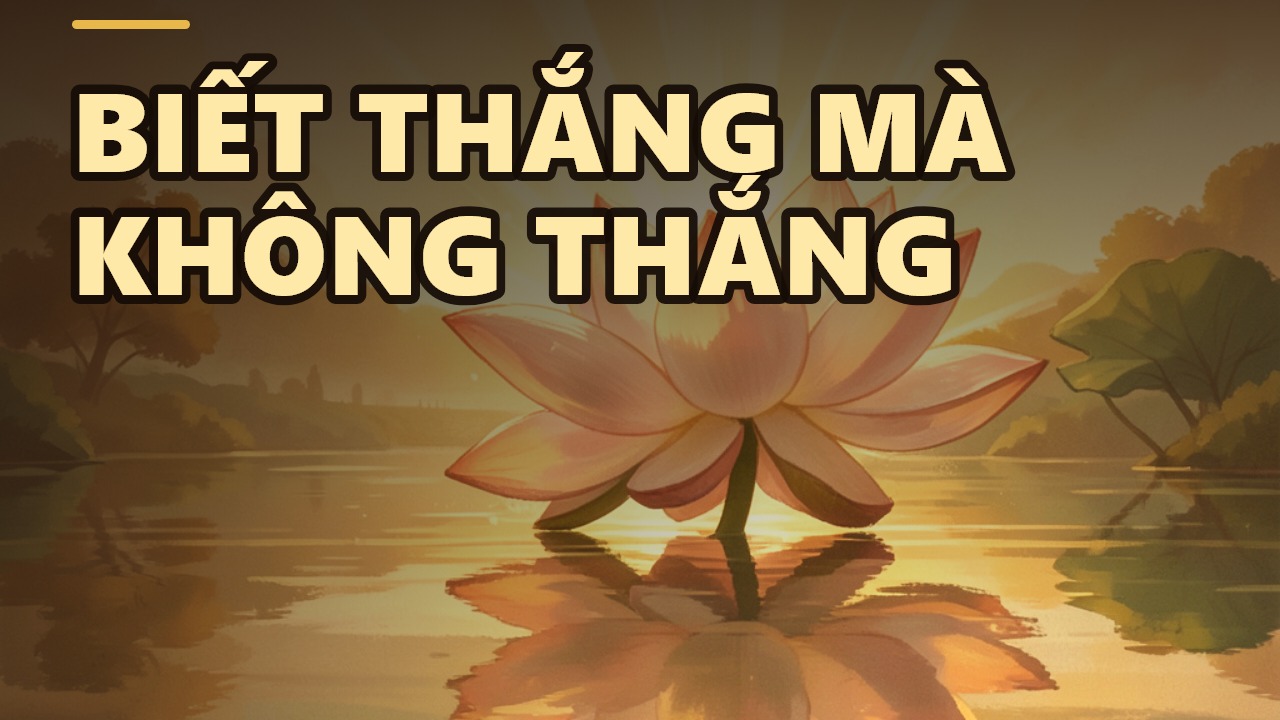
"Patient without malice. Though cursed and struck, taking patience as strength, such a one I call a brahmin."
These are the words the Buddha taught in Dhammapada verse 83. But what is patience? Is staying silent always patience? The lesson in the story below may change the way you think.
There was once a wife who had attained the fruit of Stream-entry and had deep faith in the Triple Gem. Her husband, however, was arrogant and often cursed and argued with her. She never argued back, only calmly explained. Frustrated, he went to see the Buddha to "argue it out." But when he saw the Buddha's radiant presence, he changed his tone and asked: "How can one know who is a saint and who is an ordinary person?" The Buddha gently replied: "One who does not get angry, lives with ideals, and transcends their own prejudices is a saint." Hearing this, the husband asked to become a monk. His three younger brothers came to curse and berate, but one by one they too were persuaded and became monks on the same day. The Buddha praised the wife for her patience, which had created the conditions for the whole family's transformation.
Patience Is Not Endurance
Many people misunderstand patience as resignation, as fear. But Thầy Thích Chân Quang explained clearly: patience is not letting the mind be disturbed when facing things that go against our wishes. If we are struck and do not react because we are weaker, that is endurance, not patience. Patience is when we are strong enough to strike back, but we choose to let it go, understanding that the other person is angry and needs to be transformed.
"Train in martial arts to attain the perfection of patience. That is, train so that you can defeat others but do not wish to win." — Thầy Thích Chân Quang
In the story, both the wife and the Buddha were truly patient: cursed and struck, yet without any hatred, only calmly explaining. That is why the husband and his three brothers were guided to the path. Patience is the power to transform people.
Patience to Repay Karma and Avoid Injustice
Thầy Chân Quang taught: when others harm us, it may be due to karmic debts from many past lives. If we react, the debt only accumulates, and we must repay even more in future lives. But if we know how to be patient, how to endure, we are repaying that debt and purifying our mind/heart.
"When others harm me, I know it all, but let it be, no anger... to avoid injustice in the next life." — Thầy Thích Chân Quang
This is where bodhisattvas practice patience. They know who is scheming against them, yet do not bother to react. They see suffering as an opportunity to release karma. The more patient we are, the lighter our mind/heart becomes, and the further we advance on the path.
When Should We Not Be Patient?
There is an important boundary: patience applies to ourselves. But when others are being wronged, when the nation or the Buddha's teachings (Dharma) are being violated, we must protect them. Silence in the face of evil is cowardice.
"If I am insulted for my own sake, enduring it is entirely right. But if someone else is being insulted and I am patient on their behalf, letting them be wronged, that is cowardice." — Thầy Thích Chân Quang
When we see a child being bullied, we must intervene. When we see someone oppressing the weak, we must stand up for them. Patience does not mean losing our compassion and sense of justice.
Practicing Patience: Daily Repentance
Do not wait until anger flares up to try to control it. Thầy Chân Quang said: we must practice repentance every day to receive the Buddha's protection. Simply kneel before the Buddha and ask forgiveness for our hot temper and wounded pride, and within a few months we will see a change.
"Every day, kneel before the Buddha and repent... May the compassionate Buddha forgive me and protect me, so that I no longer have this burning pride and anger." — Thầy Thích Chân Quang
This practice is very important, because when anger arises, it is hard to control. But with the Buddha's spiritual power in our mind/heart, we can remain calm. This is the most practical way to cultivate patience.
Conclusion
Patience is not weakness. It is victory over anger, the completion of karmic debts, the strength of a heart filled with compassion and wisdom. Today, try it just once: when insulted, breathe deeply, recite the Buddha's name, and remember that being strong enough to win yet not wanting to win is true patience. The more we practice, the lighter our heart becomes, and the more those we love are transformed through us.
AI-assisted translation from the Vietnamese original.
Read in Vietnamese →