
What We Know Is But a Drop; What We Do Not Know Is the Entire Ocean
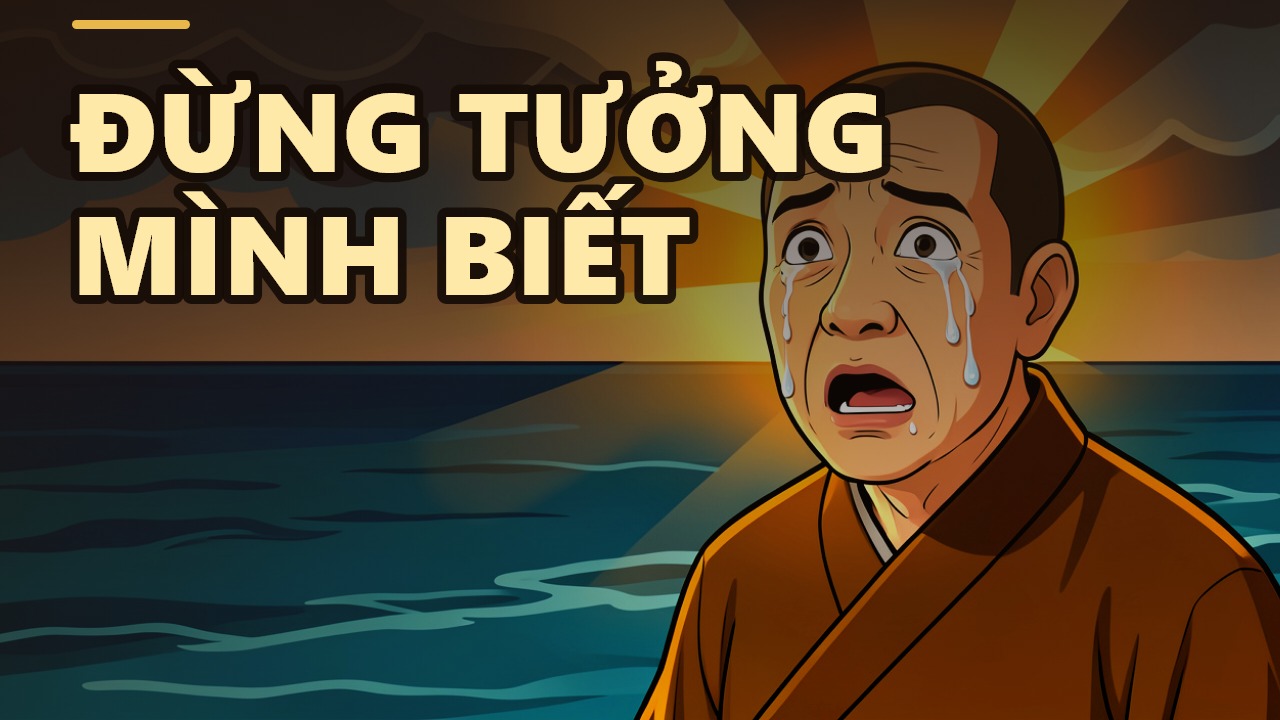
A dharma talk by Venerable Thích Chân Quang helps us recognize our own ignorance: our knowledge is but a drop of water, while what we do not know is the vast ocean. From this, we learn to cultivate humility and live rightly on the path.
Are you certain that in five minutes' time, your life will still be as peaceful as it is now? Do you know what the person sitting next to you is thinking? And can you be sure of your own future? The Venerable's teachings open a profound perspective: we are living amid the unknown.
**Knowledge Is But a Drop of Water**
We often take pride in our degrees, the knowledge we acquire, and the news we read daily. But let us ask: what will happen in the next five minutes? Who can know for certain? Venerable Thích Chân Quang states:
"What we know is only a drop of water. What we have yet to learn is the entire ocean."
Our brains are small; how much knowledge can they truly hold? Compared to the boundless universe, what we know is but a speck of dust. Therefore, never consider yourself a person of great learning. The Venerable emphasizes:
"The person who has a feeling that they know a lot—that is the first fault, the first mistake, the first act of foolishness."
When we believe we know much, the path of learning closes. Conversely, when we are humble, the path opens wide. Even lifelong practitioners of the Dharma do not dare claim complete understanding. So how can we be arrogant?
**The Human Heart Is Hard to Fathom**
The Venerable offers a proverb: painting a tiger, you paint its skin but cannot paint its bones; knowing a person, you know their face but not their heart. This ancient saying retains its full value:
"We can paint a tiger for fun, but how can we paint its bones? We can recognize a person's face, but how can we know their heart?"
We live alongside each other and greet one another with courtesy, but do we truly know each other's hearts? We all suffer from a chronic ailment: we hide our faults and display our virtues. Thus, we only see the good in others. When betrayal or deceit occurs, we are shocked, wondering, "Why would they act this way?" But in truth, they were always like this; they were merely concealing it. Living in a world where no one truly knows another's heart is frightening. Yet we still cling to and trust what we can see.
**Karmic Law: A Path Shrouded in Mist**
Another thing we do not know is our own karmic law. We do not know what we did in past lives or where we are headed in the next. We may even think our practice is good, yet we unknowingly plant negative causes. The Venerable tells a story of a person visiting a temple who, upon seeing someone drop a tissue on the ground, silently cursed them in their mind. Such secret thoughts, though seemingly hidden to all, are a karmic cause that destroys all accumulated blessings from merit. He says:
"These hidden thoughts now come along and destroy all the merit."
The law of cause and effect is not as simple as drawing a picture. We only understand it superficially, and thus remain confused about our own offenses and virtues. Therefore, we must seek guidance from enlightened masters who clearly discern cause and effect, and learn from them.
**The Invisible World Around Us**
We cannot see spirits, but they exist all around us. The Venerable affirms:
"Everywhere, there are spirits."
These spirits influence our daily lives without our knowledge, leading us to act incorrectly. There are roads where accidents frequently occur, but after the Venerable performs rites for the departed, the area becomes peaceful. This proves their influence. Though we cannot see them, we must understand this to live more rightly.
**Celestial Beings Arrange All Things**
Not only spirits, but celestial beings and bodhisattvas also exert influence. The prosperity of a temple, the number of people coming for a ceremony—all are assessed and arranged by them. The Venerable remarks lightheartedly:
"The celestial beings choose you and call you to come."
If we are here today, it is because celestial beings have chosen us. This is both an honor and a reminder to be humble. We should not believe we came of our own accord, but rather be grateful and live worthily of this grace.
**Conclusion**
Living amid the unknown, we can no longer be proud or complacent. We learn humility, gratitude, and trust in the path of practice. Let us begin today: sit down, listen, and recognize that we are but a tiny drop of water. Yet within that small drop, we can reflect the entire pure ocean of the Buddha's teachings. We will strive diligently in our studies, so we no longer live in the mist of ignorance.
AI-assisted translation from the Vietnamese original.
Read in Vietnamese →