
The Only Thing We Should Fear
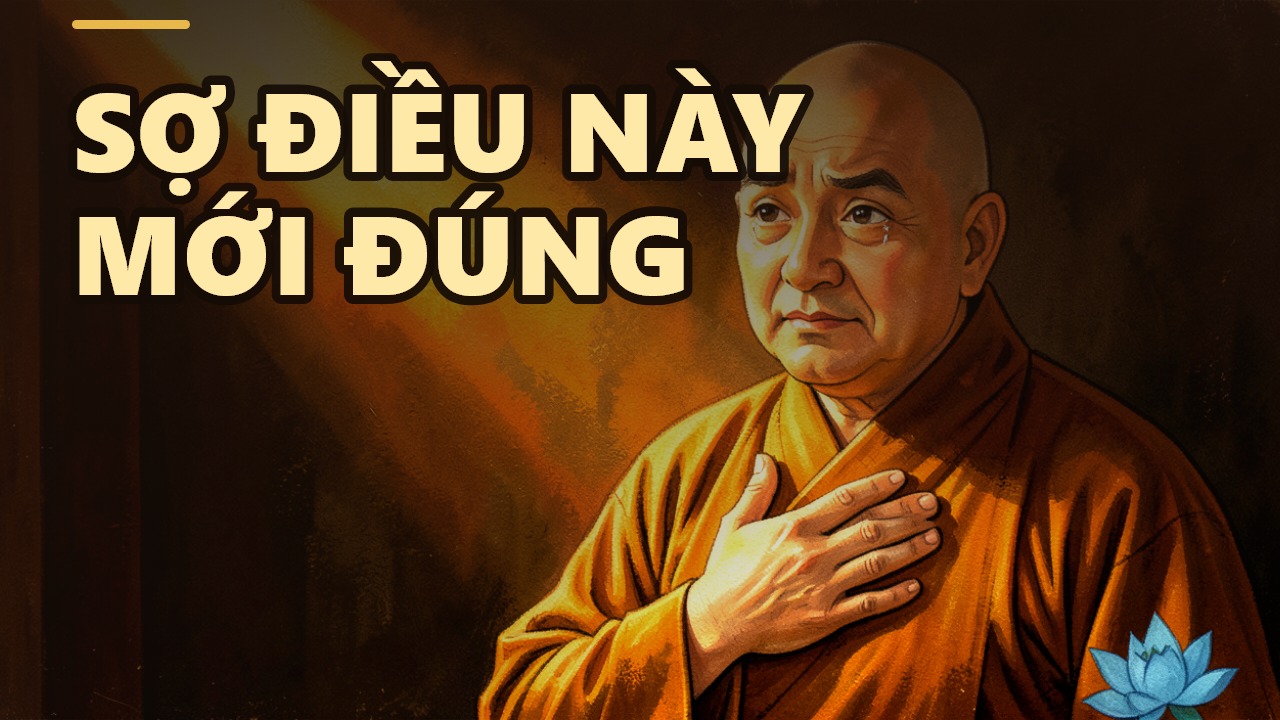
Venerable Thich Chan Quang teaches that fear is a weakness, but the most terrifying thing is not poverty or aging. It is letting a day pass without creating any merit. Let us learn to fear wisely so that our mind may find peace.
Have you ever felt uneasy because of an unintentional remark from someone else? A comment like "you look old" can keep you tossing and turning at night. Another saying, "your daughter is still single," might rush you into finding a husband for her. These trivial fears silently dominate your life. However, according to Venerable Thich Chan Quang, there is something far more frightening that few people notice.
### Fear Is Our Weakness
In Buddhism, the Buddha taught that only upon attaining the stage of Anagami does one completely end fear. Before that, even the bravest person still harbors secret fears within their heart.
"As long as we have not attained the holy fruit of Anagami, even the bravest person in the world still has secret fears in their heart. These fears are precisely our weaknesses. They are what control us, threaten us, and manipulate us."
Because of this, some people fear poverty so much they devise every scheme to hide it. Others fear aging so intensely they waste money on cosmetic procedures. Just one sentence from another person is enough to make us spend vast amounts of money and effort. We think we are living, but in reality, we are being driven by these fears.
### Because of Fear, We Create More Karma
Fear does not just cause anxiety; it leads us to wrong decisions. Venerable Chan Quang tells the story of a thief who feared being discovered by a little girl. To hide his theft of twenty million dong, he killed her.
"Fearing a small crime led him to commit a very large crime."
In daily life, we also act out of fear. We hastily marry off our daughters because we fear they will remain unmarried, only for them to suffer domestic violence later. We cheat on exams or give gifts because we fear our children getting low grades. As a result, true ability is not reflected, causing many negative consequences for society. All of this happens because we are afraid.
### Two Steps to End Fear
So how can we reduce fear? Venerable Chan Quang points out two steps. First, do not commit any mistakes. Second, do not be afraid when facing injustice. In the example of a theft at a temple, two people did not take the money. One was fearful, while the other remained calm. The fearful person trembled more and became suspected by the police. Meanwhile, the fearless person was viewed with higher respect.
"Not taking anything, and not being afraid."
This is the attitude of a genuine practitioner. If we have done nothing wrong, what is there to fear? When the mind is free of guilt, we are no longer controlled by public opinion or the words of others.
### Things We Should Not Fear
Many ridiculous fears rob us of our freedom. We fear ghosts, we fear being judged for poverty, and we fear having no likes on Facebook. We invite masters to perform rituals against ghosts, only to bring more chaotic spirits into our homes, making things worse. We dye our hair because we fear aging. We borrow money to buy cars because we fear being looked down upon. All these fears only add confusion to our lives.
"We should only fear a few things worth fearing. Everything else is not worth fearing."
So, what is truly worth fearing?
### The Only Thing We Need to Fear: A Day Without Merit
Venerable Chan Quang emphasizes that the most frightening thing is letting each day pass without creating even a little merit. Why? Because every meal and every breath we enjoy comes from blessings from previous lives. When those blessings run out and we do not create new merit, we fall into hunger and lack.
"The real fear is that we must eat every day, yet during that day, we fail to do anything that creates merit."
Only those with wisdom understand this fear. Buddhist practitioners may have taken refuge and kept precepts, but if they do not deeply understand cause and effect (karmic law), they still do not know to fear this.
Where do we create merit? Right in our daily work. If you work harder than your salary requires, that extra effort is merit. Helping parents and friends is also creating merit. Even when alone in a desolate place, you can create merit through your intentions.
"Spread compassion into the space around you. Pray that all sentient beings love one another."
Remember, everything we have today comes from past merit. If we do not continue to create merit today, we will face scarcity tomorrow. True fear is the dread of living a wasted life with nothing to offer.
Therefore, let us start today. Ask yourself each evening, "Did I do anything that created merit?" Do not fear trivial matters outside. Instead, fear a day passing uselessly. When you are free of wrongdoing and free of fear, you will surely live with lightness and ease. That is true happiness.
AI-assisted translation from the Vietnamese original.
Read in Vietnamese →