
Coming Together: When Compassion Becomes the Guiding Light
Have you ever wondered why Mahatma Gandhi, a man who championed non-violence throughout his life, had to die by violence? What was the cause and effect (karmic law) behind this tragedy? Venerable Thich Chan Quang raised this question during an early-year dharma talk. But before seeking an answer, let us listen to the message of "coming together." This is a journey of compassion that each of us is walking upon.
### Coming to the Buddha's Teachings Means Coming to Compassion
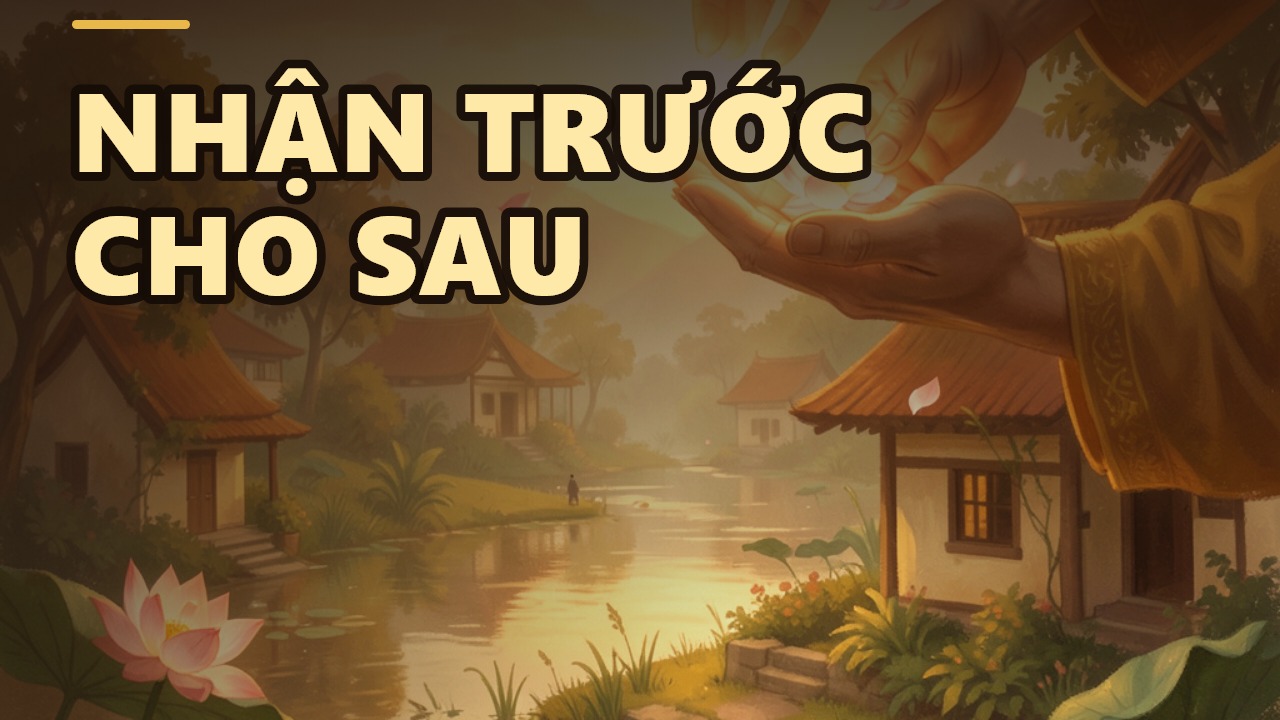
Coming together begins with coming to the Buddha's teachings (Dharma). However, approaching the Dharma is not merely about rituals or images; it is about connecting with the boundless source of compassion. Venerable Thich Chan Quang opens his heart, explaining, "What does it mean to come to compassion? It means first we receive the source of compassion from the Buddha's teachings. Only then do we bring that received compassion to others." The principle is clear: we must receive before we give. Like a vessel, we must be filled before we can share cool water with others.
"Do not rely too heavily on deities. We must strive in our lives. First, make efforts to create merit through good deeds. Second, build your own career and purpose in life."
### Receiving Love from the Three Jewels
When we approach the Buddha's teachings, we receive love from three sources. First is from the Buddha himself. Although we cannot see Him with our eyes, His spiritual presence and compassion cover all space and time. The teacher shares, "We receive love from the Buddha... In times of error, we may not dare to confess to people, but we can kneel before the Buddha altar for repentance." The Buddha truly loves us and offers forgiveness. Second, we receive love from our teachers—the monks and nuns who guide us in the path and pray for us. Third, we receive love from fellow practitioners—those who practice alongside us, sharing burdens and lightening each other’s loads. The teacher emphasizes, "When we come to the Buddha's teachings, we at least receive three sources of love: the first from the Buddha, the second from our teachers, and the third from our fellow practitioners."
### From Receiving to Giving: The Duty of Those Who Understand the Path
But we do not stop at receiving. When the heart is full of love, we naturally feel the duty to give. The teacher uses a vivid image: "If your heart holds two liters, but your capacity for love reaches twenty-three liters, then you have enough surplus to share." Therefore, we must cultivate compassion within ourselves daily until it becomes abundant. This is our practice, our daily effort. When we are overflowing, we automatically radiate outward.
### Four Signs of Love in the Heart
How do we know if we have enough love? Venerable Thich Chan Quang offers four signs for self-reflection.
First, we easily empathize with the suffering of others. Previously, hearing of someone’s difficulties might have brought amusement; now, it brings deep sympathy.
Second, we easily forgive the mistakes of others. Hearing of someone’s faults, we do not hate them but pity their situation, hoping they will return to the right path.
Third, we always wish to help others. When we hear complaints, we immediately seek ways to assist, even if we are unsure of the outcome.
Fourth, we always want to guide others out of delusion. We desire for everyone to experience the joy of the Dharma just as we do.
This fourth sign is the most important one we emphasize today. A person who deeply understands the path and finds joy in it will earnestly help others achieve the same.
"One is empathy for another’s pain. Two is forgiveness for another’s errors. Three is the desire to help others in life. Four is guiding others out of delusion."
### Two Types of People: Those Who Come to Us and Those We Go To
In bringing the Dharma to others, there are two types of people: those who come to us, and those whom we go to. The teacher teaches that waiting for people to find us yields less merit. "But if we proactively seek out people to bring them the Dharma, the merit is very great because it requires more effort." It is like giving alms: waiting for recipients reduces blessings, while going directly to their homes multiplies merit three or four times. Therefore, every Buddhist should practice being proactive, seeking out those with karmic connections rather than sitting idly and waiting.
"Giving material goods and giving the Dharma are similar. If we sit at home practicing like a god, a king, or an official, waiting for anyone who wants to understand the Dharma to come to us, we miss the point. We must go to others."
### Understanding the Dharma to Share It: Cause and Effect and Subtlety
To share the Dharma, we must understand it firmly. The teacher cites the famous example of Gandhi: "He advocated non-violence and lived gently, yet he was shot dead at the end of his life. Where is the cause and effect?" Some correctly answered regarding past karma, but the teacher added another layer of insight. He suggested that in his current life, Gandhi’s strict non-violence also led to many Indian citizens dying under oppression, and he had to bear the consequences of that. The teacher stresses, "Do not assume that gentleness is always correct. It is not." This is why temples still enshrine guardian deities holding swords—not to encourage violence, but to remind us that compassion must be paired with wisdom and the ability to protect.
"To save others, remember this: if you do not yet understand the Dharma, you cannot save anyone. Therefore, strive to study and practice, mastering the principles so that you have something true to offer others."
### Come Together Today
Coming together is a journey from receiving to giving, from empathy to guidance. Begin by opening your heart to the Three Jewels, accepting love until your heart is full. Then, naturally, you will reach out to those around you with both compassion and wisdom. Do not wait. Come to others as a spiritual gift—for every time you bring the Dharma and love, you light another lamp in the darkness.
AI-assisted translation from the Vietnamese original.
Read in Vietnamese →