
When Visiting a Temple, What Do You Understand About Buddhism? A Wake-Up Call from Venerable Thích Chân Quang
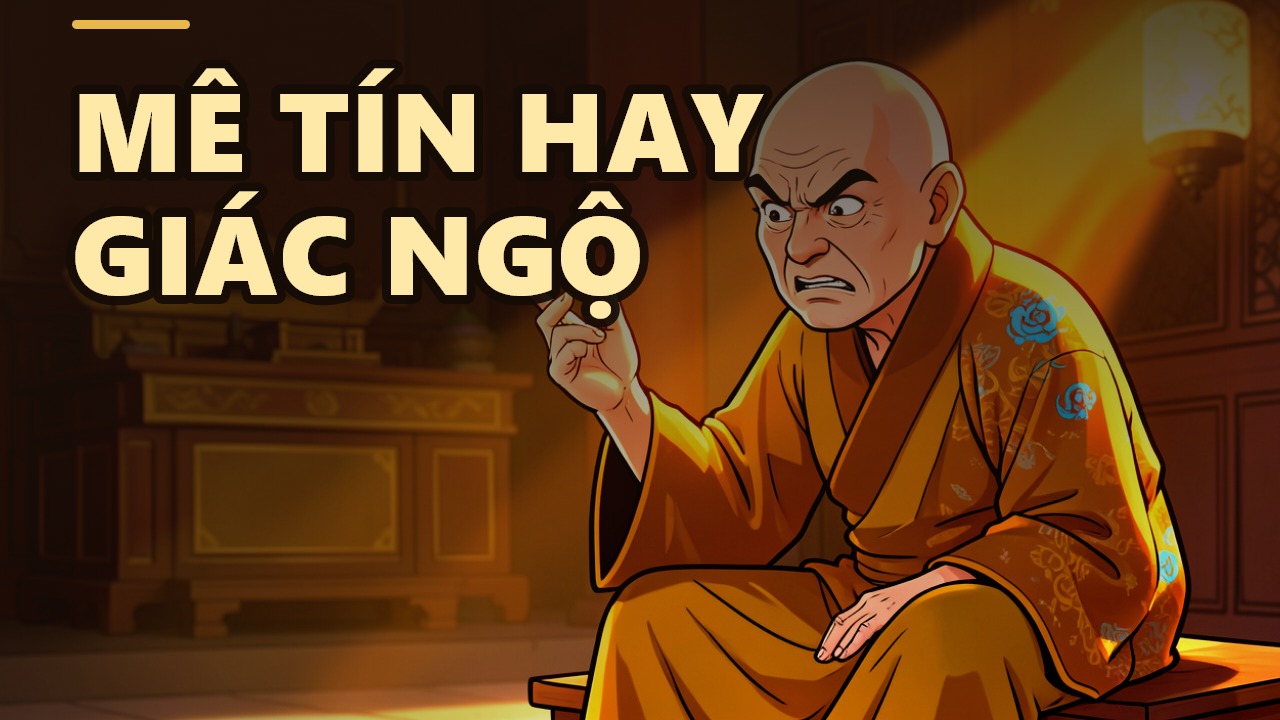
When visiting a temple, many people simply make requests without truly understanding Buddhism. Venerable Thích Chân Quang helps us recognize the two core elements of religion and the true meaning of spiritual practice.
Many people come to temples with simple wishes: for peace, for prosperity, for children. But if someone were to ask, "What do you understand about Buddhism?" often we might just fall silent. In a story about the Quảng Bình region—a place with few temples—Venerable Thích Chân Quang offered a profound perspective on what visiting a temple truly brings.
**What is Religion? Two Essential Elements**
The Venerable defines a religion as a spiritual system comprising doctrines, theories, laws, rituals, clergy, monastics, and followers. It has two hallmark features. First, it teaches morality to society, compelling people to live kindly and virtuously. Second, it addresses and explains metaphysical spiritual matters such as heaven, hell, spirits, Buddhas, and Bodhisattvas.
He also warns that many new religions may preach "people must love one another," but this can be a mere slogan or a lure. We should not be hastily moved by such calls. The difference between a deviant and an authentic teaching lies in its depth and the real transformation it brings to the heart and mind of the practitioner.
**True Buddhism in Two Aspects**
Buddhism teaches morality in a perfect and specific way, allowing us to apply it to our daily lives. The more we learn, the kinder, more virtuous, and more compassionate we become. At the same time, the Buddha’s teachings explain the metaphysical world in a detailed and logical manner. For instance, concerning hell: it is not simply that "evil" leads to hell; there are levels of fair cause and effect (karmic law). This understanding helps us stay clear-minded and avoid superstition.
To illustrate, the Venerable tells a story about when we dream of a deceased loved one. A non-authentic religion might invent elaborate rituals for us to spend money on. But Buddhism simply suggests offering food, chanting sutras, practicing repentance (sám hối), and transferring merit (công đức) to the departed, without demanding money from anyone. This is not superstition; it helps us understand the universe and the law of cause and effect.
**The Buddha – A Teacher Who Does Not Want Blind Faith**
One of the most distinctive aspects of Buddhism is that the Buddha does not demand unconditional faith from his followers. He advises us to doubt, to examine carefully, and then to believe. This is fundamentally different from other religions.
He is both the supreme being and a great teacher. We can ask him for anything, but he also teaches us the endless path of spiritual practice. He is the Fully Enlightened One, transcending all deities, saints, and teachers in the universe.
**The Role of the Sangha and Justifiable Doubt**
Because we have the right to doubt, we must also observe the monastic teachers with discerning eyes. Not every monastic has attained the Path, but the Sangha consists of those who have left worldly life to practice. They bear a great responsibility, as they are supported by the faith and generosity of the community, and they must practice diligently in return. The skepticism of lay followers can serve as an invisible encouragement, motivating the monastics to be diligent in their practice. In society, the Sangha must first be exemplary citizens, and upon attaining realization, they become teachers for the entire nation.
Visiting a temple is an encounter with a deep source of morality, a profound spiritual heritage, and boundless wisdom. We are far more fortunate than many to be children of the Buddha, to be able to kneel beneath the warm roof of a temple. Let each visit be more than just a plea for blessings, but an occasion for practice, for self-understanding, for comprehending the universe, and for living better each day.
AI-assisted translation from the Vietnamese original.
Read in Vietnamese →