
Raising Wise Children: Seven Secrets from Parental Virtue to Developed Wisdom
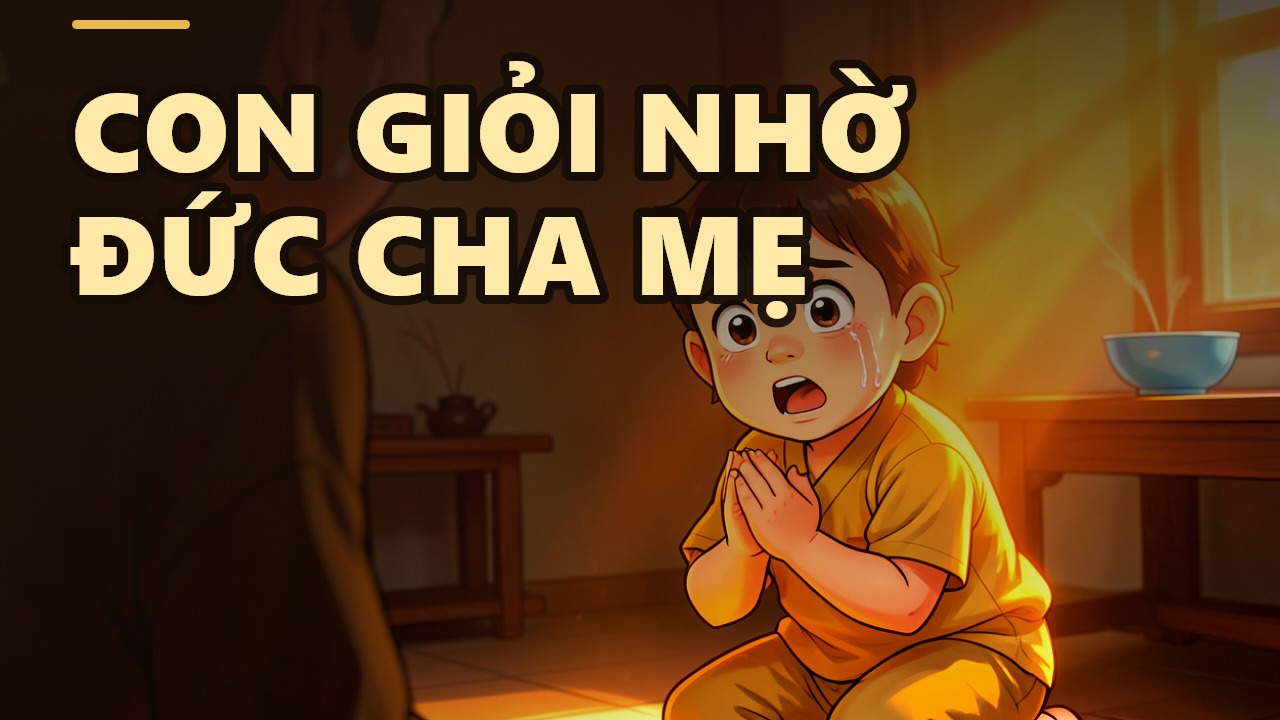
**Summary:** In this dharma talk, Master Thích Chân Quang reveals seven secrets for raising intelligent children: virtuous parents, teaching courtesy, orderliness, problem-solving, constant improvement, reasoning through cause and effect, and admiring the talented and virtuous.
Imagine you are taking your child to school on an old motorcycle. The child sits behind, their eyes gazing aimlessly at the road. Master Thích Chân Quang, in his talk 'Raising Wise Children,' suggests you ask your child: 'What do you see about this motorcycle that isn't perfect? What could be done to make it better?' A simple question, but it is the beginning of wisdom. Today, let us explore the golden principles he shared.
**Two Goals: For the Ego or for the Future?**
Every parent wants their child to excel in studies, but the deeper goals behind this vary. Many parents want their children to be outstanding to bring honor to themselves, to reinforce their own ego. Master Chân Quang points out clearly: "The mindset of wanting your child to be smart... is so the parents can be proud and boast 'my child is smart'... it is just for bolstering one's own ego." Instead, the higher goal is to raise capable children to contribute to the country, the world, and the Dharma. As the teacher said: "Here we share a goal: to raise our children to be capable, for what? To contribute and give back to make life better."
**Principle One: Parents Must Live Virtuously**
For a child to be intelligent, parents must first be virtuous individuals. This is the root of all success. The Master emphasizes: "If you want a child to be smart, the parents must have virtue first; that is the root, where the parents know self-cultivation." When parents live with virtue, know how to cultivate themselves, know how to love and be kind to everyone, their children will learn by example. A person who visits a temple on the second day of the Lunar New Year to listen to the Dharma, without indulging in luxury, is already a person of virtue. It is this very virtue that forges the character of the young child.
**Principle Two: Teach Children Courtesy**
The secret of Vietnamese people lies in the saying "First learn etiquette, then learn literature." The Master humorously notes: "The secret lies in the fact that parents gently guide the child's head down to say 'Hello, sir.' The secret lies there, and the world doesn't know it." Courtesy is the first step towards intelligence. A child who knows how to greet others, to bow in respect to elders, and to be humble, will easily absorb knowledge and handle all relationships well. Conversely, arrogance and indifference are the path that leads to ignorance.
**Principle Three: Teach Children Orderliness and Meticulousness**
Orderliness is a habit that seems small, yet it is a sign of wisdom. The Master explains: "A meticulous person is an intelligent person. Why is that? Because an intelligent person can gradually perceive even the smallest detail." A child who knows to put things in their place, to sweep and clean the house, to notice where dust accumulates and wipe it immediately, is beginning to train their keen eye and powers of observation. This is the foundation of scientific thinking and creativity.
**Principles Four & Five: Practice Problem-Solving and Always Seek Improvement**
Do not rush to solve every problem yourself. Present real-life situations for your child to think about. The Master teaches: "Don't resolve these matters yourself; have your child solve them. Train them to use their brains, to handle situations both ethically and wisely." From borrowing money from relatives to navigating road construction, ask your child for intelligent and ethical ways to respond. Accompanying this, cultivate the habit in your child of looking at everything and finding ways to improve it. The Master says: "Great people are those who are always looking for ways to make everything a little bit better, and that is all it takes to become great, nothing more." Suggesting your child find the imperfect aspect in a motorcycle, a cup, or an iPad… is a way to unlock their imagination and spark their inventive potential.
**Principles Six & Seven: Reasoning Through Cause and Effect and Admiring the Talented and Virtuous**
Train your child to regularly reason about cause and effect (karmic law). When seeing a wealthy person, ask them why they are rich, what cause did they plant? When seeing someone with a disability, discuss karma and its effects. The Master emphasizes: "When a child reasons through cause and effect for everything they see, will they dare to do evil? Dare to? No, they won't dare at all." Deep faith in cause and effect (karmic law) makes children ethical individuals. Simultaneously, teach them to sincerely admire those who are talented and virtuous. The Master warns: "If we are jealous, we will eventually destroy all our own talents." When a child values the talents of others, it becomes the very factor that helps them develop their own talents.
Raising wise children is not just a responsibility, but an opportunity for us to impart the aspiration to contribute to life. Begin with yourself: live virtuously, teach your children courtesy, teach them orderliness, and always ask them great questions. Every intelligent child with a virtuous heart is a bright future for the nation. May all parents have the wisdom to raise children who are both intelligent and devoted to the path.
AI-assisted translation from the Vietnamese original.
Read in Vietnamese →