
Where Does Suffering Come From? – The Answer of an Enlightened One
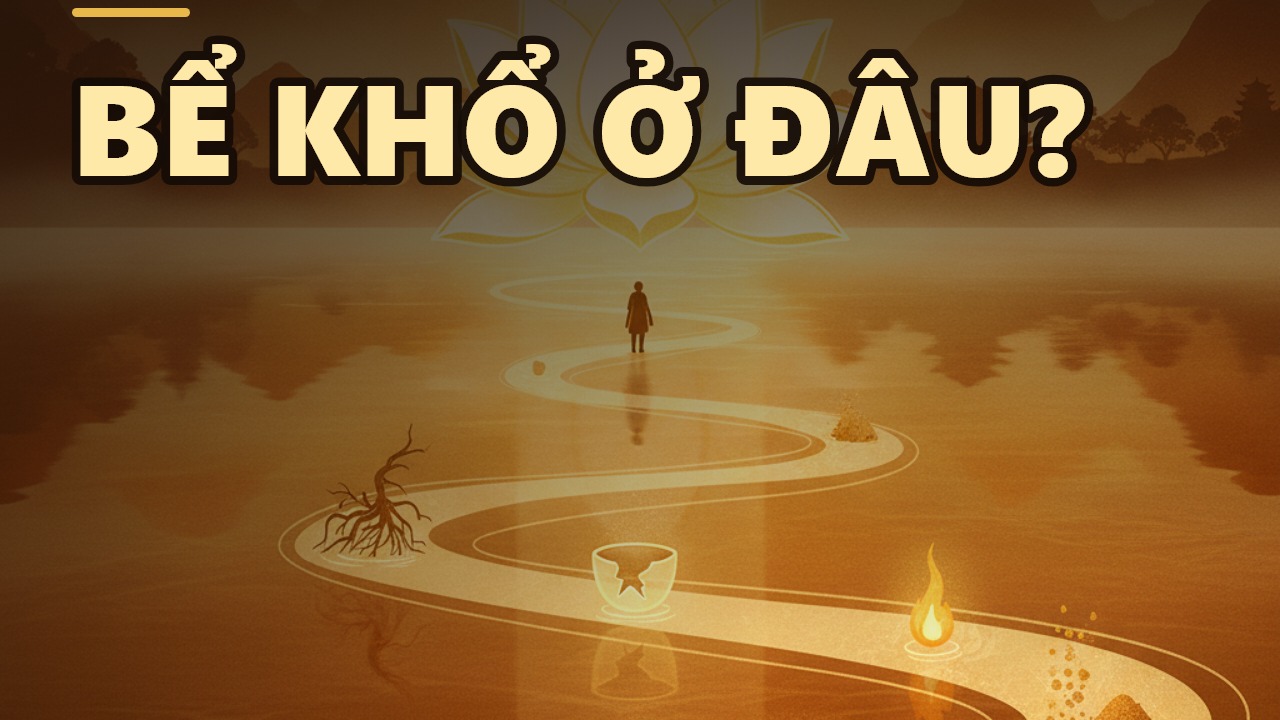
This article opens a deeper insight into the meaning of "life is an ocean of suffering" from a Buddhist perspective, along with the four sources of suffering as taught by Thầy Thích Chân Quang.
Have you ever stood in the middle of life's currents and wondered: Why do I step into the temple? Some people say it is for peace, some say it is to pray for wealth and fortune, but is that truly the deepest motivation? In a dharma talk at Hưng Khánh Temple, Thầy Thích Chân Quang offered a different perspective on the phrase "life is an ocean of suffering" – not as pessimism, but as the first step toward enlightenment.
Only From Above Can We See That Life Is an Ocean of Suffering
We often think that life has moments of joy and moments of suffering. But according to Thầy Thích Chân Quang, this is because we are standing within our human identity and have not yet looked from the perspective of a saint. The Thầy taught:
When we say that life is an ocean of suffering, that view comes from the standpoint of a saint who has been liberated. But when we stand from the standpoint of sentient beings living within this life, we cannot fully see our own condition.
The Thầy gave the example of fish competing for bait. For them, life is nothing but suffering, yet they do not know it. When we humans look down, we see that the condition of a fish is full of suffering. Yet if we asked the fish, it would say: sometimes there is suffering, sometimes there is joy. From this, the Thầy emphasized: like the fish, we are submerged in an ocean of suffering without realizing it. Only when we rise above our condition and look from a higher vantage point can we see the truth.
Understanding That Life Is an Ocean of Suffering – The First Step of Enlightenment
Many people come to the temple to make requests, but they have not yet truly understood the deeper reason. The Thầy made it clear:
One who hears the phrase "life is an ocean of suffering" and feels only vaguely, without much understanding, still thinks with the mind of an ordinary human. But one who understands clearly and deeply that life is an ocean of suffering, though still human, already carries the mind of a saint.
Therefore, when we come to the temple and become aware that sentient beings are drowning in afflictions (kleshas), we gain the true motivation to practice diligently. This is not pessimism, but wisdom that rises above the ordinary.
The Four Sources of Suffering
Thầy Thích Chân Quang pointed out four sources of suffering in life:
The Suffering That Comes From Circumstances and the Body
Circumstances such as poverty, failure, being despised, or having an unattractive appearance can cause us suffering. The Thầy gave an example:
Poverty is a suffering. For instance, during the holidays we want a new outfit to wear like everyone else, but we cannot afford to buy one. The sadness in our heart – that is suffering.
The body itself is also a nest of pain. From accidents, bumps, and illnesses. The Thầy said:
The slightest bump brings pain and suffering, a little hunger is suffering, sitting too long brings numbness and suffering, aching and soreness of every kind. This whole body of ours is a suffering waiting to happen.
The Suffering That Comes From Beliefs and Attachment
Much suffering is created by ourselves. The Thầy pointed out:
A family that gives birth without a son is considered suffering, shameful, disgraceful – people invented that themselves. Heaven and earth never said such a thing. The trees and grass never said it, the rivers and mountains never said it, the clouds in the sky never said it. People said it to one another.
From needing a car, to needing dyed hair, to needing to marry – all of these are imposed beliefs. The Thầy advised us to live beyond these prejudices in order to find peace.
The Deepest Suffering: A Restless Inner Mind
Whether rich or poor, beautiful or plain, if the mind is not at peace, there is still suffering. The Thầy explained:
Even the rich will weep if their inner mind is restless and anxious. The poor simply suffer more – there is no joy in it. But if a poor person's mind remains at peace, watch out – that poor person may truly be happy.
This is the heart of the Buddha's teachings (Dharma): peace does not come from external circumstances, but from selflessness and understanding. When we know how to nurture a mind of compassion, we will find happiness right here in the present.
Today, when you step into the temple, kneel before the Buddha's altar and silently give thanks for having recognized the suffering of samsara (cycle of rebirth). Do not ask for trivial things, but make this aspiration: "Let me understand that life is an ocean of suffering, so that I may find the path to liberation." That is the prayer of a true child of the Buddha. Begin practicing today, so that your soul may find peace in every breath.
AI-assisted translation from the Vietnamese original.
Read in Vietnamese →