
The Way and the Technique: Are You Practicing the Way, or Just Training a Technique?
Thầy Thích Chân Quang helps us distinguish the Way (the spiritual path) from Technique (methods, occult arts, and skills). From this, we come to see the true meaning of practice: living out of compassion, without calculating merit.
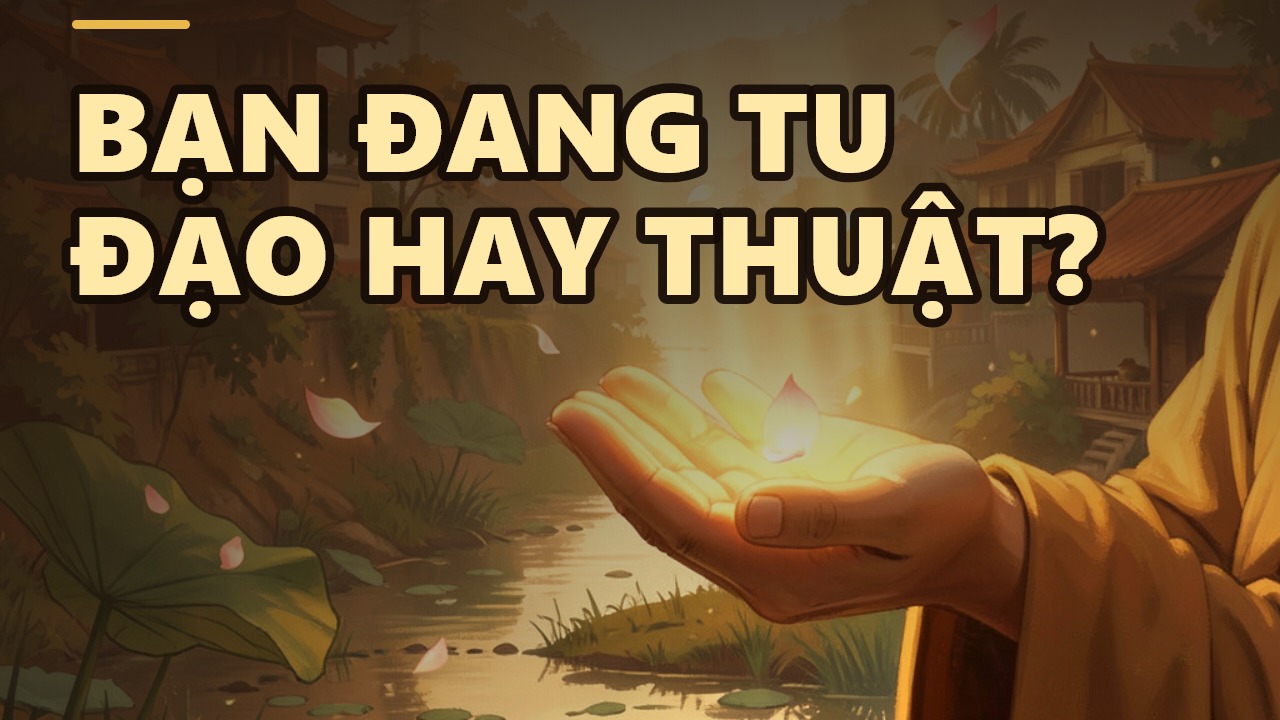
Have you ever wondered: why does someone who diligently does good deeds still suffer, while someone who trains in qigong still feels restless in their heart? Could it be that they are walking a path they believe to be the Way, when in truth it is only a technique? In his dharma talk "The Difference – The Way and the Technique," Thầy Thích Chân Quang helps us clearly distinguish between these two categories, so that each of us may know where we stand on the path of practice.
The Way and the Technique: Both are methods, yet as different as heaven and earth
Thầy Thích Chân Quang begins by identifying that both the Way and the technique are methods to help people improve their lives, but they rest on different foundations.
"The Way carries the philosophical dimension of life. The Way is more philosophical than technical. A technique is a method, a means, a skill for us to carry out."
If a philosophy is infused into a method, then that method takes on the nature of the Way. Thầy gives an example: taking a morning walk, breathing and stepping, may at first seem like a health technique. But if you attach to it a philosophy – that each step brings you closer to the ultimate truth, that each breath is a borrowing from heaven and earth – then it begins to carry "the scent of the Way."
Three kinds of technique: skill, occult art, and art
Thầy classifies techniques into three groups:
Skill: based on science, with no philosophical dimension. For example, building a house, making a table, weaving cloth.
Occult art: carrying mystical and spiritual qualities. For example, fortune-telling, astrology, geomancy.
Art: involving creativity and emotion. For example, flower arranging, music.
Thầy especially emphasizes that occult practices such as fortune-telling, astrology, and energy healing may possess mysterious power and at times be remarkably accurate, yet they remain only techniques. They are not the Way, and we should not regard them as heresy or wrong path.
When does a technique draw near to the Way?
A technique can come close to the Way when it is accompanied by meditative concentration and gives rise to wisdom. Thầy cites yoga, qigong, and tai chi: when practiced to a refined level, one attains a settled peace, from which one comes to recognize a philosophy of living, and gradually it takes on the flavor of the Way.
The law of cause and effect (karmic law) – a great truth that can easily become a technique
The law of cause and effect (karmic law) is a principle that is absolutely true. Thầy affirms:
"Whatever we bring to others will return to us with precision. When we bring suffering to another, misfortune will surely come into our own life, unavoidably. When we bring joy to another, happiness will surely come to our own life."
But if we believe in cause and effect (karmic law) and do good deeds with a mind that seeks blessings from merit for ourselves in the future, then the law of cause and effect (karmic law) becomes a technique for trading in merit. Thầy also says:
"The person who believes in cause and effect (karmic law) yet turns that law into a technique is one who has strong faith in cause and effect (karmic law) and performs many wholesome deeds, but seeks blessings from merit for themselves in the future."
Living with the Way: Giving without expecting to receive
This dharma talk opens up a truly authentic direction for practice: do good out of love, without calculation. The Way does not lie in making offerings to the Buddha so that the next life will be beautiful, nor in giving so that we may gain wisdom. It lies in a heart that knows how to give, knows how to think of others, knows how to love.
In closing, Thầy reminds us to look within and recognize: are we practicing the Way, or merely training a technique? The answer lies in a heart of compassion, in that place where we no longer carefully calculate merit. Let us begin each small act with all the love we have.
AI-assisted translation from the Vietnamese original.
Read in Vietnamese →