
Buddhism and Martial Arts: Conquering Oneself
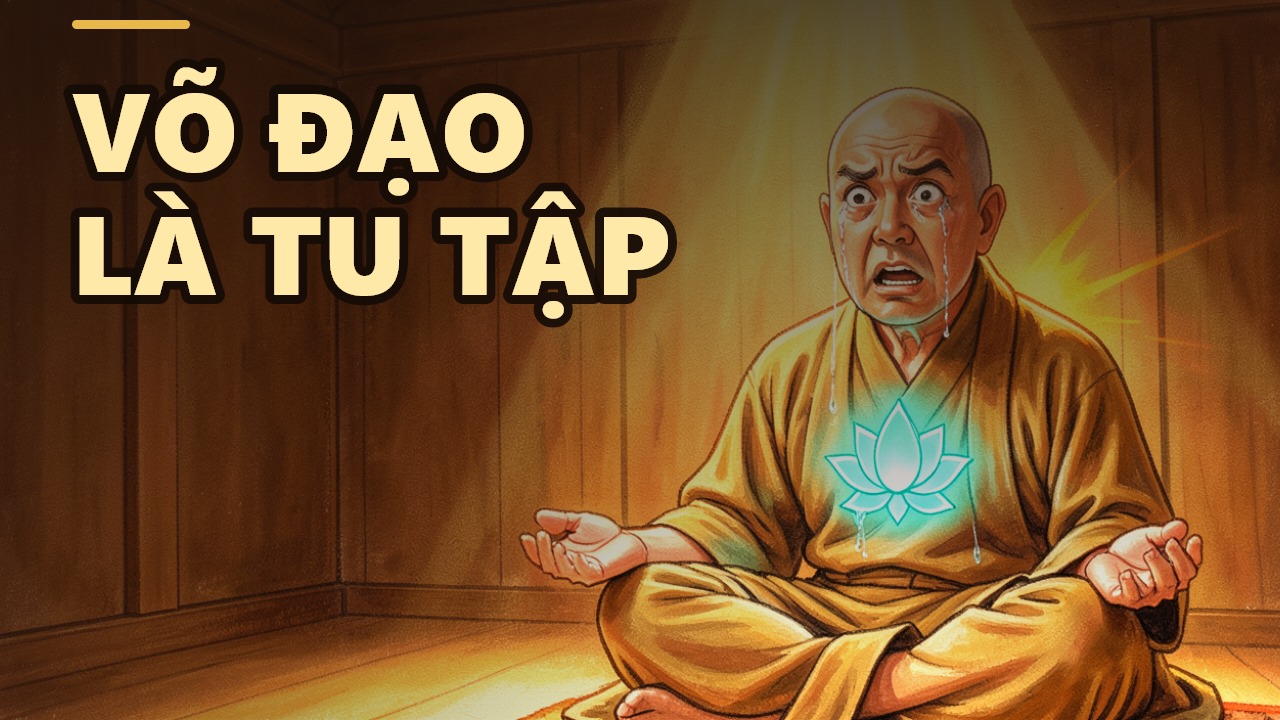
Have you ever wondered what connection exists between a compassionate religion like Buddhism and an art form often associated with violence, such as martial arts? At first glance, they seem to be opposing extremes. However, if we look deeper, we see that martial arts is not merely a survival skill but a path of practice for conquering oneself. This is a truth the Buddha taught more than two thousand five hundred years ago.
### Martial Arts: A Survival Skill from Ancient Times
In ancient times, when humans lived in tribes, those who could not fight were destroyed by wild beasts or rival groups. Thus, martial arts emerged as a vital skill for survival. Yet, this was also a period when human aggression became evident. There were two types of people: one group reborn from heavenly realms, gentle and vegetarian; the other reborn from animal realms, retaining aggressive habits and killing indiscriminately. Gradually, martial arts became a symbol of heroism, as seen in Japanese samurai or Western knights, who used their skills to protect the weak.
Ordinary beings, trapped in ignorance, strangely enjoy conflict and slaughter.
### The Buddha and Bodhidharma: Great Masters of Martial Arts
Few know that before renouncing the world, the Buddha possessed supreme martial arts skills. He and the princes of his court were all trained in combat. Ananda, the Buddha’s attendant, though known for his beautiful face, was also a skilled warrior. Princess Yasodhara shared this trait. Thanks to this latent inner strength, these figures found it easier to maintain health and meditative concentration during their spiritual lives. Patriarch Bodhidharma was also an exceptional martial artist who left secret techniques for the Shaolin Temple, where martial arts became the pinnacle of the warrior world.
Our Buddha was indeed a peerless martial artist, someone who never lost.
### Martial Arts and Meditative Concentration: Where They Meet
Interestingly, Eastern martial arts do not stop at physical training but delve deeply into qigong and internal power. When practicing breathing and maintaining mindfulness, inner strength begins to radiate. If this energy is kept within full-body awareness, it leads naturally into meditation. Many martial artists thus became meditation masters. The way one fights reflects the practitioner’s soul: brutal fighting indicates a lack of depth, while graceful movement showing restraint reveals true cultivation. There is a story of a swordsman whose teacher constantly ambushed him. Initially fearful, the student gradually learned to remain fully alert, aware of every movement around him. As a result, he became not only the greatest swordsman but also a meditation master.
That state of alertness evolves into a kind of spiritual intuition.
### The Story of the Missed Arrow: Winning Over Oneself
In the art of archery, there is a famous tale. A master wished to choose a successor, so he threw two oranges high into the air and asked students to shoot them before they hit the ground. Everyone succeeded except one person who deliberately missed. That person was chosen because he had conquered his desire to compete. Others were technically skilled but still bound by greed and the lure of leadership. Thus, the ultimate goal of martial arts is self-conquest. In daily life, some can win but choose not to, like a boy in the Mekong Delta who calmly walked away from a violent aggressor to avoid causing harm. This is the virtue of patience practiced by martial artists.
Only the one who conquers the desire for the title of leader is truly worthy of holding it.
### Martial Power in Modern Life: Law Requires Strength
Many believe martial arts are obsolete now that we have police and laws. But consider this: police protect us through force. They use guns, swords, and combat skills. Therefore, for society to remain peaceful, a strong force is still necessary. There can be no law without the gun. Most importantly, those who study the martial way do not learn to attack others, but to protect and transform them. When you possess great capability yet choose restraint, that is true martial virtue.
There can be no law without the gun.
Martial arts and the Buddha's teachings meet at their highest point: mindfulness and letting go of the ego. Each day, you can practice mindfulness in every small action and breath. When facing others, strive to conquer anger and greed. This is the martial arts of the soul. Begin today, so that each step becomes a spiritual technique, leading you toward peace and liberation.
AI-assisted translation from the Vietnamese original.
Read in Vietnamese →