
A New Buddhist Path: No Longer Retreating to Quiet Places?
Thầy Thích Chân Quang opens a new way for the Buddha's teachings (Dharma) in modern times: no longer escaping to renounce the world, but stepping forward to serve others in order to accumulate blessings from merit, thereby gathering the mind into meditative concentration, with liberation still as the ultimate goal.
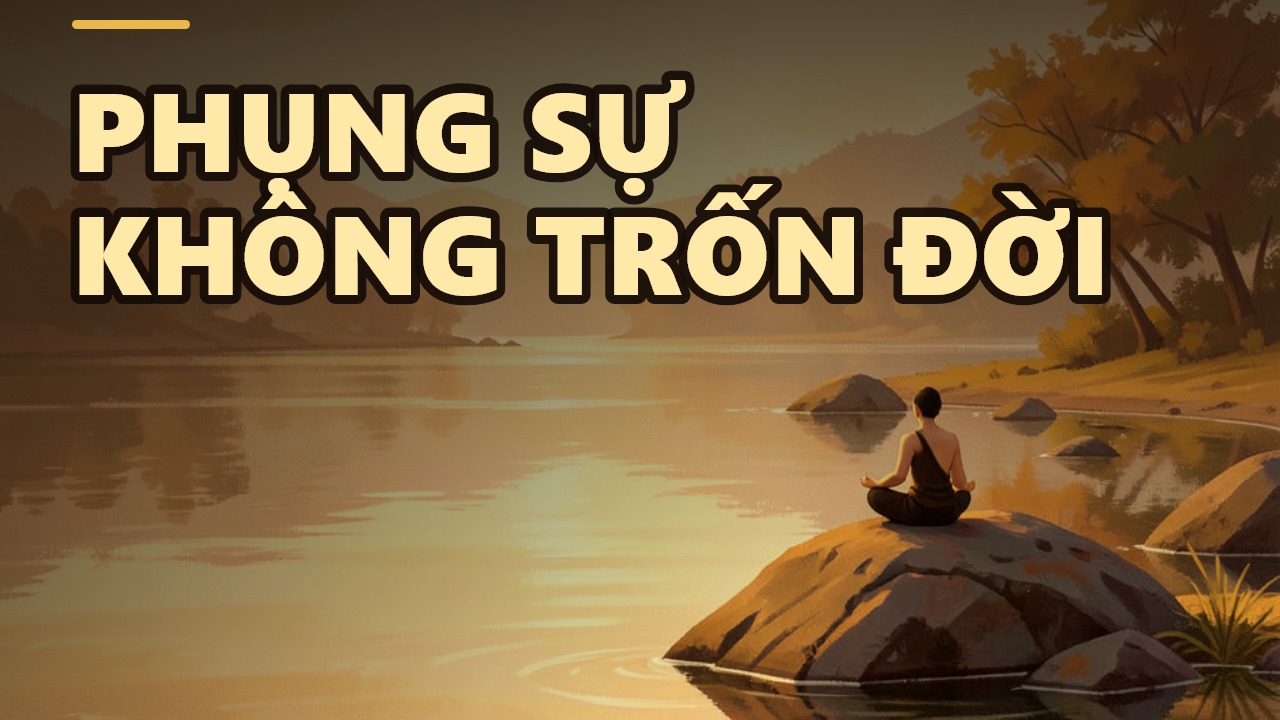
If you met a person devoted to spiritual practice, what would make you admire them? Would it be their serene appearance in the mountains and forests, or the meaningful deeds they leave behind for the world? This question once weighed deeply on a young woman: "What is spiritual practice for?" And the answer given by Thầy Thích Chân Quang in his dharma talk, "A New Path of the Buddha's Teachings," opened up a very different perspective.
From Renunciation to the Spirit of Service
More than two thousand five hundred years ago, the Buddha appeared in ancient India, where people lived simply and frugally. He owned not a single coin, went on alms rounds eating only what he received that day, and lived without possessions to exemplify the practice of renunciation, free from craving and attachment. That image is beautiful indeed, but it belongs to another era. Today, science and technology permeate our lives, and no one can separate themselves from them. We still use microphones, electricity, clothing, concrete, and even the very act of listening to the teachings — all of these are achievements of science. So between two practitioners — one who retreats to a mountain peak in seclusion, unknown all their life, and one who has not yet attained the way but lives ethically and humbly, doing many things that benefit others — before whom will the world bow down?
"People only bow down before a sage who has devoted this entire life to the service of humanity."
This is proven by two women the world has celebrated: Mother Teresa and Princess Diana. Neither fled from the world; instead, they stepped forward to serve, caring for the poor and for unfortunate lives. That is the shared conscience of humanity.
The Trap of Selfishness Behind the Goal of Liberation
Many people think that spiritual practice means seeking liberation for themselves. But precisely because they do not clearly understand what liberation is, yet still set it as their personal goal, they unknowingly nurture and enlarge their own selfishness. Thầy Chân Quang once said to a Buddhist layperson: "You want to find peace and happiness for yourself" — and Thầy replied:
"When you want to seek peace and happiness for yourself, you will never attain it, because you have made selfishness your foundation... But if you seek peace and happiness for others, then right at that moment, peace and happiness naturally overflow within you."
True joy does not lie in hiding away in a quiet corner; it arises from nobility, selflessness, and the ability to benefit others. As in the story Thầy told: when we see someone else's house on fire, if we run to throw water on it, our mind is agitated — but it is an agitation that brings us joy and peace of heart. Whereas if our own house is burning and we sit in meditation pretending to be calm, we will be tormented for the rest of our lives.
A New Kind of Human Being
Thầy also posed a hypothesis: if Darwin's theory of evolution is correct, that apes became humans, then in the future humanity will evolve one step further into "superhumans" — beings who are more intelligent and more spiritually developed. Yet over millions of years, no one has ever seen such a new kind of human. What will bring it into being? Thầy affirmed: it is precisely those who know how to practice meditation. Not practicing through intellect or knowledge, but through spiritual intuition. At that point, human beings will understand one another without words — a single glance will be enough to read each other's thoughts. This is a heavenly realm right here in the world. A young girl once recounted a dream in which she met her late older brother: the two simply looked at each other, and the moment she formed a thought, she received the answer in her heart, without any words.
Two Paths for Practicing Meditation
To gather the mind into meditative concentration, there are two paths. The first is to avoid stirring environments, seeking quiet places so the mind is not shaken. The second is to step into the world, working for the benefit of others, accumulating blessings from merit in order to gather the mind. Thầy told the story of a carpenter: the man sat planing wood, and for a long time could not do it, but he kept trying little by little, until his hands adjusted themselves and he was able to plane the wood. Practicing meditation is the same — the more we step into the world and train ourselves to face adversity, the more blessings from merit we accumulate.
"Use those blessings from merit: at night, sit in meditation; during the day, care for others; when free at night, cross your legs and begin to meditate. Live amid stirring environments, step into them to train yourself to face adversity."
This is the path encouraged for modern Buddhists. But whichever path we take, the ultimate goal remains liberation from samsara (cycle of rebirth) through meditative concentration — this must never be forgotten.
Which Path Will You Choose?
When Thầy asked the entire hall which path they would choose, many people raised two fingers — the path of engagement. These are the ones walking in accordance with the new character of the Buddha's teachings (Dharma). Those who raised one finger remain faithful to the ancient way. Both have their strengths, but the second path helps us avoid the trap of selfishness and cultivate virtue amid the bustle of the world.
If you are still hesitating, try beginning with small things: helping someone in hardship, reconciling a quarrel, or simply listening to the voice of your own heart when night falls. For only when we know how to live for others do we truly begin the path of liberation.
Step forward! For it is precisely in those selfless actions that we will find the peace we have been seeking for countless lifetimes.
AI-assisted translation from the Vietnamese original.
Read in Vietnamese →