
The Way of the Official: When Power Meets the Spiritual Mirror
A dharma talk by Venerable Thich Chan Quang on the ethics of leadership, emphasizing the morality of those in power, their impact on the people, and how to cultivate oneself to avoid abusing power.
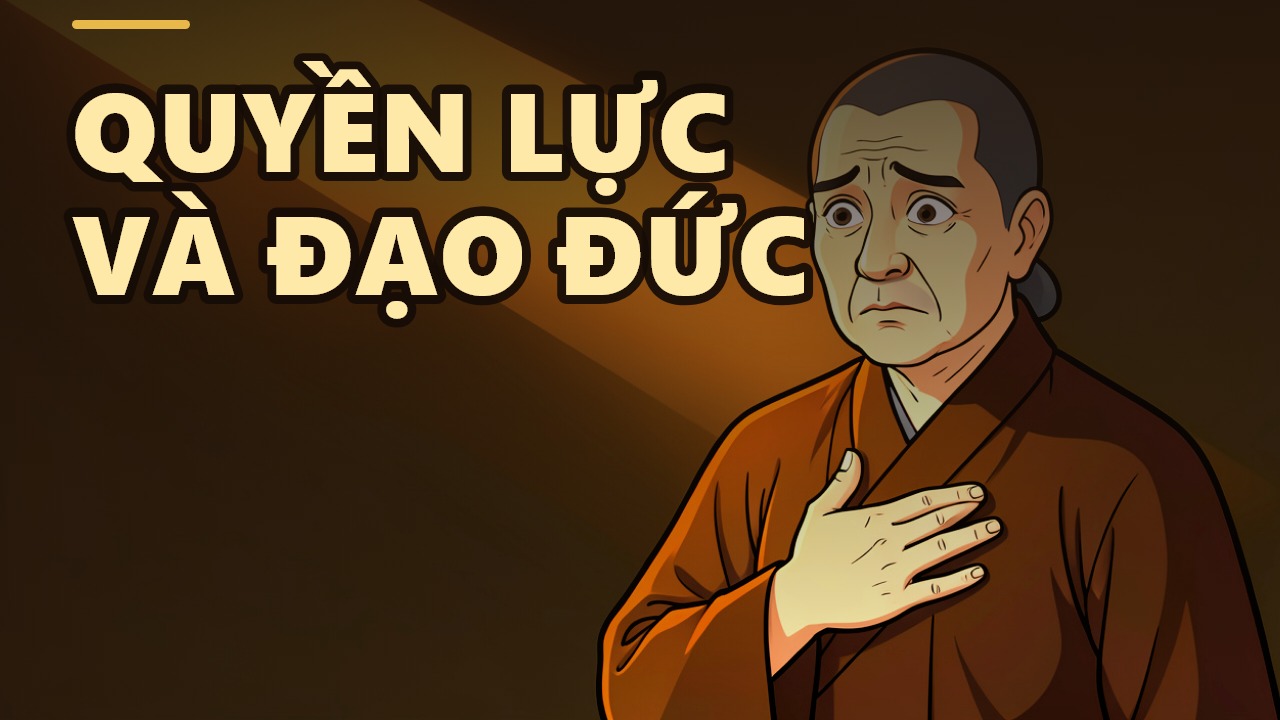
Have you ever wondered what makes a good leader? A cadre, an official – they hold power that can change the lives of thousands, even millions. But this power, if not illuminated by morality, becomes a double-edged sword. Today, let us listen to the profound sharing of Venerable Thich Chan Quang on “The Way of the Official” – a subject that may seem distant from Buddhism, yet is intimately connected to life.
Power is everywhere.
From the very beginning of civilization, humans have ruled over one another. In a family, there is a head; in a village, there is a chief; in a nation, there are kings and officials. Venerable Thich Chan Quang points out: “In human society, including celestial beings, beings in hell, and even animal packs, there always exists the reality of governance.” Power is present everywhere, from the small family unit to the broad society. The greater this power, the heavier the responsibility, and without morality, it can cause immense suffering.
Officials – those who determine the happiness of the people.
Every decision made by an official directly affects the lives of the people. The Venerable teaches: “When officials have morality, the people rejoice. When officials lack morality, the people suffer.” This holds true not only in the past but also in the present. A decision about relocating a cemetery, a tax policy, a development project – all can bring joy or sorrow to millions. Therefore, the morality of those in power is not their private matter, but a concern for all society.
The ego – the silent enemy of the official.
Everyone has an ego, and everyone experiences greed, hatred, and delusion. But if an official cannot restrain these, they will harm many people. The Venerable emphasizes: “Where there is ego, everyone becomes selfish, greedy, and angry. But when an official’s greed and anger are unchecked, the impact on many is profound.” This is why officials must cultivate themselves daily, just as a practitioner recites the Buddha’s name and contemplates the mind, to avoid being blinded by power.
“The official is the servant of the people” – a profound reminder.
President Ho Chi Minh once said: “The official is the servant of the people.” This may sound contradictory, as the one in power is often seen as the master, not the servant. But Venerable Thich Chan Quang explains: “There are truths that may not seem practical, yet we must speak them. Why? To remind the official. To remind them that when you hold office, you are a person who serves the people.” This statement does not seek to diminish officials, but to remind them that power is not for self-service, but for serving the populace. But if this is heard only once every few years, how can it truly sink in? An official needs to remind themselves daily, just like a practitioner upholding mindfulness.
How can officials remain virtuous?
The Venerable asks: “How do we prevent officials from inflating their ego?” The answer lies in each individual’s cultivation. Officials must have a firm spiritual life, know how to reflect upon themselves, and know how to let go of the self. Otherwise, power will corrode the soul, turning them into despots and corrupt figures. He teaches: “The task of ensuring that an official has a firm direction for rigorous cultivation is now the responsibility of all people.” Each of us, whether a citizen or an official, can contribute to creating a better society by living ethically, encouraging, and supporting leaders of integrity.
The Way of the Official is not a distant concept. It is present in every decision and action of those in power. It is also present in every thought and word of each of us when we have even a little influence over others. Let us remember that power is not for satisfying the ego, but for serving. Let us look into the mirror and ask ourselves: “Have I lived worthily with what I have been given?”
AI-assisted translation from the Vietnamese original.
Read in Vietnamese →