
What is "The Way"? From a Path to a Spiritual Journey
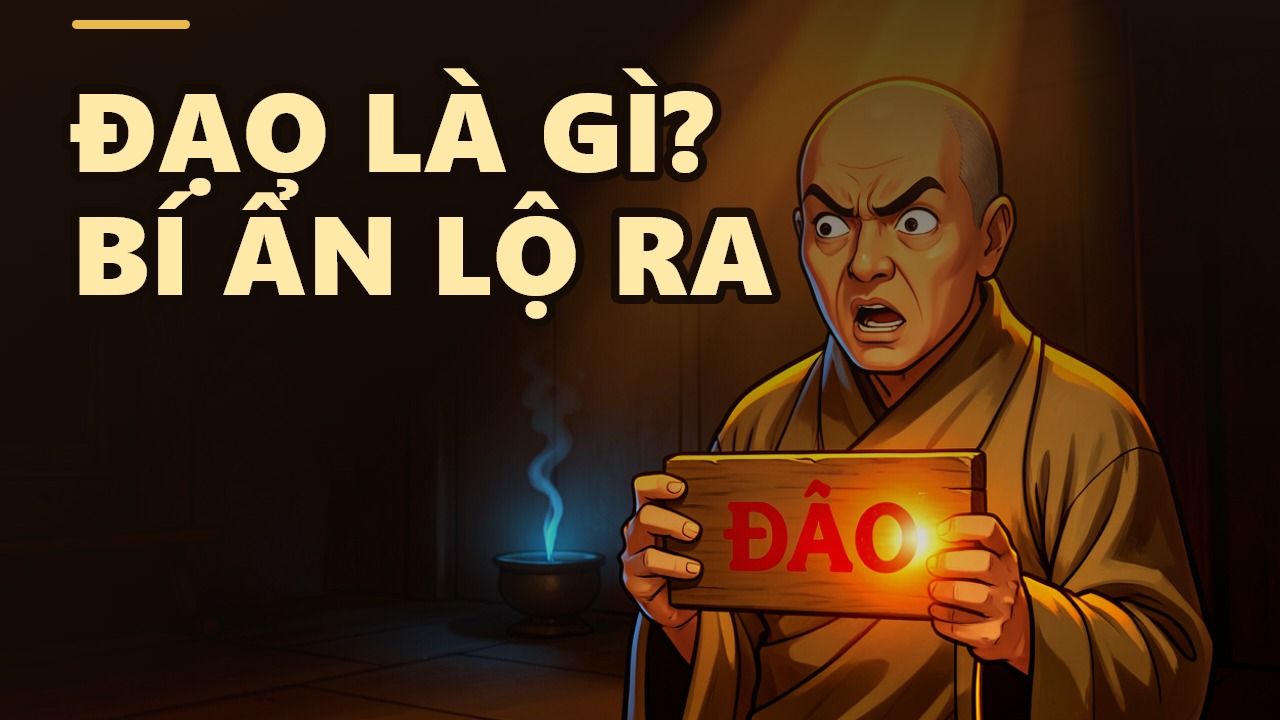
**Summary:** Exploring the true meaning of the word "Đạo" (the Way) from ancient to modern understanding, and the six elements that constitute a religion, through the explanation of Venerable Thích Chân Quang.
Have you ever wondered what "Đạo" – the Way – truly is? We hear people mention "Đạo" everywhere, but how many truly understand it? Today, along with the teachings of Venerable Thích Chân Quang, let us examine the word "Đạo" and see what it contains.
**Đạo: The Path and the Method**
Originally, in Confucian script, "Đạo" simply meant a path. Over time, its meaning broadened to signify a "method" – a way of doing something. The ancients used it to refer to the way of crafting furniture, the way of cooking rice, the way of building a house. Everything has its own "Đạo."
"Originally, in Confucian script, 'Đạo' simply meant a path."
Everyone knows how to cook rice, but cooking it so it is perfectly cooked, neither burnt nor soggy, is an art form. This is the "Đạo" in everyday life. It is that simple, with nothing mysterious about it yet.
**When "Đạo" Became Religion**
Gradually, as people felt the need to rely on spiritual power to resolve life's difficulties, the word "Đạo" became confined to the scope of religion. Religious scholars often identify six fundamental elements that constitute a religion:
* A divine being to be worshipped – such as Jesus Christ, Allah, or the Buddha. * A system of doctrine – such as the Bible, the Quran, or the Buddhist Tripitaka. * Rituals and ceremonies – to help bond the community. * A clergy class – people who dedicate their lives to the faith. * A body of followers – to create a spreading force. * A connection to the supernatural – the mystical, metaphysical element.
This is a theoretical framework for identifying a complete religion. However, Buddhism has its own unique characteristics. As Venerable Thích Chân Quang once noted: "Our Buddhism is a religion, but it has some qualities that are quite different from others."
**The Flexibility of Buddhism**
There was a time when Buddhism in Vietnam weakened, with few monastics but many temples. To maintain the temples, some monks had to form families, creating a class of married clergy. This sounds paradoxical, but it was a form of skillful adaptation. Later, when Buddhism was revived and monastic discipline was emphasized, monastics returned to a celibate life. Indeed:
"This is also an admirable quality of Buddhism. It self-adjusts... to adapt, to survive."
Buddhism is not rigid; it is flexible according to context, maintaining its core purity while staying vital within the heart of the nation.
**Fragmented Beliefs and the Power of Efficacy**
Alongside major religions, there are many unsystematized local beliefs that persist because of their perceived efficacy. Stories tell of a merchant from the lowlands who traveled to a mountain region. Merely touching the face of a local girl led to him being forced to marry into her family, and he could not escape because of a "secret charm" of the people there. It is this extraordinary power that makes people both believe in and fear it.
"There are beliefs that exist solely because they are seen as having effective efficacy."
This shows that a "Đạo" does not necessarily need all six elements. There is something beyond reason that compels people to bow their heads.
**What Does it Mean to Live with "Đạo"?**
So what does "Đạo" mean for us today? It is not merely a system of dogma or elaborate rituals, but "a way to live." The Way of spouses is a way of love and empathy; the Way of parent and child is a way of filial piety and responsibility. When we understand "Đạo" in this profound sense, every small action in life becomes a path of practice.
"'Đạo' is also a way to live. A way to live."
Dear friend, begin with the very "Đạo" within your own life. Live with integrity, listen, and practice from the smallest things. When you do, you will realize – "Đạo" is not far away; it lies right within every breath, every thought, and every step you take.
AI-assisted translation from the Vietnamese original.
Read in Vietnamese →