
Where Does True Morality Reside? Thầy Thích Chân Quang's Lesson on the Psychology of Morality
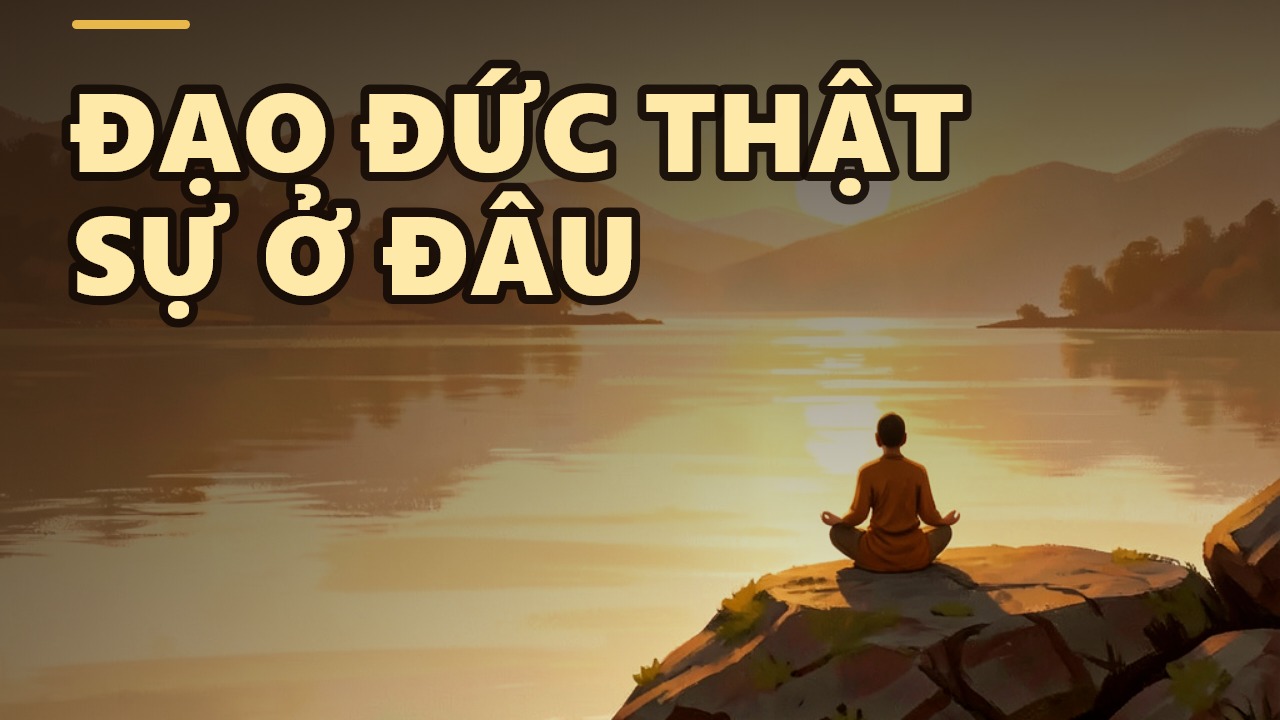
Have you ever wondered: if a person quietly holds good thoughts but does nothing for others, can they be considered moral? This question may seem simple, yet in a dharma talk on the psychology of morality, Thầy Thích Chân Quang offered a profound perspective that makes us reconsider.
Morality Is Not Just Inner Goodness
According to Thầy, morality does not lie in beautiful thoughts kept within the heart. It must be expressed through action and speech, and most importantly, it must bring benefit to those around us. Thầy defines it this way:
"Morality consists of the good inclinations in our mind/heart that give rise to outward words and actions, allowing those around us to receive benefit, peace, joy, and transformation."
Thầy emphasizes further: "Goodness within the mind/heart that benefits those around us is what we call morality." Thus, if a person always thinks about helping the world but never acts, that goodness is not yet enough to become morality. It needs to be nurtured and brought outward, taking shape as concrete actions—just as a person with an inclination toward selflessness will naturally help others upon seeing their need.
Why Do We Need to Cultivate Morality?
In an age of explosive scientific and technological development, people increasingly chase after material things, and the world is falling seriously out of balance. Thầy Chân Quang points out: "The world is losing its balance between material life and spiritual life." People trust in tangible conveniences rather than vague spiritual values. For this very reason, monastics carry a great responsibility: to become specialists in morality and to bring inner peace to society.
Thầy offers an analogy: an engineer without morality will see their structures quickly crumble; a lawyer without morality will only defend the wealthy; an official without morality will easily fall into corruption. Therefore, every profession needs a foundation of morality. And monastics are precisely the people who can contribute this.
What Do Monastics Bring to Society?
Thầy affirms: for those in Buddhism, the ideal is enlightenment and liberation, but for the wider society, what a monastic can offer is morality and inner peace. To do this, monastics must first possess these qualities themselves. Thầy says:
"If I speak of bringing morality but have no morality myself, what can I bring to others? And if my mind/heart is in complete disarray, how can I bring peace to anyone?"
For this reason, cultivating morality and practicing meditative concentration is not merely the private affair of monastics—it is what enables them to help the world. Monastics live in temples, close to lay Buddhists, yet they must also remain vigilant so as not to be swept along by worldly life.
The Trap of Material Comfort and Self-Centeredness
Thầy warns of the dangers when monastics possess blessings from merit and receive many offerings. They may become indulgent and extravagant, losing their simplicity. Some may even exploit the teachings to justify their own selfishness. Thầy tells the story of an Indian master who, when asked why he did not help the poor, replied that it was their karma. Thầy rejects this:
"Cause and effect (karmic law) is not an excuse for us to turn our backs on the poor."
True morality cannot stand still. It must be sharing, must be generosity, for only then can we plant conditions (dependent origination), helping others understand and practice in turn.
Study to Practice, Not Study for a Degree
In the environment of monastic education, Thầy reminds: "We study in order to practice, study to know the path of practice—not study to obtain a degree." Learning is meant to be applied to daily practice, transforming knowledge into genuine inner strength. If we merely memorize teachings while our heart remains full of afflictions (kleshas), that learning is incomplete.
Thầy hopes that Buddhist schools will incorporate sessions of meditative concentration into the formal curriculum, so that monastic students can study and practice together, thereby graduating with true morality, able to withstand the temptations of the outside world.
Beginning Within Our Own Heart
Thầy Thích Chân Quang's dharma talk is not meant only for monastics; it is also a profound reminder for each of us. Morality is a journey—it begins with good inclinations in the mind/heart, is expressed through words and actions, and brings benefit to others. Let us ask ourselves: what have we done today to make the world around us a little better? If we have not yet done so, let us begin with the smallest things—a word of encouragement, a helping hand, a smile of peace and joy. That is morality living within us.
AI-assisted translation from the Vietnamese original.
Read in Vietnamese →