
Making Offerings: Three Great Meanings from a Small Act
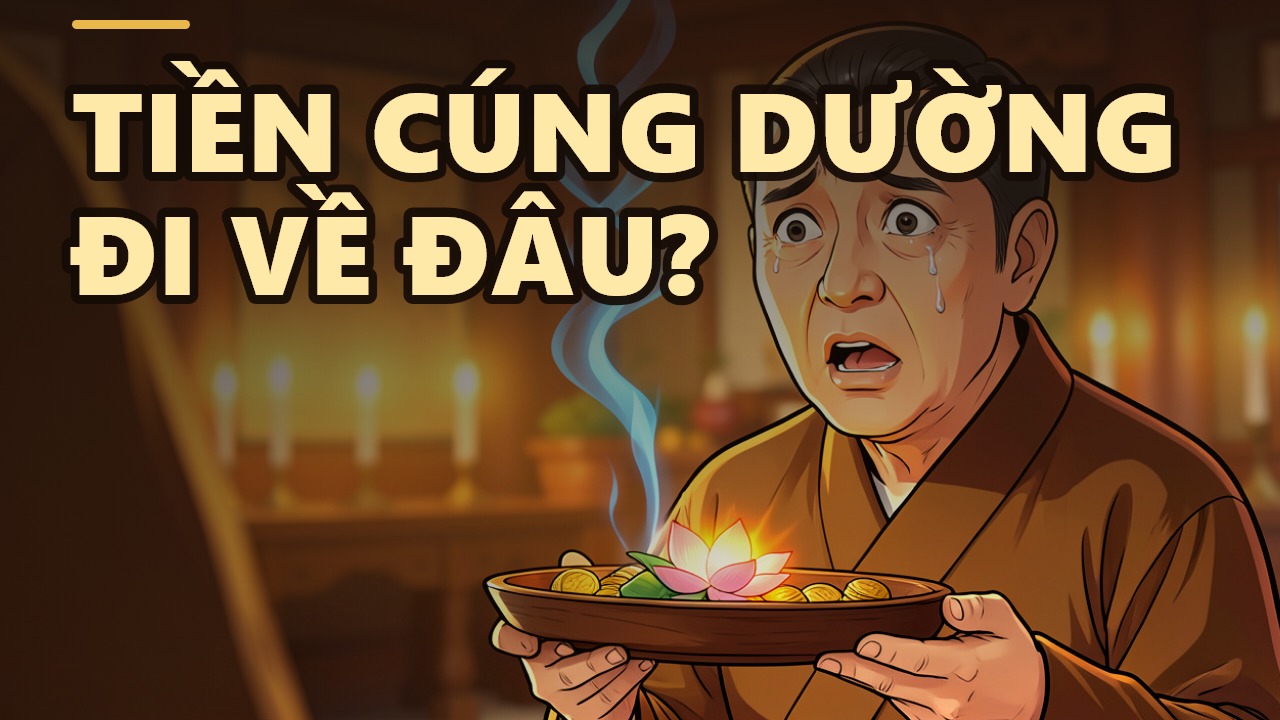
Making offerings is not simply bringing money and rice to the temple. With three great meanings — sustaining, spreading, and protecting the Buddha's teachings (Dharma) — every coin you give contributes to the survival and growth of the Dharma.
Have you ever wondered: when I make offerings to the temple, what do the monks do with the money? Do they simply eat and practice, or is there something more?
In truth, making offerings is not the same as giving alms. When we give to someone in difficulty, that is almsgiving. But when we bring items to the temple and give them to monastics with a measure of respect, that is making offerings. And according to Thay Thich Chan Quang, making offerings is not merely a small act — it plays an incredibly important role in the entire Dharma.
Making Offerings Is Not Simply Giving Money
Many people think that making offerings means bringing money and rice to the temple to feed the venerable teachers, and that is all. But Thay Thich Chan Quang emphasizes:
"Making offerings is reserved for monastics, and importantly, reserved specifically for temples. Therefore, making offerings plays an important role in the Dharma. It is no longer just an ordinary act of bringing rice and money to feed monastics so they have food to continue their practice."
Indeed, the act of making offerings does not stop at helping someone have a meal. It sustains the lifeblood of the Dharma, spreads it, and protects it. Let us explore these three great meanings.
Three Great Meanings: Sustaining, Spreading, and Protecting the Dharma
Thay Chan Quang shares this clearly:
"First is sustaining the Dharma. Second is spreading the Dharma. Third is protecting the Dharma."
Sustaining the Dharma: Monastics need food in order to continue their practice. Thanks to offerings, they have the conditions to live and to study. Through this, the Dharma continues to exist.
Spreading the Dharma: If you encounter a monastic with real capability, your offering can help them spread the Buddha's teachings more widely, allowing Buddhism to flourish.
Protecting the Dharma: When difficulties arise, when destructive forces seek to harm the Dharma, it is the genuine monastics — sustained by offerings — who can stand firm and protect the true teachings.
So do not think that you are only contributing a small part to the meals of the venerable teachers. You are contributing to the great undertaking of the entire Dharma.
Those Who Make Offerings Also Need to Practice
Making offerings is not just an outward action; it is also an opportunity for practice and letting go. Thay Chan Quang warns about clinging to one's giving — that is, constantly remembering what one has offered, then developing arrogance and pride. This destroys blessings from merit and can even cause one's life to decline.
"Give and then forget. Forget what you have given. In your heart, hold only one noble thought: that you are helping the venerable teachers to sustain the Dharma, to spread the Dharma, and to protect the Dharma."
When we make offerings with a humble heart, unburdened by thoughts of "how much or how little I gave," the merit endures and even our work and livelihood go smoothly. Conversely, if we cling to our giving, we may lose those blessings from merit and encounter difficulties in life.
Understanding the True Costs of a Temple
Many people think that offerings only cover the monks' meals. But Thay Chan Quang reveals:
"The cost of Dharma work is ten to twenty times greater than the cost of food and living."
At a temple, beyond meals there are countless other needs: repairing buildings, printing sutras, producing teaching videos, organizing retreats, and more. All of these require funding. When making offerings, we should be aware that we are contributing to building and sustaining the entire work of the Dharma, not merely feeding a few teachers.
Choosing Genuine Practitioners
One more gentle piece of advice from Thay Chan Quang: those who make offerings should choose genuine practitioners wisely, contributing to the purification of the monastic community.
"Try to choose genuine practitioners, contributing to the purification of the monastic community."
When we support only those who practice diligently, those who lack virtue will find it difficult to survive, and naturally they will have to improve. In this way, the Sangha is purified, and the Dharma is kept pure.
Conclusion
Making offerings is a small act with immense meaning. Each time you place money in the hands of the monks, send an offering letter, or bring a bag of rice to the temple, you become an important link in sustaining, spreading, and protecting the Dharma. Make offerings with a pure and humble heart, without clinging to your giving, and choose practitioners who are worthy of trust. That is how you plant boundless blessings from merit for yourself and for all sentient beings.
AI-assisted translation from the Vietnamese original.
Read in Vietnamese →