
Embracing Greater Hardship: The Unexpected Secret to Ending Suffering
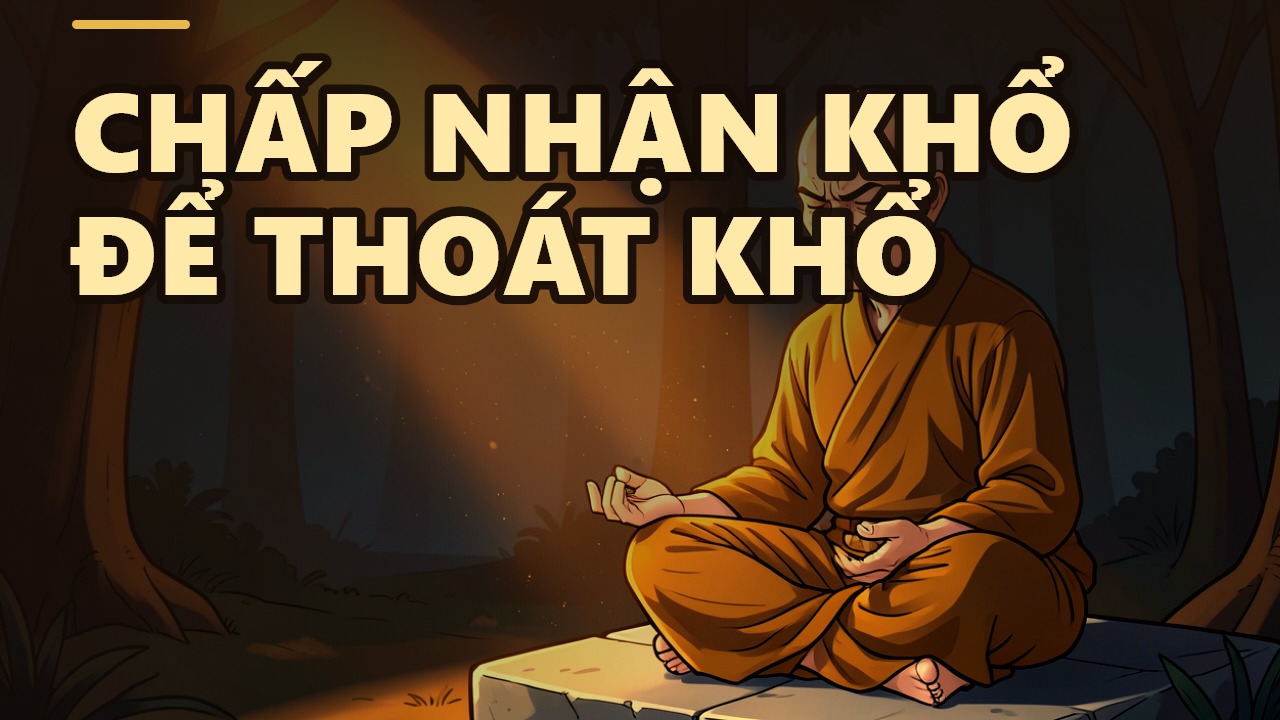
**Summary:** The Buddha taught that life is suffering, but the way out is not through letting go or escaping. It is, surprisingly, through accepting even greater hardship. This is the key to transformation.
Who among us does not wish for life to be a little easier? But what if someone told you that to end hardship, you must choose an even more difficult path? Would you believe it? This teaching, which sounds like a paradox, is actually profound wisdom shared by Venerable Thích Chân Quang in a dharma talk on the fifth day of the New Year. Everyone suffers: the poor suffer from lack, the wealthy suffer from debt and ambition, officials suffer from responsibility, and monastics suffer because their practice is a hundred times harder. So, what is the way out?
**Everyone Suffers – No One Enjoys True Happiness**
Reflecting on our lives, who among us does not feel burdened? The poor suffer from poverty, and the rich suffer from protecting their assets. A wealthy person may be known as the owner of a three-billion-dong car, but in reality, they may owe the bank eight billion and work fourteen to fifteen hours a day. Venerable Chân Quang summarized:
"Truly, life is suffering. One who has not realized this cannot truly speak of it."
Intellectuals might think becoming a doctor is glorious, only to face violence in the emergency room. Police officers are also threatened and attacked. Even a king—a monarch ruling a nation—may not have eight hours to himself, staying awake all night to review reports. The happiness we assume is perfect often hides invisible suffering.
**Is Letting Go the Path to Ending Suffering?**
Many say: when life is too hard, just let go. But can a parent abandon a sick child? Can a business owner discard a company buried in debt and run away? Can a king flee the throne to become a hermit on a mountain? The story of Emperor Trần Thái Tông escaping to Yên Tử is an example: he left the throne to become a monk, but Trần Thủ Độ led an army to escort him back. There, Master Phù Vân persuaded him to return with the teaching: "A bodhisattva uses the mind of all sentient beings as their own mind, having no private mind."
"If anyone tells you that the only way to end all troubles and suffering in this world is one word—let go—they are wrong, speaking very superficially."
Running away does not end our suffering. Karmic debts follow us like a shadow. Those who escape into temples to "take it easy" still must contribute labor, tend gardens, and bear responsibility. When a branch breaks and falls on someone, the garden manager is the one blamed. Injustice leaves no one untouched. Therefore, letting go is not the solution.
**The Key to Ending Suffering Is... Even Greater Hardship!**
So how can we end suffering? The Venerable presented a truth that seems paradoxical: to be free from hardship, we must accept even greater hardship. If our current suffering is at level five, we must choose a hardship of level six or seven to overcome it. He emphasized:
"To end suffering, we must choose an even more arduous path. This is the true teaching, not letting go."
But please note: "even greater hardship" does not mean tormenting ourselves. It means being diligent in our duties, doing more than our assigned responsibilities, and helping others more. This is conscious service. When we accept greater sacrifice, we accumulate merit and can rise above our current suffering.
**A Beautiful Day Will Come**
Consider the image of the old lottery seller. She already endures so much hardship: sitting in the sun and rain, earning each coin to care for her sick husband. Can she let go? No. But if she accepts even greater hardship, she will gain blessings from merit. For example:
- Picking up trash along the road to keep the scenery clean. - Giving directions to a stranger who is lost. - Buying a cup of soy milk for road workers.
Then, one beautiful day, someone might accidentally buy a winning lottery ticket and share one billion dong with her. Her life changes. The Venerable said:
"In the midst of extreme hardship, if we endure even more hardship, we overcome it. But if in hardship we give up and run, we will never be free from it."
Or consider the doctor on duty during the New Year holiday, overwhelmed by patients admitted due to traffic accidents. Leaving the profession to sell lottery tickets would still be hard. The only way is to endure more hardship: taking on shifts for colleagues, selflessly caring for poor patients. Then one day, a grateful patient's family might decide to build a private hospital and invite that doctor to be its director. It sounds like a fairy tale, but the law of cause and effect (karmic law) always operates exactly like this.
**From Earthly Kings to Celestial Kings – Never Ceasing to Overcome Hardship**
If an earthly king wishes to end suffering, he must endure even greater hardship: caring for his own nation and neighboring lands. Vietnam has done this with Laos and Cambodia. When such a king passes away, if he has accumulated sufficient merit, he may ascend to the heavenly realms. But are celestial kings free of hardship? Sutras record that King Śakra (Đế Thích) once visited the Buddha, lamenting that he was extremely busy, having to manage both the heavenly and human realms. Thus, we must once again endure even greater hardship. After conquering one hardship, we step into another, until... we attain Buddhahood. The Venerable said:
"A Buddha is one who always endures greater hardship than their present hardship. We should not imagine the Buddha as sitting in absolute stillness."
This is a very powerful idea. The Buddha is not a motionless god, but one who continuously transcends all suffering through compassion and wisdom. His hardship is never forced, but arises from voluntary service to all beings.
So, are you ready to choose the path of "always embracing greater hardship"? Do not fear suffering, do not run away. Start with the smallest tasks: doing more than your duty, helping those around you, accepting a little more sacrifice. Then, a beautiful day not far away will arrive for you. This is not a miracle, but the law of cause and effect (karmic law) in motion.
Please remember: Embrace greater hardship—this is the golden key to transformation.
AI-assisted translation from the Vietnamese original.
Read in Vietnamese →