
A Single Blade of Grass Before the Buddha’s Altar: Prajna Discriminating Wisdom and the Bodhisattva’s Practice of Cause and Effect
Venerable Thich Chan Quang offers a profound insight into Prajna Discriminating Wisdom, exploring the distinction between the emptiness of phenomena and the detailed law of cause and effect, alongside the ten great vows of Samantabhadra Bodhisattva.
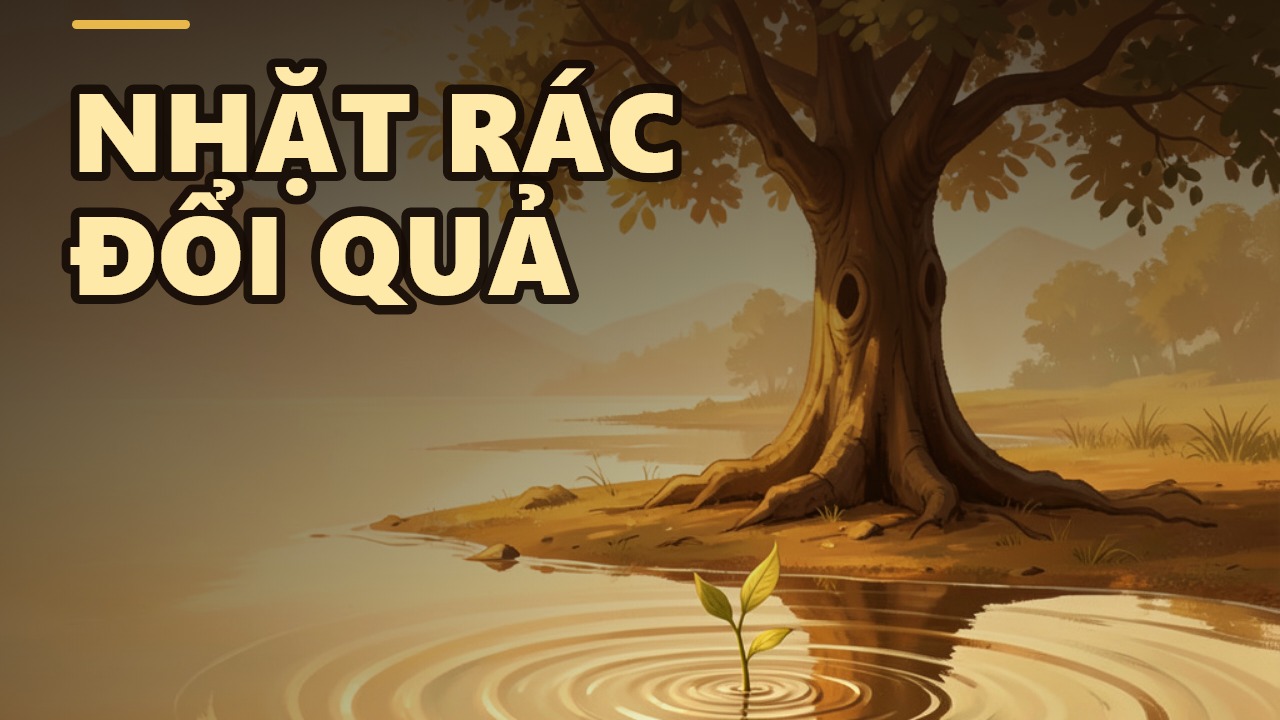
Have you ever wondered how a tiny action, such as picking up a piece of trash before the Buddha’s altar, could bear fruit for hundreds of lifetimes? In his dharma talk on Prajna Discriminating Wisdom, Venerable Thich Chan Quang shares a story that invites us to look deeply at ourselves. He recounts how even the smallest movement can have staggering consequences across a thousand future lives, urging us not to overlook the power of our daily actions.
The teacher tells of a child playing innocently before a statue of the Buddha. Seeing a piece of plastic lying on the altar, the child picked it up and threw it away. This act seemed insignificant, yet in the eyes of a bodhisattva, it was a seed that would ripen into the fruit of Arhatship after one thousand kalpas. It reminds us that no deed is too small when viewed through the lens of karmic law.
Fundamental Wisdom and Discriminating Wisdom offer two perspectives on reality. Fundamental wisdom perceives the emptiness of all phenomena, while discriminating wisdom sees the intricate details of cause and effect in every action. We often think studying Prajna means realizing that "all is empty," but true practitioners return to using cause and effect to help others once they have realized emptiness. This balance is essential for genuine spiritual growth.
Those who have not yet attained enlightenment often speak of emptiness to prove their own liberation or freedom. However, those who have truly realized it use only the principle of cause and effect to guide sentient beings. If we are not yet awakened but use the concept of emptiness to justify laziness or mistakes, we risk falling into wrong views. Those who truly understand Prajna become more humble and respectful of karma.
Emptiness can become a double-edged sword if misunderstood. The teacher warns that students of Prajna may become arrogant, neglecting courtesy and humility. Using emptiness to excuse errors leads to a loss of compassion. One drawback of focusing solely on emptiness is becoming indifferent to sentient beings, viewing everything as void. We must guard against this detachment, ensuring our practice remains rooted in love.
We see this error in new practitioners who claim "everything is empty" yet remain critical and impatient with others. This is a sign of pride. Emptiness should lead to freedom, but without compassion, that freedom is meaningless. True understanding brings warmth, not coldness, toward all living beings.
Bodhisattvas rely on cause and effect rather than abstract emptiness to teach. The teacher illustrates this with stories showing the depth of karmic connections. Offering a glass of water to a traveler might lead to encountering the Dharma fifty lifetimes later. Conversely, slandering sacred beings can result in madness for ten lifetimes. Bodhisattvas clearly see these vast chains of causes and conditions across countless ages.
A simple offering of water may seem lost, but it is never wasted. Whether the recipient is a wandering bodhisattva traversing the three realms or one resting in nirvana, no being with whom there is a connection is forgotten. This teaches us that every small action can be a wholesome condition for infinite future lives. We must be careful with every word and thought.
Samantabhadra Bodhisattva made ten great vows. The teacher highlights the first three: paying homage to all Buddhas, praising the Tathagata, and making offerings. These are practices even high-level bodhisattvas undertake to achieve full Buddhahood. They form the foundation of spiritual attainment.
For a bodhisattva to eventually attain perfect enlightenment and skillfully teach countless beings, the first vow to practice is always to pay homage to all Buddhas. We should not think that because we are ordinary beings, bowing to the Buddha is unnecessary. In truth, the greater the wisdom, the deeper the bow. Humility is the bedrock of the path.
Let us begin with humility and compassion. The teacher shares his own experience of helping someone during difficult times, hoping they would learn to do good deeds. It took time for that person to understand the Dharma and reciprocate. This story reminds us that we do not need to wait for enlightenment to practice. Start with small acts: one bow, one praise, one cup of water. Never forget to open your heart in love.
Venerable Thich Chan Quang leaves us with this message: he may not be able to do much, but his heart has never ceased to love everyone. Similarly, let us sow seeds of positive karma in every moment. Today, pause for a breath, bow deeply to the Buddha, and pray for the transformation of yourself and all beings. This is the first step in practicing Prajna Discriminating Wisdom.
AI-assisted translation from the Vietnamese original.
Read in Vietnamese →