
The Merit of Sutra Recitation: From the Mouth to the Soul
Reciting sutras is not merely a religious ritual; it is an effective method for purifying one's karma of speech, helping to cleanse the mind and transform one's life.
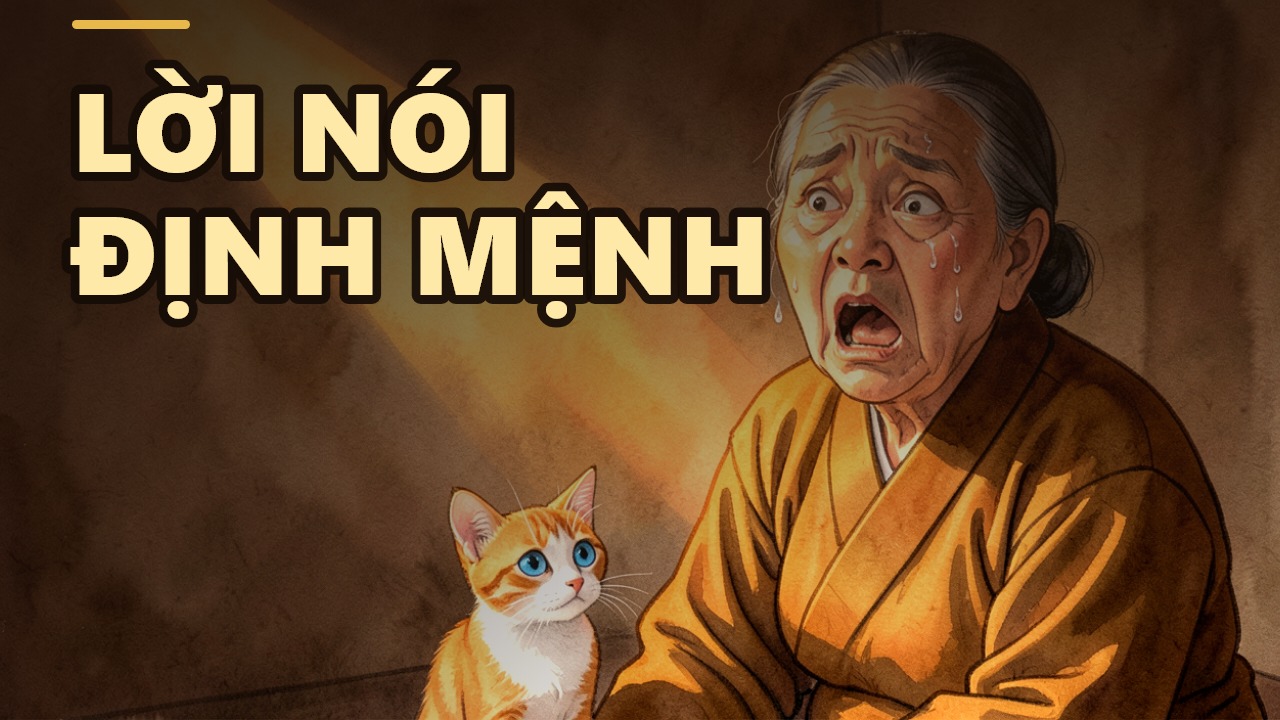
There was an elderly woman overseas who, upon her death, left twelve million dollars to her cat. Many found it perplexing: why leave it to an ignorant animal instead of her children or grandchildren? But if we view this through the lens of cause and effect, it may be the karmic consequence of a single insult: "You are nothing but a cat." Our mouth, therefore, becomes the very instrument that shapes our destiny. Sutra recitation is one of the ways to train this mouth, and through it, the mind and heart are purified. This is the essence of the teaching shared by Venerable Thích Chân Quang in his dharma talk, "The Merit of Sutra Recitation."
**The Mouth: The Greatest Tool for Creating Karma**
Some may say that words cost nothing—just a few drops of saliva. Yet, words have the power to uplift a person or cast them down. In the story of the elderly woman and her cat, she cursed her own family, calling them "nothing but cats," and in a subsequent life, that very cat reaped the inheritance of twelve million dollars. Was this an act of expectation? No, it was karmic retribution.
Our words do not demand much. They cost only a little effort, a few drops of saliva. Yet, they can elevate another's spirit and inspire profound change.
Venerable Thích Chân Quang emphasizes that we must never take our speech lightly. A careless word can cause us to be reborn as an animal. A rightful word can elevate us to heavenly realms. Therefore, a practitioner must be exceptionally mindful of their mouth.
**The Three Karmas: Body, Speech, and Mind – Speech is the Easiest to Purify**
A Buddhist practitioner must cultivate all three karmas: body, speech, and mind. Body refers to actions, speech to words, and mind to thoughts. Among these, training the body is the most laborious, requiring physical effort and sweat. Training the mind is the most difficult, as no one can control our inner thoughts; we must discern right from wrong ourselves. However, training speech is the easiest, for it only requires us to hold our tongue and speak words that are kind and meaningful.
Cultivating the body is the hardest, the mind is the most difficult, and the mouth is the easiest to train.
Because it is the easiest, we often overlook it. And because we overlook it, we easily transgress. Speaking carelessly throughout the day, criticizing one, mocking another—these soon accumulate into serious faults. If we let our mouth run freely, it will drag us into the lower realms.
**Sutra Recitation as Cultivating the Karma of Speech**
So how do we train our mouth? The ancient masters have shown us a very skillful method: sutra recitation. Instead of letting our mouth utter meaningless words, we give it the words of the Buddha to speak. Reciting sutras not only generates merit but, more importantly, it prevents the creation of negative speech karma.
The masters saw that we were too fond of talking, so they gave us a sutra and told us to recite it.
When we recite a sutra, our body sits upright with reverence, our mouth reads the sacred words, and our mind becomes focused. The phrases of the Buddha gradually permeate our consciousness, rebuilding our inner world. This is the fundamental merit of sutra recitation.
With our mouth speaking the Buddha's words, our mind entertains fewer idle thoughts. Each word of the Dharma falls into our heart, beginning to reconstruct our spirit.
**The Merit of Sutra Recitation Extends Beyond Oneself**
Sutra recitation is, first and foremost, a practice for oneself, but it also influences others. When we recite with clear understanding, listeners can also comprehend and be transformed. Conversely, if one merely chants to complete a section without understanding, the benefit is significantly diminished.
Only when we understand as we listen does it truly benefit all sentient beings.
Therefore, one should not perform rituals mechanically. If ceremonies are conducted but no one understands the meaning, they fail to bring liberation to anyone. We need to teach and convey the teachings so that the sutra's words truly enter people's hearts.
**Do Not Haste to Criticize Those Who Recite Yet Still Stumble**
Some people see a person who recites sutras but still makes mistakes and are quick to criticize. But Venerable Thích Chân Quang teaches: "If they did not recite sutras, that person would be far worse." At the very least, sutra recitation has reduced their harmful actions, and sometimes, if their mind is pure enough, it can even lead to sudden enlightenment.
Thanks to sutra recitation, someone who once spoke harshly can become gentle. Someone who was once aggressive can become less irritable. We should not ignore the merit that is gradually transforming them just because we still see their flaws.
**Conclusion: Let the Sutra's Words Permeate Your Heart**
Such is the merit of sutra recitation. It is not just a ritual, but a concrete and effective method of practice. Dedicate time each day to recite, trying to chant with full understanding and sincerity. Let each word of the sutra soak into your soul, transforming your speech karma and purifying body and mind. You will find your life becoming lighter, more peaceful, and more joyful. Sutra recitation is not for the Buddha to hear; it is for you to become a Buddha yourself.
AI-assisted translation from the Vietnamese original.
Read in Vietnamese →