
The Path of Meditative Concentration: A Journey to Non-Self (Anatta) That Is Not for the Impatient
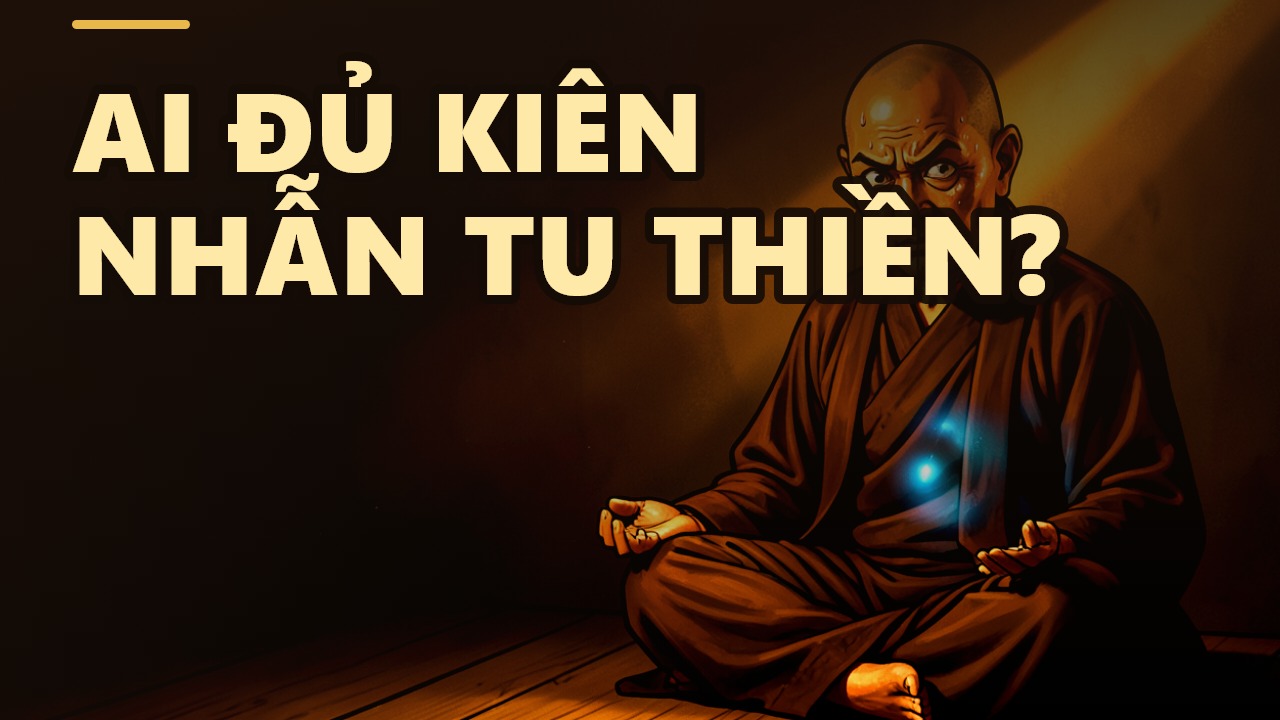
Venerable Thich Chan Quang reveals a demanding path of meditative concentration that requires unwavering perseverance. The ultimate goal is non-self (anatta). Discover the traps and correct methods to avoid getting lost in life.
Have you ever asked yourself, "Why am I me, and not someone else?" This question may have briefly crossed your mind/heart, only to be swept away by the rush of daily life. In his dharma talk, "The Path of Meditative Concentration," Venerable Thich Chan Quang brings us back to this fundamental inquiry. From there, we explore a challenging yet miraculous journey of practice: the path of meditative concentration.
### Meditative Concentration: From Death to Life
Many people believe spiritual practice is merely preparation for death, aiming for rebirth in a Buddha land. However, meditative concentration is different. Venerable Chan Quang emphasizes that meditation does not focus on death, but on life itself. We must strive to break through our current spiritual limitations to open up our inner potential. This creates a holy life and establishes a sacred realm right here in this world. It is a powerful transformation, not an escape from the present, but a way to live fully and meaningfully in every moment.
### Facing Yourself – An Unforgiving Battle
Practicing meditation is never easy. It is a battle with oneself, second by second. The teacher shares that meditation involves fighting against one's own errors constantly. It is extremely difficult. Meditation does not use anything to cover the mind; instead, it looks directly into the mind to see who we truly are so we can correct ourselves. This demands courage and wisdom. Only those brave enough to face their hidden flaws and admit their imperfections can truly practice. Those who always consider themselves good will find it hard to progress far.
### The Road Is Longer Than You Think
The teacher uses the analogy of traveling from Saigon to Vung Tau. Many travelers leave the city, see a large body of water, and assume it is the ocean. They jump in to swim, only to realize it is just a small pond. Similarly, meditators may experience slight shifts or openings in their mind/heart and mistakenly believe they have reached enlightenment. They stop practicing, becoming arrogant and boastful. The teacher warns that true practitioners become more humble, gentle, and peaceful as they go deeper. Those who mistake a small pond for the ocean become noisy, proud, and talkative after minimal progress. The real path of meditation is long and arduous, possibly taking many years or lifetimes to reach the destination.
### The Ultimate Goal: Non-Self (Anatta)
So, what is meditation? The teacher teaches simply that meditation is settling the mind into purity. More importantly, where does this settled mind lead? The answer is the goal of non-self (anatta). This is the key distinction between Buddhism and other paths. Any method, whether chanting the Buddha's name, reciting sutras, or practicing meditative concentration, is not Buddhist if it does not aim for non-self (anatta). He stresses that disciples of the Buddha must seek non-self (anatta). This is not about losing everything, but merging with the universe and becoming all things. Suddenly, you become this universe. You are all sentient beings, and all sentient beings are you. You are flowers, grass, leaves, flying birds, crawling ants, swimming fish, the moon, the stars, and the entire dharma realm. This is true enlightenment and liberation.
### Avoiding Wrong Goals
On the path of practice, many traps can lead us astray. These include practicing for supernatural powers, authority, longevity, health maintenance, or out-of-body experiences. The teacher cautions that some people display supernatural abilities gained through meditation before full realization. When their merit runs out, these powers disappear. Such goals are not part of the Buddha's teachings (Dharma). True practitioners will see their morality shine, their ego shrink, and their humility and compassion grow.
### Perseverance on the Right Path
Meditation is not something achieved overnight. Some people see quick results from superficial practice, but this may be due to blessings from merit accumulated in past lives. The teacher reminds us that such individuals can harm future generations of Buddhism. Because they are subjective, they teach others incompletely, damaging the Dharma. Therefore, we must study carefully, practice seriously, and always keep the goal of non-self (anatta) in sight.
The path of meditative concentration is a long journey filled with thorns, yet it is also full of hope. Begin with small steps, persevere daily, listen to your mind/heart, and always turn toward non-self (anatta). As the teacher said, practice correctly, practice until death, and do not worry. If we stay on the right path, no matter how many kalpas pass, we will eventually arrive. Trust in this and begin today.
AI-assisted translation from the Vietnamese original.
Read in Vietnamese →