
The Storm That Turned 90 Degrees: A Spiritual Lesson for a Nation's Economy
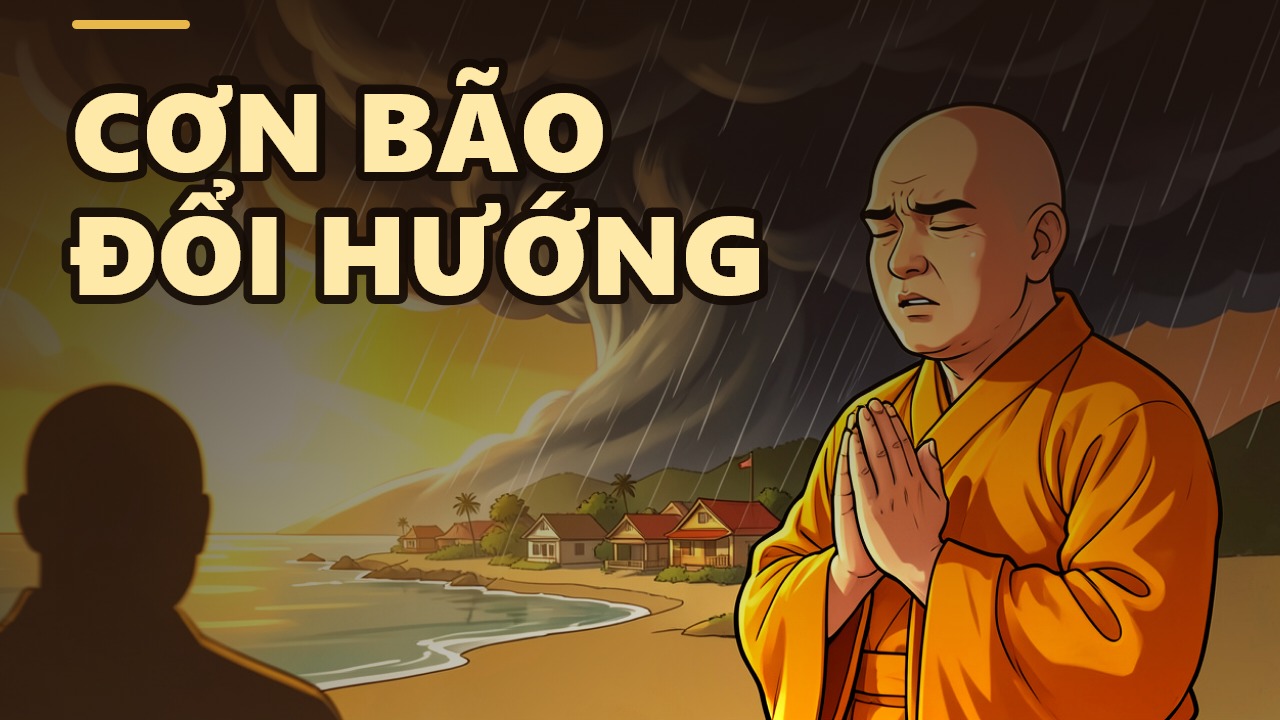
**Summary:** From the story of Typhoon Haiyan suddenly halting before the shore as people prayed together, Venerable Thích Chân Quang points out three methods of repentance and practice to help the country overcome economic difficulties.
Do you believe a terrifying storm can suddenly turn ninety degrees and head out to sea, as if by a miracle? This happened in a story recounted by Venerable Thích Chân Quang in an early spring Dharma talk. That story unfolds a profound message: spiritual power can not only stop a storm, but also contribute to the economic development of an entire nation.
**The Story of the Storm That Turned 90 Degrees**
Before Tet, a storm swept through Quang Binh, leaving devastation. Venerable Thích Chân Quang had given a talk on "How to Stop a Storm." It sounded like a mystical topic. Then Typhoon Haiyan, with wind speeds up to three hundred and seventy-five kilometers per hour, tore through the Philippines and aimed straight for central Vietnam. Everyone was filled with fear.
The Venerable then informed all the practice groups from north to south to pray together. The result was truly unexpected: about two hundred kilometers from the coast, the storm turned a full ninety degrees, traveling parallel to the shore without making landfall.
It was not human power that stopped the storm; it was the power of heavenly beings in the sky that was able to turn it. The heavenly beings stopped the storm, not us. But why did they stop it for us? Why? Because the heavenly beings love us.
**The Hearts of People Move the Heavens**
Why did the heavenly beings feel compassion for this land? The Venerable explained: At that very moment, within the nation, there were people whose hearts turned with earnest repentance, praying for themselves and for their homeland. These souls are called great souls. When calamity strikes, if everyone only worries about themselves, runs away, and abandons others, then the heavens will be even more angered. But when people care for one another and pray for their fellow citizens, the heart of heaven is touched.
Because at that moment, within this country, there were people whose hearts turned with earnest repentance. They repented for themselves and repented for their homeland. They prayed for themselves and prayed for their homeland. Therefore, those souls are called great souls.
The storm proved: humans alone are not sufficient, but when humans learn to love each other, a power from above will change destiny. This is also true for the wealth and poverty of a nation.
**Economics is Also a Matter of Cause and Effect**
The Venerable said: "When it involves money, the karma of cause and effect becomes very heavy." Looking at poor people making an offering of five thousand dong at a temple, that is their sweat and tears. Money carries immense toil. Therefore, the wealth and poverty of a nation also depend on the merit of its people and its entire community.
Wealth and poverty are deeply significant to a human life. To be born into a life of extreme poverty is to lose one's dignity. One's life must have a bit of ease for dignity to exist... That material wealth depends on personal merit, and the general context depends on the merit of the entire nation.
Thus, for a country to develop, we need not only economic policies but also the use of spiritual power. And there are three ways to do this.
**Three Ways to Use Spiritual Power for Economic Development**
The Venerable clarified: The first way is to repent for past faults; the second is through vows and promises for the future; the third is through one's own practice. In the scope of this talk, the Venerable focused on the method of repentance—the foundation for all resolution.
When a country experiences economic recession, it is due to karma. But if the community knows how to repent, to shed the chains of past errors, then the future will open up. The Venerable invited each person to look inward and repent on behalf of the community.
**Three Faults to Repent: Miserliness, Wastefulness, and Indifference**
The first is miserliness—being stingy, unable to give to others, unwilling to help others. The karma of miserliness is the karma of poverty. When many people are miserly, the whole country becomes poor.
Miserliness means a person finds it very difficult to help others, does not want to help others, and feels regret when helping. That karma is the karma of poverty, and it is not just about one person. If many people in this country are so miserly, then the entire country becomes poor.
The second is wastefulness—spending extravagantly, giving to those unworthy of giving, spending on things not worth spending on. The story of Black Prince burning a twenty-dong note to light the way for his friend to pick up a ten-dong note is a classic example. The consequence was that ancestral wealth vanished, and descendants had to work as motorbike taxi drivers.
Wastefulness, extravagant spending on those unworthy, and spending on things not worth it leads to having no money later. No money at all.
The third is making no contribution to life. Many think they have the right to eat and the right to live, but in reality, having rice to eat is still due to remaining merit. One must have the awareness to contribute to society, not just take without giving.
There is no awareness that when one appears in this life, one must contribute to the world... The reason one still has rice to eat is because of remaining merit, not because one naturally has the right to eat without cause.
**Practicing for Transformation**
The Venerable instructed: "Remember? Now you remember. From this hand to the other hand, tonight begin to repent. So that we step onto the spiritual path to help develop the nation's economy, creating a new miracle."
The lesson is truly practical: Each of us can help lead the country out of its difficulties by starting with ourselves—repenting for our faults, living frugally, giving wholeheartedly, and contributing to life. When the mind transforms, merit will come, and the nation will flourish. Begin today, from a single minute of repentance, from a sincere vow, from the smallest kind act.
AI-assisted translation from the Vietnamese original.
Read in Vietnamese →