
The Realm of the Living and the Realm of the Dead: They Can See You, But Can You Hear Them?
Thầy Thích Chân Quang teaches about the connection between the realm of the living and the realm of the dead, and how to treat departed spirits with love and sutra chanting rather than fear.
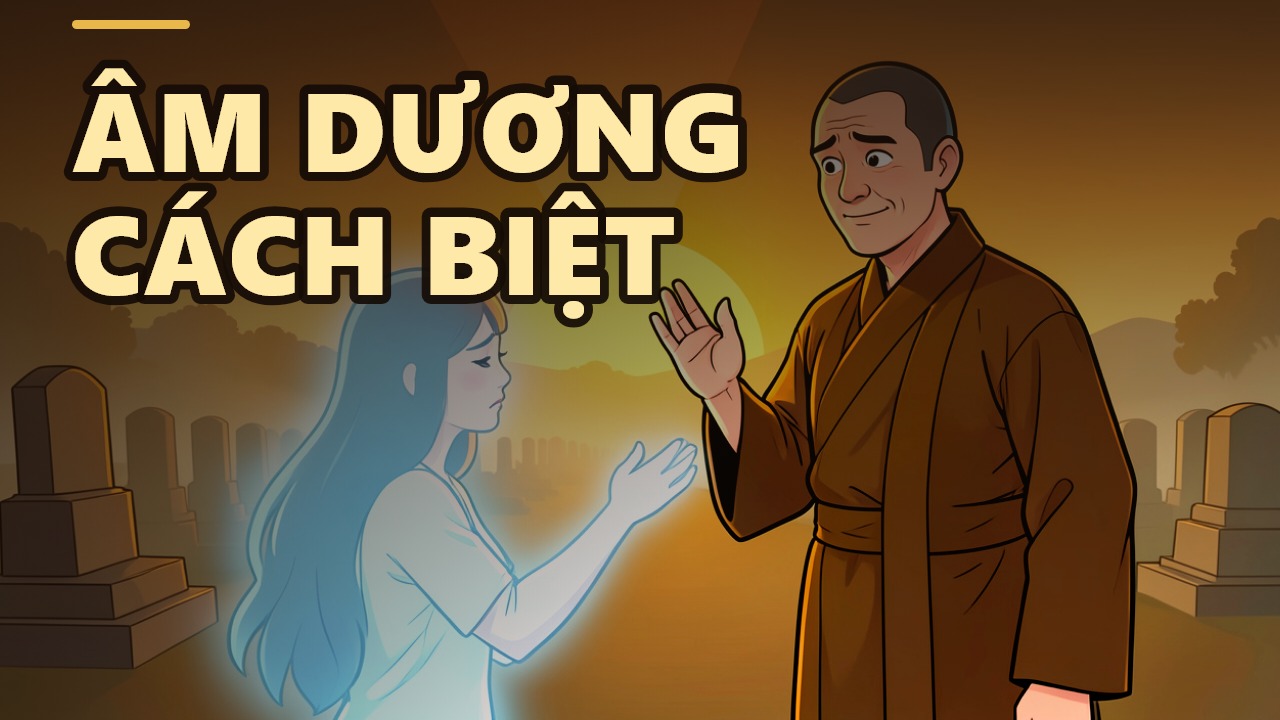
Have you ever wondered: when we leave this world, where will we go? And those who have passed away, are they watching over us? In a deeply moving dharma talk at Phuc An Vien cemetery during the Vu Lan season, Thầy Thích Chân Quang opened up profound insights on the theme of "The Realm of the Living and the Realm of the Dead."
Everyone knows, only some do not
Thầy began with a thought-provoking observation: "This universe holds many mysteries. This world holds many mysteries. What we call science has never known everything." Yet there is one phenomenon that people have known since ancient times: the world of the departed. Only those who speak in the name of science refuse to acknowledge it. Thầy affirmed:
"That science has not proven something does not mean it does not exist. What science does not yet know is not nonexistent; it is simply that science does not yet know."
Thầy told the story of a graduate student in Beijing, someone bold and fearless, who suddenly called home one day in a trembling voice because she had seen a ghost appear in broad daylight. She was not dreaming, and her panic showed that the world of the departed truly exists, but most of us lack the conditions to see it.
Two realms, separate yet connected
Thầy explained: although the two worlds are separate, they influence one another. The departed can see us, but we cannot see them. This is a source of suffering for both sides. When a loved one passes away, we cry because we cannot see them, while they stand beside us, speaking endlessly, but we cannot hear:
"That person sees us, stands beside us, and says to us, 'Please stop crying, I am here, your mother is here, please stop crying,' but we cannot hear them."
Thầy emphasized: "The cause of all fear is not knowing." When the departed wish to show their presence, they affect physical things, making a glass fall and shatter, opening doors, making footsteps sound, and this frightens us. But in truth, all they need is to be loved.
Thầy also told another story: a nun once came to Phuc An Vien for the Vu Lan ceremony, and at midnight she saw her door open as a girl with flowing hair stepped in, then quietly left. The next morning, all the lay residents had long been asleep. That girl was the spirit of someone buried in the cemetery, trying her best to make her presence known.
Do not suppress, do not exorcise; simply love and chant sutras
Thầy shared the proper approach in Buddhism:
"In Buddhism there are only two things to do: first, offer food for the spirits to eat. Second, chant sutras for their deliverance so they may listen."
Thầy warned against using talismans and spells to suppress or exorcise spirits:
"Chase away one ghost and you welcome ten more. A talisman is a command that leads an army of spirits. When pasted in a house, it allows new spirits to invade, driving out the old one, only to bring in new ones who are even more troublesome."
Instead, treat the departed as you would your own family: with love, offering food, and chanting sutras. Through the words of the Buddha's teachings (Dharma), their souls gradually find relief, transforming from greed, hatred and delusion into love. Thầy stressed that the departed are still people, who need to be loved and supported through the true Dharma.
As long as the karma remains, the hunger remains
Thầy described the misery of wandering spirits: they cannot die again, yet the feeling of hunger persists. Some spirits must eat leftover rice, and even eat cow dung because there is nothing else to eat. The karma of hunger follows them from one life to the next. Conversely, those wealthy in blessings from merit remain rich ghosts even after death. Therefore, we should strive to create merit and live morally, so that we may have blessings from merit in the life to come as well.
Matter becomes spirit, spirit becomes matter
Thầy offered a fascinating perspective: in the realm of the living, we are bound to the material; in the realm of the dead, they are bound to the spiritual. Yet the two realms support one another. Living people who create merit with money, material things, and effort will, upon passing to the other realm, enjoy blessings in the form of thoughts, as in heavenly realms. Conversely, spirits who cultivate spiritually, when they return to the realm of the living, become extraordinary people, like King Quang Trung, famous for his immense power. Thầy said:
"Matter has become spirit, and spirit has become matter. These two realms are opposite to each other, yet they support one another in this way."
Thầy's dharma talk not only opens up an invisible world but also teaches us a lesson about love and spiritual practice. Let us begin today, offering food and chanting sutras for those who have passed. Do not fear them, do not shun them, but love and support them through the true Dharma. This is also how we can touch the realm of the living and the realm of the dead with peace and compassion.
AI-assisted translation from the Vietnamese original.
Read in Vietnamese →