
Being and Non-Being: The Mystery of Your Presence in Life
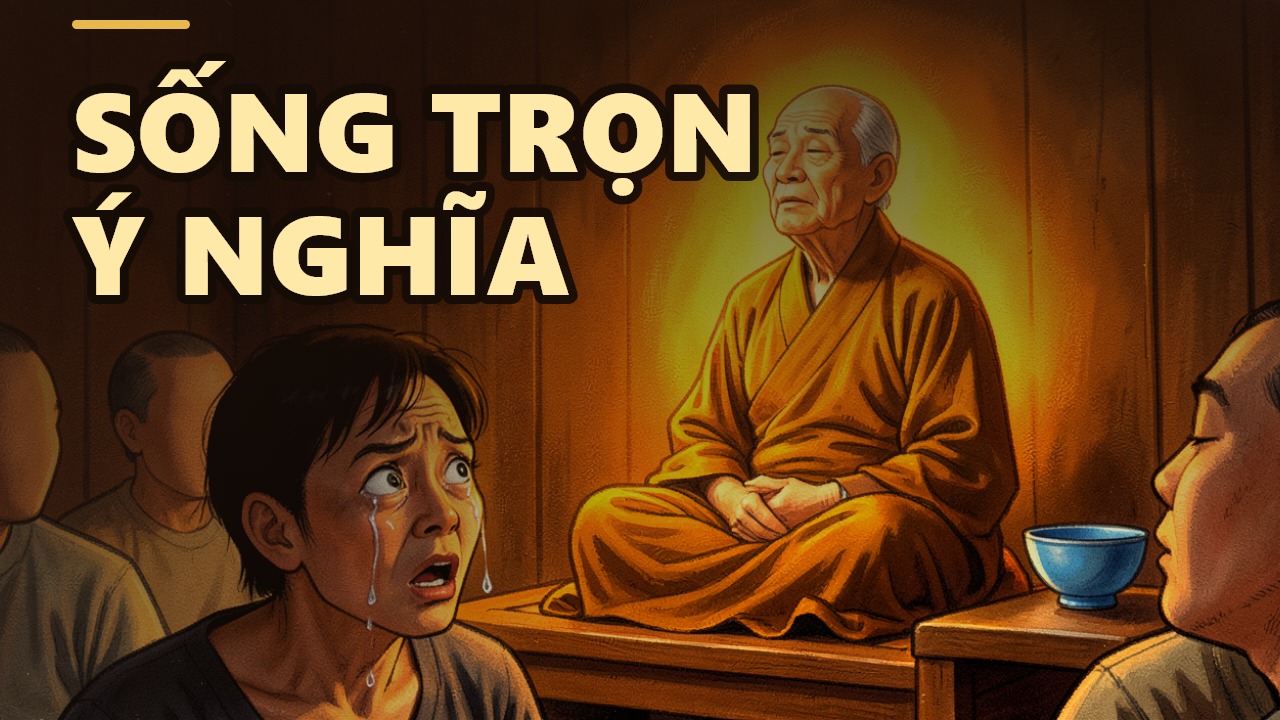
**Summary:** Understanding the Bodhisattva's dharma of being and non-being. Explore four paired categories and apply them to daily life so that your presence holds meaning.
Have you ever wondered why some people can light up a room simply by walking in, while others go unnoticed even when standing right before you? Today's dharma talk by Venerable Thich Chan Quang helps us recognize this wonder through the concepts of "being" and "non-being"—two categories that seem simple, yet form the core of practice in the Bodhisattva spirit.
**"Being" and "Non-Being"—Concepts from Real Life**
Venerable Chan Quang begins: "That which 'is' is something countable, possessing quality, nature, function, and practical application in this life. We call that 'being.' And what of 'non-being'? It is the opposite."
Yet he emphasizes: "In this universe, nothing is ever absolutely non-existent."
**When Presence Becomes Meaningful**
From this definition, he leads us to imagine a person sitting quietly in a corner. Upon noticing them, we feel a surge of joy because that person holds meaning for us. They possess merit, morality, talent, and have helped others before. Conversely, someone might stand right before us, yet we only wish to move away because they offer no value and may even cause frustration. This shows that "being" and "non-being" are not about appearance or status, but about blessings from merit and one's character. He further states:
"A person who has blessings, when they appear among the assembly, draws our attention and attraction. Whereas a person without blessings, even if present among the assembly, is as if they were never present; no one takes notice."
This is why we must accumulate blessings from merit through every action, word, and thought.
**Four Paired Categories: Being Turns to Non-Being, Non-Being Turns to Being...**
He outlines four states to help us understand the operation of karmic law:
* **Being turns to non-being:** Due to the laws of impermanence, cause and effect, and biology. For example, when newly in love, people swear eternal devotion, yet feelings may fade over time. Or a wealthy person becomes arrogant and indulges excessively, so their blessings run out quickly—what "was" becomes "not." * **Non-being turns to being:** Starting from nothing, through effort, creating merit, and understanding cause and effect, one gradually achieves success. He says: "Starting with nothing at hand. When blessings accumulate, success happens bit by bit, rising gradually." Even life itself appears from conditions, like grass growing on barren ground despite being enclosed. * **Being becomes more being:** The rich become richer because they know humility, practice restraint, and continue creating merit. This mirrors life on Earth developing in abundance from one species to another. * **Non-being remains non-being:** Stuck in poverty because one does not sow good causes and continues to create negative karma.
**Do Not Misuse "Non-Being" and Lose Compassion**
He warns of a common mistake among many practicing the Mahayana path: "Many who practice the Mahayana contemplate everything as empty, view everything as non-existent, lose their heart of compassion, lose their merit, and offend others."
When we see everyone as "empty," we cannot love or help them. Yet in truth, every person present is worthy of love and value. He reminds us that a talk is made excellent not only by the speaker but also by the attentive listening of the assembly. Therefore, each person has a unique role and meaning. The Bodhisattva's dharma of "non-being" does not negate existence but penetrates the truth of impermanence while cherishing every present condition.
**Applying the Dharma of Non-Being for a Peaceful Life**
Through this teaching, we learn that everything is relative and nothing is fixed. Therefore, we should live with humility, gratitude for the present, and continuously sow wholesome causes. For our presence to hold meaning for others, we must cultivate morality, talent, and above all, compassion. This is the true value of a child of the Buddha.
Being or non-being lies not in the money in our pocket or our fame, but in what we contribute to life. Let each time we appear, everyone feels happy and warm. This is the Bodhisattva's way of living in the midst of everyday life.
AI-assisted translation from the Vietnamese original.
Read in Vietnamese →