
Color Without Fragrance – What Is Gained from Studying the Path without Practice?
**Summary:** Studying the Dharma without practice is like a flower with color but no fragrance. This article explores the consequences of mere words and suggests a path of practice so that the teachings may bloom fragrant in one's life.
Have you ever heard a Dharma talk so wonderful you wanted to share it with everyone immediately, yet when you tried to apply it to your own life, you failed? This is not uncommon. The Buddha taught about this through a beautiful image: a fresh, beautiful flower that has color but no fragrance.
**A Lesson from Two Royal Consorts**
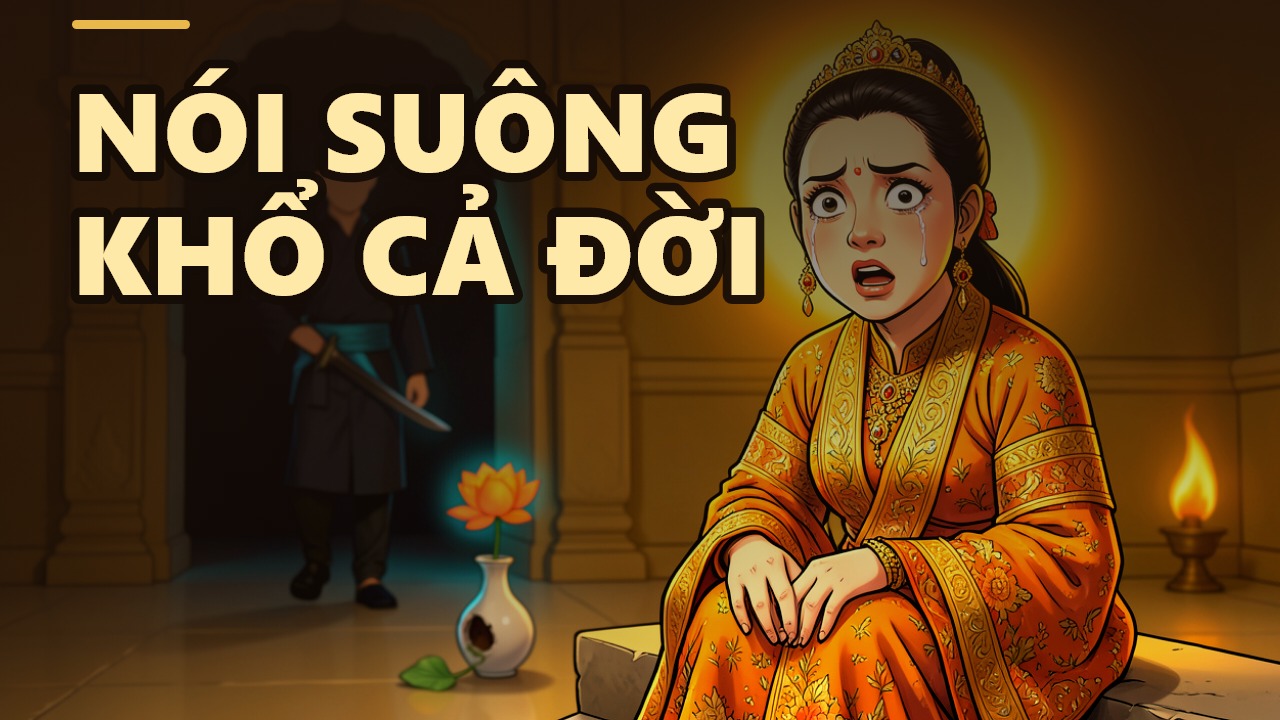
During the time of the Buddha, King Prasenajit invited him to the palace to teach the Dharma to his consorts. Among them were two: Queen Mallika, who studied attentively, recited the teachings fluently, and applied them in her life. The other consort, Vasapati, learned reluctantly, spoke about it carelessly, and did not practice at all.
The Buddha recognized this and spoke a famous verse: "Just as a beautiful flower has color but no fragrance, so also, well-spoken words without practice are of no benefit. Just as a beautiful flower has both color and fragrance, so also, well-spoken words with practice bring peace and happiness."
The two consorts clearly demonstrated this. Mallika practiced and thus became a virtuous wife and a wise counselor, bringing benefit to the people and the kingdom. Vasapati, who only spoke empty words, not only gained no merit but also failed to recognize the hatred harbored in her own child's heart, which eventually led to a terrible crime.
**Speaking without Doing: Unpredictable Consequences**
The same is true today. Many who study the Buddha's teachings hear the Dharma, understand it, feel inspired, and then immediately retell it to others as if they had already attained enlightenment. But in truth, they are borrowing the Buddha's authority without paying the "royalties"!
Thầy Chân Quang emphasizes: "When we hear a teaching, we should diligently practice it first, and never rush to become a teacher to the world."
He gives an example: one hears that one must remain calm before praise and criticism, but the moment one steps out the door and is bitten by a dog, one flies into a rage. If one speaks without having practiced, one will fail as soon as challenges arise. More seriously, if one speaks before practicing, one may never practice at all.
**From Understanding to Doing: A Great Distance**
Between hearing and understanding, and actually practicing, there is a great gap. Some people hear the Dharma with great emotion, believing their life has turned a new page, only to return to their old ways six months later. Thầy calls this a "syndrome": one hears well and understands much, but has never applied the teachings.
Some even boast that they have changed, but in reality, they remain indifferent to the suffering of others. So how does one transform understanding into true merit?
**The Right Way to Practice: Paying Homage, Making Vows, and Doing Small Acts**
Thầy Chân Quang suggests a three-step process: Pay homage to the Buddha daily, vowing to practice what you have learned. Begin by doing small, kind deeds within your ability. Maintain discretion and avoid boasting, so that your blessings from merit continue to grow.
For example, each day, one can prostrate before the Buddha and promise: "Please help me learn to love and share with others." Then, when meeting someone whose home was destroyed in a storm, helping with a few hundred or thousand dong is the first step of practice. Gradually, the capacity for greater deeds will come. But one must always remember: "When we do good deeds, we must keep them discreet, because if we boast, next time we may not be able to do them."
**Color and Fragrance: The Dharma Blooms Fragrant with Practice**
Ultimately, the purpose of studying the Buddha's teachings is not to become an eloquent lecturer, but to live a peaceful, joyful life, to transform oneself, and to help others. Only when we practice do our words gain a fragrant scent, the power to move hearts, and the ability to bring peace to the listener. Let us begin today: little by little each day, practicing before speaking.
AI-assisted translation from the Vietnamese original.
Read in Vietnamese →