
Having and Not Having: The Bodhisattva’s Secret in Life
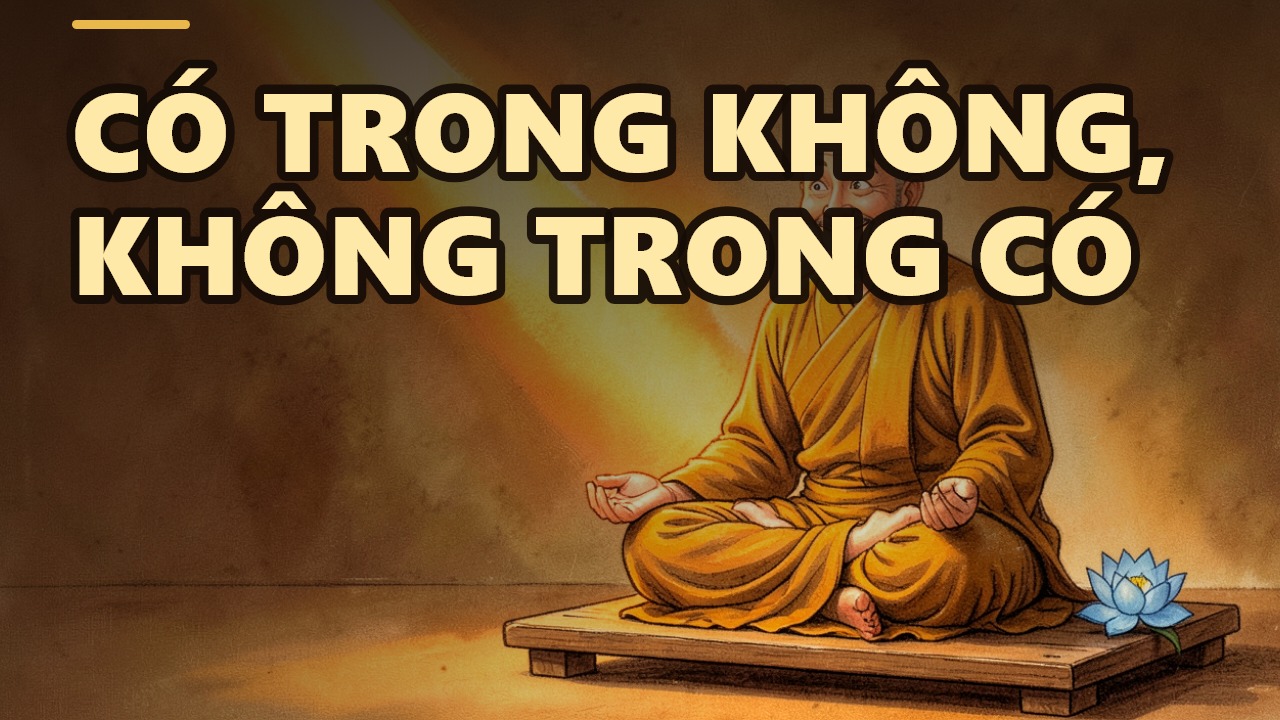
Have you ever wondered why some things we hold onto feel empty, while other things that seem non-existent become powerful realities? In the dharma talk titled "The Bodhisattva and the Dharma of Existence and Non-Existence," Venerable Thich Chan Quang guides us into the world of the bodhisattva. Here, existence and non-existence are not separate; they are two sides of one reality. This teaching reveals four principles about having and not having, helping us see life clearly and live with peace like a bodhisattva.
## Four Mantras on Existence and Non-Existence
Venerable Thich Chan Quang begins with four statements that may seem paradoxical: To have is to be empty; to be empty is to have; what exists becomes nothing; what is nothing becomes something. These categories serve as guideposts for understanding the dharma of existence and non-existence. While they may sound complex at first, truly grasping them brings a significant step forward on the spiritual path.
"In this universe, there is nothing that is absolutely non-existent, and there is nothing that is absolutely existent."
These four phrases are the key to understanding dependent origination, impermanence (anicca), and the presence of all phenomena. Let us explore this together today.
## To Have Is to Be Empty: Seeing the Emptiness of All Things
Consider a living person. They are someone’s child, someone’s parent, a director, a worker, a friend, or a relative. Their body has hair, nails, and countless elements changing daily. Yet, upon close inspection, everything is temporary. When facing another person, the bodhisattva sees the empty and meaningless nature of what appears to exist. Nothing remains but suffering (dukkha), just as the Buddha taught in the Four Noble Truths.
"What does 'to have is to be empty' mean? It means that even when all things are present and existing right now, we see their emptiness immediately. They are here, yet they are empty and devoid of inherent meaning."
When we see this clearly, we no longer cling. If wealthy, we smile and use our assets to help others. If poor, we live peacefully in simplicity. If loved, we give thanks. If hated, we also give thanks, seeing it as an opportunity for practice. This is the freedom of the bodhisattva.
## To Be Empty Is to Have: From Void, the Universe Emerges
Imagine enclosing a void, removing all air and germs. Is there anything left inside? Yes, the gravitational field of the Earth remains. The universe consists of more than just matter; it includes gravitational fields, electromagnetic fields, spiritual fields, and supernatural fields. It is through these fields that matter, heavenly realms, light waves, and even intuitions about distant events can connect.
"First, there are fields, and then objects arise within those fields."
Thus, from what seems like complete emptiness, we can recognize the presence of the entire universe. When our mind/heart is still enough to reach a state of no-thought, wisdom and compassion flow endlessly. This is the truth that "to be empty is to have."
## What Exists Becomes Nothing: The Law of Impermanence
All things arise and eventually decay. Humans go through birth, aging, illness, and death. Houses, castles, and cities also crumble. The world has seen many civilizations rise and fall. Ancient people found fossilized wheel tracks millions of years old, proving that humans did not appear recently as science once thought. The Buddha spoke correctly about the history of the Earth.
"Everything that exists will slowly turn into nothing. Humans are born, grow up, age, get sick, and die."
Understanding impermanence (anicca), we stop clinging to anything. Loss no longer crushes us, and success no longer intoxicates us. The bodhisattva views life through the lens of change, so their heart remains always at peace.
## What Is Nothing Becomes Something: The Power of Faith
The teacher shares a story. There was a beautiful stone. One person wanted to split it for paving stones. Another man, unwilling to let this happen, invented a tale that a deity resided in the stone. Rumors spread, and villagers came to burn incense and pray. Strangely, some who prayed received children or wealth. As more people believed, the stone became increasingly sacred. Eventually, a deity from a higher realm descended to guard that faith. From a baseless rumor, the stone became a genuine spiritual site.
"When too many people direct their minds toward something, a holy being from a higher realm comes down to preserve that faith for humanity."
Similarly, many bodhisattvas, such as Avalokiteshvara, did not appear in historical records during the time of the Buddha. However, due to the faith of millions of sentient beings, they manifested to save people in times of crisis. The teacher explains that Lady Yasodhara manifested as the bodhisattva Avalokiteshvara so that beings would have a refuge when facing karmic consequences. Because the Buddhas could not bear to betray this faith, they turned non-existence into existence.
This is the subtle wonder of Mahayana Buddhism: when faith is strong enough, reality manifests.
## Living Like a Bodhisattva in the World
Seeing clearly the interplay of having and not having, we live in the world without attachment. We do not deny worldly life; we still work and love, but our hearts remain clear like an autumn lake. The teacher explained this simply yet profoundly, allowing each person to begin their practice from small, everyday details.
Please let this dharma talk permeate your consciousness. Whenever you face difficulties, remember: everything that exists dissolves, and everything that seems non-existent holds the seed of life. By practicing to see with the eye of wisdom, you will find that the path of the bodhisattva is not far away.
May all Buddhists enjoy a peaceful spring, strive diligently in study and practice, and attain freedom amidst the dance of existence and non-existence.
AI-assisted translation from the Vietnamese original.
Read in Vietnamese →