
What Joy Is There When Life Is Being Consumed by Fire?
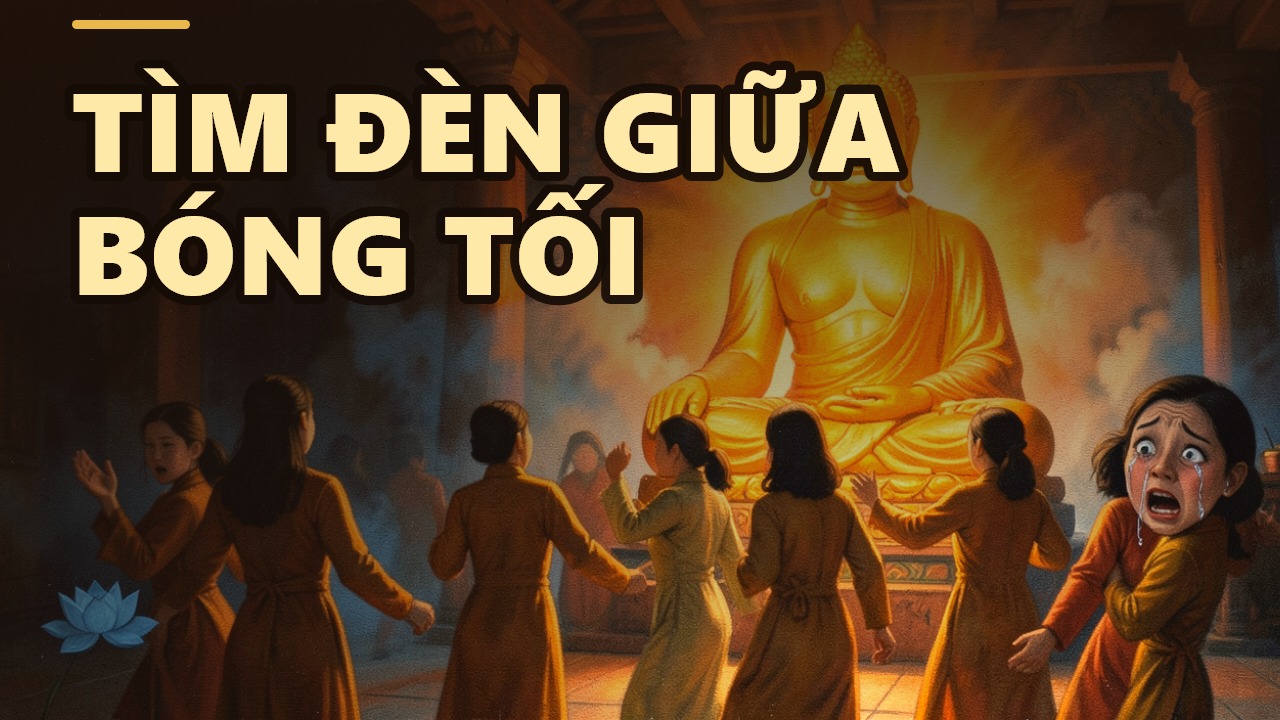
**SUMMARY:** Through the story of the drunken women, the Buddha taught: what you wish for others, you will become yourself. Alcohol stirs up negative habitual tendencies, creating openings for demons to disrupt the path. Seek the lamp to illuminate the mind.
Have you ever wondered: when our life is immersed in darkness, why do we keep seeking fleeting pleasures? The Buddha once taught: "What joy is there when life is being consumed by fire, when darkness envelops? Why not seek the lamp?" This teaching remains profoundly relevant in modern life, especially when we consider the following story.
**The Story of the Drunken Women Before the Buddha**
During the Buddha's time, a devoted laywoman named Visakha, who was very wealthy and had attained the stage of Stream-enterer, had many female friends. Because of their roles as wives, these women often poured wine to serve their husbands. However, the law of cause and effect caught up with them: they themselves became addicted to alcohol. Deep within their hearts, they always wanted their husbands to drink, and so they had to bear a similar karmic consequence.
One day, these women arranged to visit the monastery to hear the Buddha teach. Yet they secretly brought alcohol with them. While waiting, they drank themselves into a stupor. When the Buddha began his discourse, not only did they fail to listen, but they stood up, started babbling incoherently, singing and dancing, and even let their garments fall loose. At that moment, the demon king Mara possessed them, turning them into disruptors of the dharma assembly. The Buddha had to use his spiritual power to emit a radiant light to awaken them. Once their drunkenness faded, the Buddha admonished them with this verse:
"What joy is there when life is being consumed by fire, when darkness envelops? Why not seek the lamp?"
This verse compels us to reflect: Alcohol is just one example. Whenever we let ourselves go, allowing our negative habitual tendencies to surface, that is when "life is being consumed by fire" and "darkness envelops."
**The Lesson of Cause and Effect: What You Wish for Others, You Become Yourself**
In his discourse, Master Chân Quang highlighted a very important point about the law of cause and effect at a deeper level. It is not just about "reaping what you sow," but also: whatever you wish others would do, you yourself will become that person. He said:
"What you wish for others, you will receive yourself. Whatever you desire, you will obtain."
For example, if a wife wants her husband to drink alcohol, she will eventually become addicted herself. A student who is jealous of a classmate and wishes for them to fail will become lazy. Conversely, a teacher who wishes for their students to excel will be exceptionally intelligent in future lives. Someone who frequently invites fellow practitioners to the temple will have strong conditions with the Buddha's teachings. Meanwhile, someone who keeps the teachings to themselves and does not want others to practice will have a delayed understanding of the path.
He also referenced Confucius: "What you desire for yourself, help others achieve; what you wish to attain, help others attain." Buddhism and Confucianism are aligned on this point.
**Understanding Cause and Effect Correctly to Help Each Other**
Master also cautioned against a dangerous misunderstanding of cause and effect. Some people say, "Your poverty is your karma, and you must endure it to exhaust your karma." Or, "Illness is due to karma; let them lie there and repay their debt." This is a wrong understanding. The law of cause and effect does not teach us to be cruel. He said:
"The law of cause and effect does not call us to such cruelty. The law of cause and effect calls us to open our hearts with compassion and help people."
Indeed, when we see someone ill, we must seek a doctor. When we see someone hungry, we must offer food. But we should also not be wasteful. We help appropriately and advise them to create merit, learn a trade, and thereby transform their karmic conditions. This is the spirit of "being wise yet not reckless"—helping others without being extravagant.
**Alcohol Opens the Door for the Demon King**
Alcohol is not inherently evil, but it awakens the latent habitual tendencies within a person. An irritable person becomes even more easily angered when drunk. A lustful person is more prone to transgression. A competitive person will start arguments. He said:
"Alcohol agitates the latent karmic habits buried in our hearts, causing them to arise."
For this reason, throughout history, leaders have often used alcohol to test their disciples. When drunk, a person's true nature is fully revealed. For those on the spiritual path, the goal is not to reveal these tendencies, but to eradicate them. Moreover, when the mind has lapses, Mara or negative forces will exploit them to lead us astray and disrupt our practice. He emphasized:
"The demon king is extremely cunning and malicious, constantly watching for any opening in our minds to possess us."
Therefore, maintaining a clear and bright mind is of utmost importance. Do not let the intoxication of alcohol, fame, or greed, hatred and delusion cloud your judgment.
**Seek the Lamp to Illuminate the Mind**
Through this lesson, we see that whenever we wish for something for someone else, we must first look within ourselves. Whenever we slip into indulgence, we should remember the Buddha's verse and seek the light. Eating vegetarian food, keeping precepts, practicing meditation, and doing good deeds—these are the lamps that illuminate the way. Let us love and help others with wisdom and in the right measure, to transform our karmic forces together. Do not let your life be consumed by fire in darkness. Step into the light.
AI-assisted translation from the Vietnamese original.
Read in Vietnamese →