
Weeds Grow Wild, Rice Must Be Planted: Why Does the True Dharma Need Cultivation?
In this dharma talk, Venerable Thích Chân Quang compares the true Dharma to rice and false teachings to weeds—things that sprout on their own without anyone planting them. For the Buddha's teachings (Dharma) to endure, each of us must nurture, protect, and spread goodness.
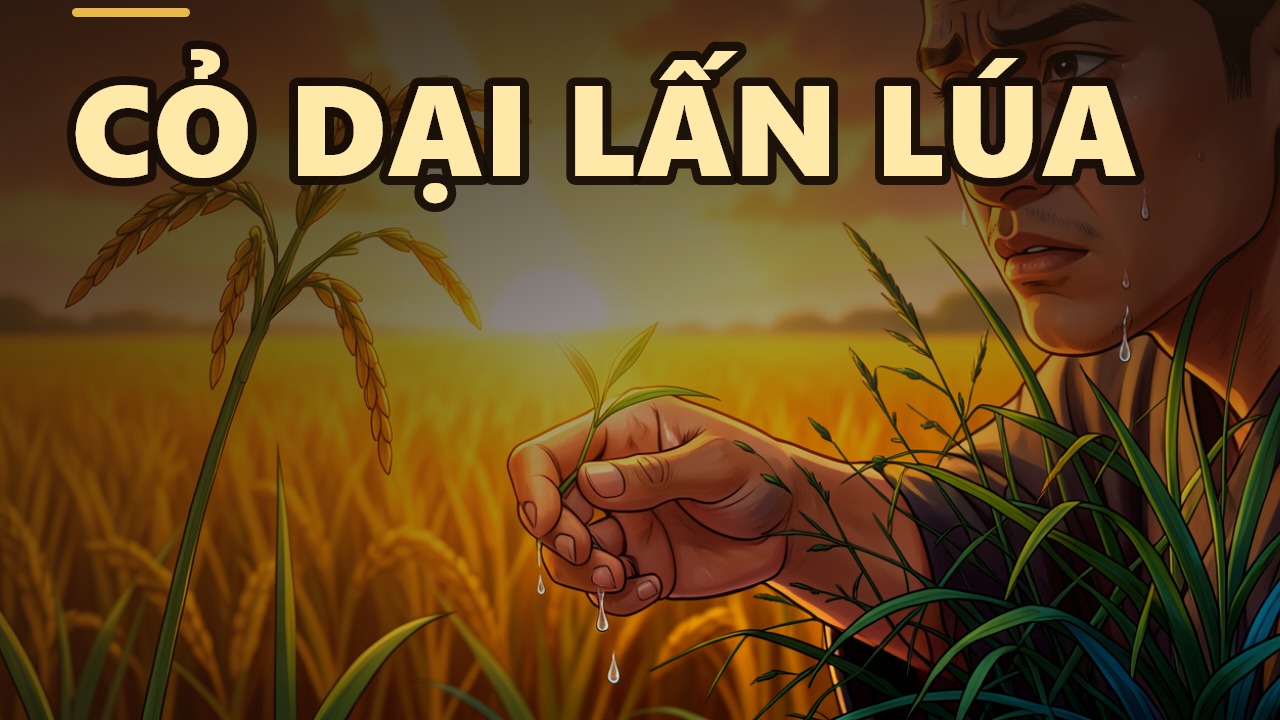
Have you ever wondered why good and noble things are so hard to sustain, while superstition and temptation spread so easily, like weeds? In a talk rich with metaphor, Venerable Thích Chân Quang used the image of "weeds and rice" to explain this, pointing out that the true Dharma—like rice—must be planted and tended every day. So what must we do to keep those grains of rice from being overrun by weeds?
The True Dharma Is Like Rice, False Teachings Are Like Weeds
Standing between a lush green rice field and a wild patch of grass, the Venerable posed a question: "Weeds grow naturally without any hard work of planting, don't they? Rice takes great effort to grow, and the truth lies right there." Indeed, rice must pass through many stages: plowing, harrowing, sowing, transplanting, tending, and clearing away pests. Weeds, on the other hand, need only a bit of rain and a little soil to spring up in abundance—even overtaking the rice fields. This is much like the true Dharma and false teachings in our spiritual life.
"Rice is like the true Dharma. If we don't plant it, it won't grow. Even if we plant it but don't tend it, it will still be ruined. And what about weeds? Weeds are like false teachings. No one needs to plant them. Left alone, they simply grow."
The true Dharma is the teaching of the Buddha, guiding people toward compassion, wisdom, and non-self (anatta). It does not exist on its own; it must be sown in each person's mind/heart through hearing the teachings, practicing, and living them out. False teachings, by contrast—superstitions and mistaken beliefs—multiply easily because they strike directly at the greed, hatred and delusion already present in every sentient being.
Why Do False Teachings Spread So Easily?
Imagine you are angry because someone has insulted you. Someone whispers in your ear: "I'll give you this talisman. Cast a spell on their house, and in three days misfortune will strike them." After hearing that, doesn't it feel satisfying? But if you go to the temple and the teacher advises, "My child, forgive and let it go," doesn't that feel uncomfortable? The Venerable pointed out exactly this:
"False teachings strike at greed, hatred and delusion, and encourage them. The true Dharma teaches us to fight against ourselves, so it feels unpleasant."
Precisely because false teachings cater to our selfish desires, they need no temples and no sermons—a whisper from one person to another is enough for them to spread. The true Dharma is the opposite: it demands that each of us strive to overcome the ego and live with greater selflessness—something that is never easy.
Morality Needs Both the Spirit and the Spiritual
In life, human beings need three things: material well-being, the spirit, and the spiritual. If we teach morality through theory alone, the results will be very limited. But when people believe in cause and effect (karmic law), and believe that divine beings are watching, they will naturally hold themselves to what is right. The Venerable emphasized:
"Morality belongs both to the spirit and to the spiritual, and only with both can we build morality in society."
That is why, alongside schools and government institutions, we deeply need temples—places where people come to quiet their hearts, learn the teachings, and willingly live virtuous lives. A temple is not merely a place of worship; it is a center of spiritual education, helping to build a peaceful and civilized society.
Each Person's Responsibility to the True Dharma
If we neglect our spiritual life, the weeds of superstition will grow on their own and choke out even what is good and beautiful. But if we know how to cultivate and care for the true Dharma—through studying the Buddha's teachings (Dharma), practicing meditation, and living according to the Buddha's guidance—then society will stand firm. The Venerable advised:
"The spiritual life, if it is to be free of superstition, must always be cared for—it must be built up and nurtured."
This is the work of monastics and of those in government, but above all, it is the work of each of us. Let each of us be a diligent farmer, pulling weeds day by day and tending the rice field of our own mind/heart, helping to spread goodness to everyone.
In Closing: Sow and Protect the Good Seeds
Weeds grow without being planted, but rice must be sown by human hands. The true Dharma is the same: it must be nourished through study and practice, through faithful devotion, and through concrete action. What can you do today to make the rice field of your spirit greener and more vibrant? Take time to listen to a dharma talk, read a page of scripture, or simply treat others with greater kindness. That is how you "pull the weeds and spread the fertilizer" so that the true Dharma may endure.
AI-assisted translation from the Vietnamese original.
Read in Vietnamese →