
Temples, Monks, and Lay Followers: The Secret of a Happy Village
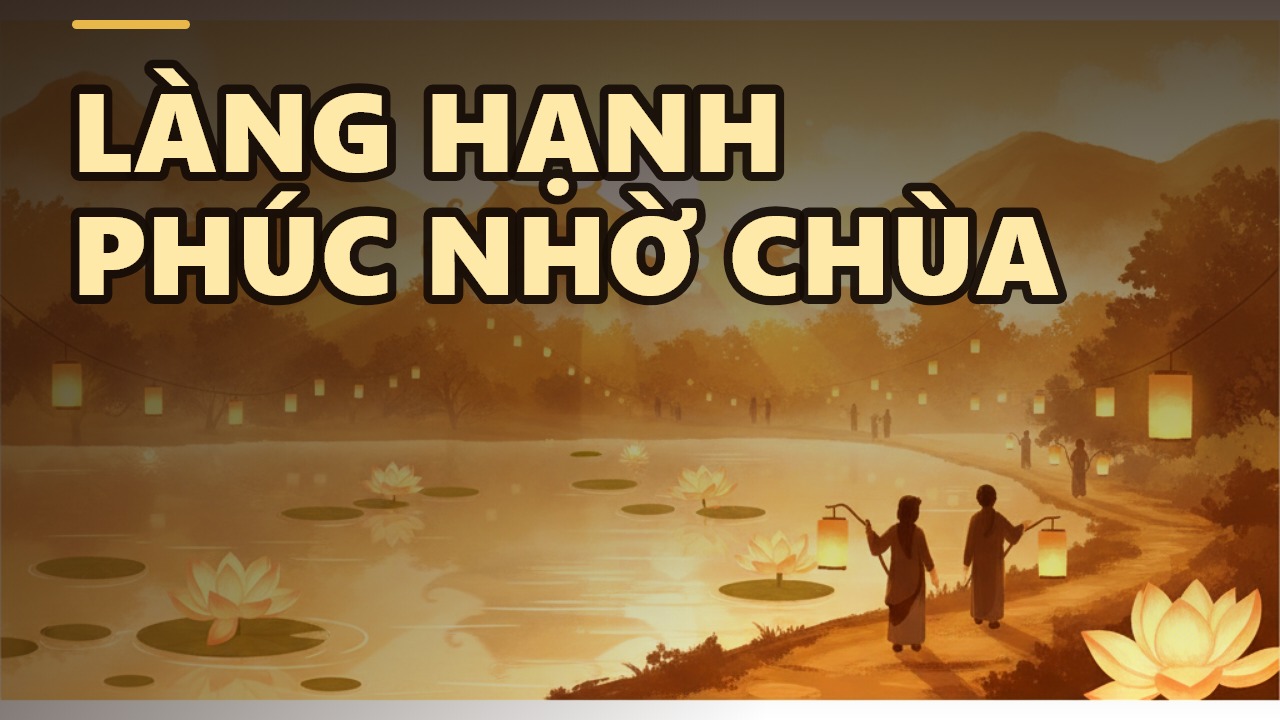
I have long held a question close to my heart: What truly makes a village happy? Is it the concrete roads, the well-built schools, or the vast rice fields stretching to the horizon? However, when I listened to Venerable Thich Chan Quang speak on the topic of "Temples, Monks, and Lay Followers," I realized that the genuine happiness of a rural community does not lie in tangible things. Instead, it resides in the presence of three profoundly sacred elements: a temple, a sincere monk, and devoted lay followers.
### A Letter Sent from a Century Ago
In history, there exists a precious letter from Mr. Nguyen Sinh Sac, the father of President Ho Chi Minh, sent to the people of Nghe An province. He urged his fellow citizens to follow Buddhism. Yet, this letter was intercepted by French secret police and remained lost for nearly a hundred years until it was finally discovered. At that time, he possessed far-sighted wisdom, understanding that to preserve the nation and achieve independence, one must develop Buddhism. Venerable Thich Chan Quang spoke with deep emotion, saying:
"Buddhism is the blood and flesh of our nation."
It took us nearly a century to fully comprehend his teaching. Today, as our country faces various divisive forces, the role of Buddhism becomes even more critical. It is not merely a religion; it is a cultural foundation and a source of spiritual strength that helps our nation remain steadfast.
### The Temple – Where the Soul of the Countryside Converges
A temple is not just a place to worship the Buddha; it is the spiritual heart of the entire village. It is where people turn their minds toward to awaken their spiritual life. Venerable Thich Chan Quang emphasized:
"In any village that has a temple, a monk, and lay followers, we can say that it is a happy village."
These are the three pillars that create the spiritual vitality of a rural community: a temple to direct the mind, a monk to provide guidance, and lay followers to practice together. In some places, only the old foundations and weathered gates of a temple remain, without a monk or any devotees. This is the greatest misfortune. Therefore, the authorities performed a monumental task when they sought to rebuild temples, invite monks back, and encourage people to embrace the path. Such merit is immeasurable.
### The Monk – The Spiritual Guide
However, having a temple without a monk means it remains nothing more than an old foundation or an ancient gate. The monk is someone who dedicates their entire life to practice, guiding others, explaining the teachings, and bringing the Buddha's teachings (Dharma) into daily life. A truly practicing monk is described as being "more precious than diamond, jade, or anything else in the world." Venerable Thich Chan Quang once exclaimed:
"We must ensure that every village in Nghe An province has a temple, and every temple has at least one monk."
Yet currently, we face a severe shortage. In many areas, lay followers must travel great distances to find a temple with a resident monk. Abroad, many Christian churches have installed automatic bell-ringing devices because there are no longer any priests available. These realities bring us deep sorrow.
### The Abyss Behind Worldly Joys
The worldly realm constantly invites us with fleeting pleasures: laughter, praise, romance, and entertainment. But who dares to look deeper? Venerable Thich Chan Quang shared a story about a lawyer complaining about marriage. When falling in love, everything seemed perfect, but upon living together, all sorts of problems emerged. He concluded:
"Behind what we think are worldly joys lies only an abyss."
This is true. Worldly happiness is short-lived, temporary, and often brings along negative consequences. Only when we enter the path and engage in practice do we see the opposite truth: the pure, mindful, and disciplined life of the monastics is the real happiness.
### Ordination – A Noble Choice
Still, there are young people who renounce everything, don the brown robes, and step into the temple. What drives them to make such a choice? It is not because they enjoy a austere lifestyle, but because they have entered the path and tasted true happiness. This happiness is not found in transient pleasures, but in equanimity amidst praise and blame, and in stillness amidst storms. Venerable Thich Chan Quang shared:
"The clean, mindful, disciplined, and restrained life of the monastics is truly happiness."
No one can fully answer why this choice is made unless they have entered the path and practiced themselves. However, we can choose a mindful life right now: knowing how to live with meditative concentration, practicing compassion, and learning letting go.
After listening, I felt a deeper appreciation for the value of spiritual life. It turns out that to have a happy village, we do not need excessive wealth. We need a temple, a monk, and lay followers who know how to return home. Starting today, let us begin by practicing a compassionate smile, speaking kind words, or dedicating a few moments to meditation each morning. This is how we contribute to building our homeland, preserving our country, and nurturing happiness within ourselves.
AI-assisted translation from the Vietnamese original.
Read in Vietnamese →