
The Little Novice Who Attained Enlightenment by Watching a Ditch Digger: The Secret of Gathering the Mind
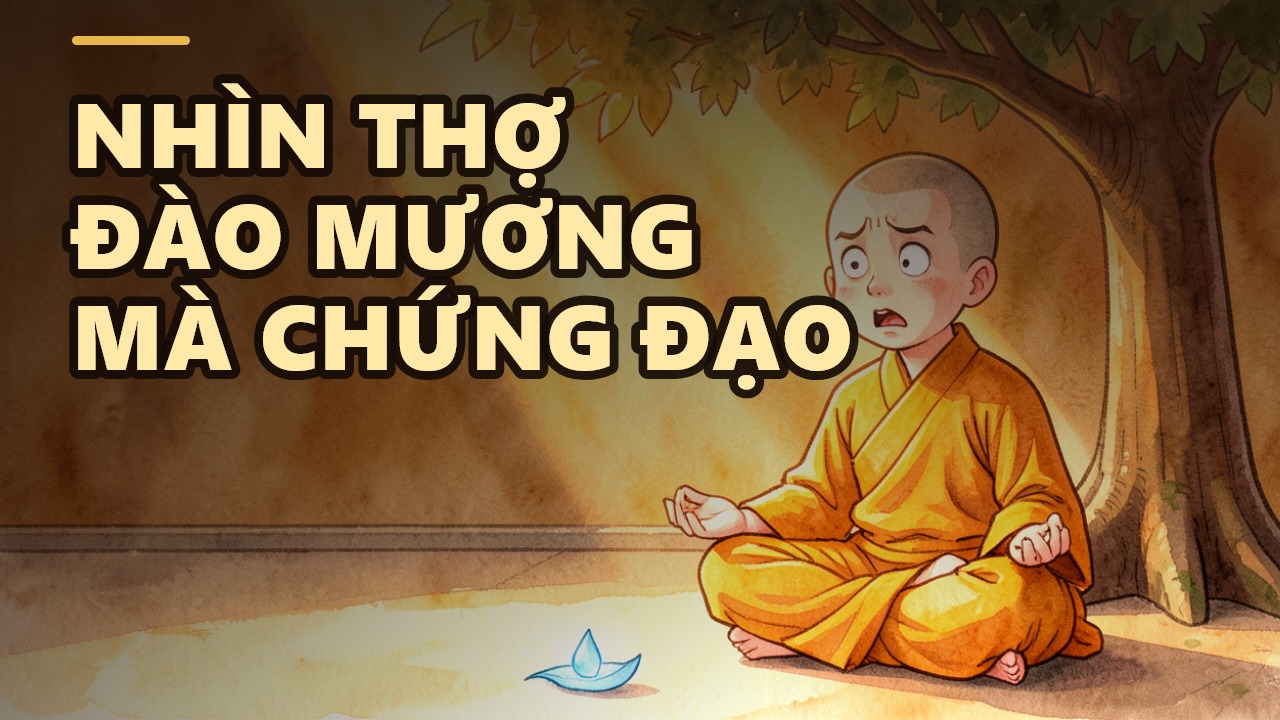
Have you ever suddenly seen a carpenter shaping wood and thought, “Why can’t I shape my mind just as they shape timber?” That very moment is when a young novice in the time of the Buddha attained enlightenment. Let us explore this story together.
The Novice and Three Lessons from Craftsmen
This event took place during the lifetime of the Buddha, when Venerable Sariputta had a young samanera under his guidance. One day, master and disciple joined the Sangha for their alms round. Along the way, the novice saw men digging channels to guide water, others straightening arrows, and still others carving wood. He connected these sights to the practice of mastering one’s own mind. A fierce determination arose within him. He asked his teacher to carry the alms bowl while he returned to the monastery to sit in meditation. Through good conditions, he attained enlightenment after six hours. The Buddha used supernatural power to extend time so that the novice could remain peacefully in meditative concentration.
The Buddha praised the novice with this verse:
“Those who dig channels guide the water; those who make arrows straighten the shafts; carpenters carve the wood; but the wise gather their minds.”
The images of guiding water, straightening arrows, and carving wood symbolize the taming of our own mind. Water flows freely, and raw wood has no fixed form, yet human hands can direct them. Our mind is the same. If we apply mindfulness and diligence, we can control it.
Enlightenment Is Not Force, But Ripeness
Many people hear this story and immediately feel ambition: “Why haven’t I attained enlightenment?” Venerable Thich Chan Quang reminds us:
“Never force yourself to attain enlightenment in this life or even this year. Enlightenment is a fruit that ripens. When it is ripe, it falls naturally. As for us, we simply plant seeds, tend the soil, remove weeds, and provide water and fertilizer.”
Spiritual practice is like farming. We cannot force a tree to bear fruit instantly. We only need to sow the seed, water it, fertilize it, and clear the weeds. When the fruit is ripe, it will fall on its own. Therefore, do not crave results. Just practice diligently according to the Dharma each day.
Association Reveals Your Karmic Consciousness
What was special about the novice was his ability to turn everything he saw into a lesson on gathering the mind. Venerable Chan Quang explains:
“This sign, this association, tells us what lies within our consciousness and what karma resides inside us.”
Whatever occupies your mind, you will associate with it. For example, someone afraid of heights worries when seeing objects placed high up; someone with a poetic soul sees countless shapes in the clouds. Similarly, when looking at a tiger, some think of strength, others of its fur, and others of traditional medicine made from tiger bone. These associations reflect our karmic consciousness and karmic retribution.
In ancient times, there was a custom where infants would pick objects on their first birthday to predict their future path. Some chose books, others pens, and some grabbed prayer beads. These choices revealed their karmic tendencies. Thus, observe your mind whenever thoughts arise, to understand what karma you are carrying.
When You Practice Sincerely, You Are Never Alone
In the story, the Buddha used supernatural power to stretch time so the novice had enough conditions to attain enlightenment. This shows that Buddhas always support sincere practitioners. Venerable Chan Quang reassures us:
“When we practice sincerely, we are good children of the Buddha. And as good children, the Buddha always watches over, guides, and protects us... we are never alone.”
Even if we cannot see it with our eyes, the love and protection of the Buddhas and bodhisattvas are always present. Sometimes, when we are about to forget our mindfulness, someone reminds us; when we face difficulties, luck suddenly appears. These are signs of divine support. We only need to trust and continue walking forward.
Praise and Blame Measure Spiritual Strength
During practice, praise and criticism offer opportunities to see if we are still attached. Venerable Chan Quang says:
“The spiritual power of a practitioner is measured when faced with praise and blame.”
If you rejoice when praised and become angry when criticized, you have not yet mastered your mind. Praise can deceive the ego, causing you to wear the garment of approval forever, troubling those around you. Criticism can also cause discomfort and complaint, affecting others. Learn to remain calm amidst praise and blame, viewing them as tests to train your mind.
The wise are like solid rocks, unmoved by any wind. Amidst praise and blame, they remain serene. Let us learn this virtue, so our lives may be lighter and more peaceful.
Every moment in life is an opportunity for practice. Look at the world with awakened eyes, turning everything into a lesson. Do not rush to seek results; just nurture your practice day by day. And never fear loneliness. The Buddhas are always watching over you, reaching out to guide you through hardships. Be diligent, loving, and live fully in each moment.
AI-assisted translation from the Vietnamese original.
Read in Vietnamese →