
Just One Meaningful Word: From a Brutal Executioner to a Noble One
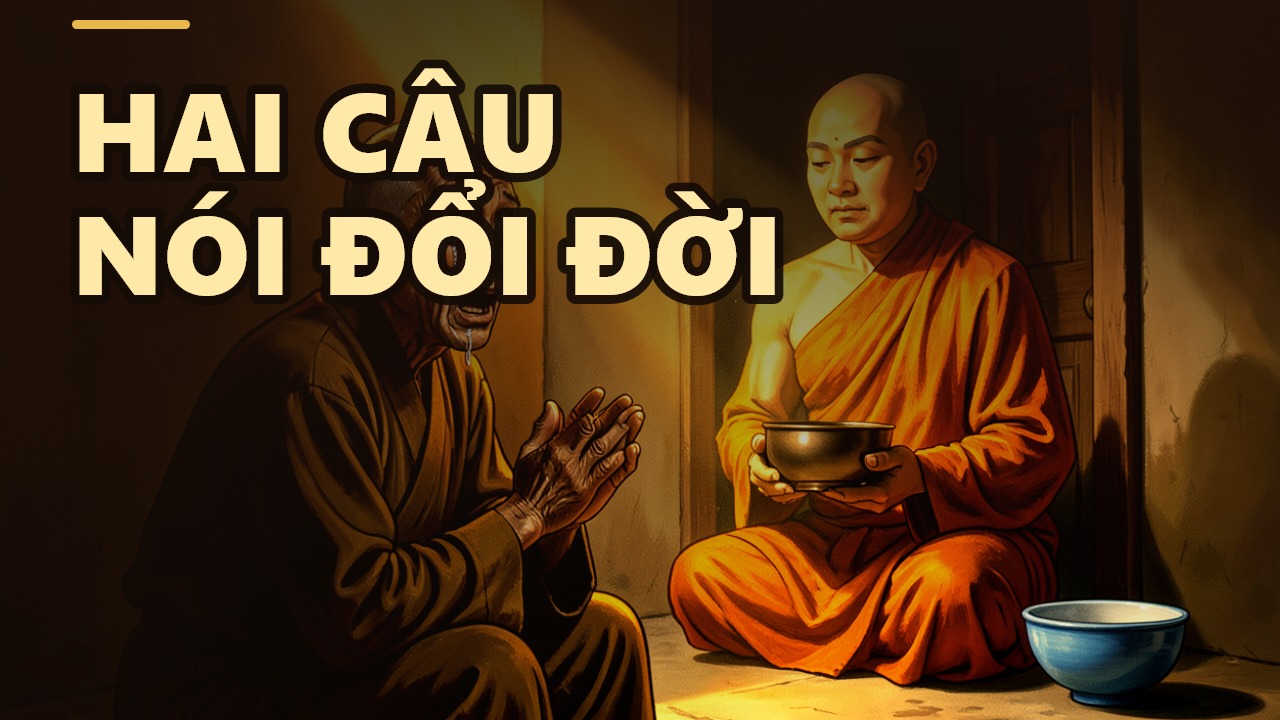
Do you believe that a single word spoken at the right moment can change an entire life? In the Dhammapada, there is a story about a brutal executioner who killed nearly three hundred people in one morning. Yet, after hearing just two sentences from Venerable Sariputta, he attained the fruit of Stream-Entry. Where does the true power of speech lie?
The Unblinking Killer
Legend tells of a notorious bandit with teeth yellowed like brass. He joined a gang and grew increasingly violent until the royal court had to surround them with a large army. When captured, the king ordered their execution. No one dared to be the executioner for more than three hundred men at once. So, a corrupt official promised to spare the gang leader if he would kill his own brothers. The leader refused out of loyalty. Finally, another bandit—the most ruthless among them—volunteered. He beheaded each man coldly, blood splattering over him while his face remained impassive, terrifying everyone present at the execution ground.
Thanks to this act, he was pardoned and became the chief executioner of the court. For many years, he carried out executions without blinking. Even when he retired in old age, he remained healthy, eating well and sleeping peacefully. But one day, Venerable Sariputta came to his home on alms round.
Two Miraculous Blessings
That day, the old executioner was preparing to enjoy a bowl of honey milk porridge when he saw a dignified ascetic standing at his door. Filled with respect, he offered the porridge and fanned the monk as he ate. After finishing, Venerable Sariputta blessed him: "In all things in this world, there is cause and effect (karmic law). If anyone understands cause and effect and lives purely, they place their faith in the Buddha, the Dharma, and the Sangha. Their life will walk on a good path. I wish for you to believe in cause and effect and take refuge in the Three Jewels to escape suffering."
Hearing this, the executioner’s whole body trembled. He remembered the countless people he had killed and felt fear. Venerable Sariputta comforted him: "Did you kill by your own will or under orders?" Since he acted under the commands of officials and the king, the elder said: "You are not at fault. I accept you as pure. Receive cause and effect calmly, and place your faith in the Three Jewels."
Those words were gentle yet full of meaning. The executioner calmed down and unexpectedly attained the fruit of Stream-Entry right there.
The Buddha’s Teaching on Speech
When the monks heard this story, they wondered: How could someone with bloody hands attain enlightenment after hearing only two sentences, while many long-time followers had not achieved it? The Buddha replied:
"Do not measure the teachings of the Tathagata by the quantity of lectures. Often, speaking much is not timely, not aligned with conditions (dependent origination), and lacks complete meaning. It is better to speak one word that is full of meaning, aligned with conditions and timing, which can bring pure joy and peace to others."
The Buddha taught: "Even if you speak a thousand empty and useless words, it is not as good as one word full of meaningful peace." Speech does not need to be abundant; it needs to be timely, aligned with conditions, and saturated with meaning. This is speech arising from compassion and wisdom.
Profession Creates Karma, Karma Creates Profession
Master Chan Quang expanded on the relationship between profession and karma. Profession creates karma, and karma also creates profession. For example, whether a pho seller accumulates merit or demerit depends on how they cook, their ingredients, and their attitude toward employees. A teacher who dedicates themselves daily increases their blessings from merit every day. A loan shark who pushes others into destitution creates heavy negative karma.
Karma creating profession means that thoughts and speech from past lives guide us into our current work. Someone who cursed others as "prostitutes" might be reborn into such a life; someone who called others "robbers" might join a gang in a future life. We often curse others beyond their actual faults, and our mouths create karma that leads us into corresponding professions.
Master Chan Quang analyzed: "This is how profession creates karma and karma creates profession." If we did a certain job in a past life, doing the same in a future life may not make sense because eras change. However, karma across lifetimes can lead us to new professions suited to our mindset. For instance, if one loved mechanics in a past life, they might become an engineer in this life, even if they were a doctor before.
Negative Times Negative Equals Positive – Reflecting on Cause and Effect
There is a profound paradox in cause and effect (karmic law) that few notice: Is killing criminals a sin? According to Master Chan Quang, in algebra, a negative number multiplied by a negative number yields a positive result. Similarly, "treating evil people with severity can be a good deed."
He shared that he once thought simply: killing equals sin. But upon reading about a French executioner who lived healthily into his seventies, eating and sleeping well, he reconsidered. That executioner was not haunted by killing death-row inmates. Consider national heroes like Tran Hung Dao and Pham Ngu Lao; their hands were stained with blood, yet through them, the nation gained glory. Thus, firmness against evil can be a virtue.
In Mo Yan’s novel *Sandalwood Death*, ancient punishments were gruesome but served to maintain social order. An executioner skilled in their craft practiced a profession that helped stabilize society.
The words we speak each day are seeds we plant. Learn to speak less but speak correctly, speak from the heart, and speak with wisdom. One meaningful word can change someone’s life, and it can also change your own. Practice listening and choose words that are timely and aligned with conditions. As the Dhammapada teaches:
"Even if you speak a thousand empty and useless words, it is not as good as one word full of meaningful peace."
AI-assisted translation from the Vietnamese original.
Read in Vietnamese →