
Only Four Verses Before Meditation, Yet an Entire Battlefield of Practice – Do You Truly Understand?
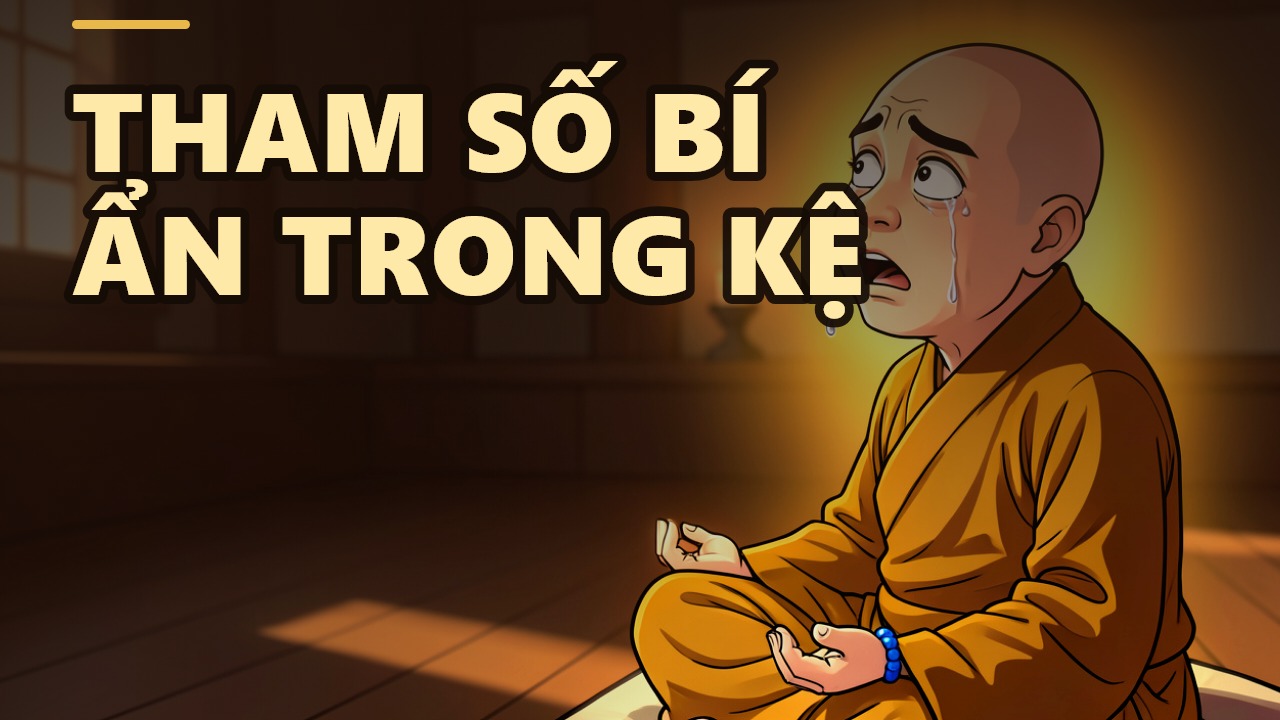
Have you ever wondered why a few short verses recited before sitting meditation are repeated every single day? Is it merely a ritual? Or does a whole path lie hidden within those words? In a recent dharma talk, Venerable Thich Chan Quang revealed the profound layers of meaning in the verses for entering and exiting meditation. Here are some precious insights we can carry into our daily practice.
A brief verse, yet an entire battlefield of practice. The entry verse at Phat Quang Pagoda is only a few lines long, but Venerable Chan Quang emphasized that it is far from simple. It encapsulates moral principles, inner states, and a comprehensive strategy for cultivation. He stated that while the verse is short, it contains a whole battlefield of spiritual practice within it. This "battlefield" combines the insight of non-self (anatta), the technique of gathering the mind with each breath, and a noble sentiment: deep reverence for the Buddha.
Please ask the Buddha to protect me: The mysterious variable of success. The opening line, "Please ask the Buddha to protect me," might sound like a mere request. However, Venerable Chan Quang taught that this phrase imparts a lesson in humility. We cannot achieve anything truly good without favorable conditions and the subtle protection of the Three Jewels. Without the Buddha’s blessing, no one can accomplish great goodness on their own.
He used an interesting analogy: in fields ranging from medicine and science to cooking and business, there is always a "mysterious variable" beyond our control. This represents dependent origination, blessings from merit, and external support. Those who understand this possess right view; those who believe they know everything fall into wrong view and failure.
Body and mind are not self: Planting the seed of sainthood. The core of the verse lies in three phrases: "This body is not me, this mind is not me, there is nothing that is me." This reflects the truth of non-self (anatta) taught by the Buddha. By reciting this daily, we cultivate seeds of liberation in our hearts. Venerable Chan Quang said that anyone who recites this entry verse daily is planting the cause for becoming a saint.
When we deeply penetrate these three phrases, our minds naturally open up. Ego-clinging, selfishness, and jealousy buried deep within gradually dissolve. Even celestial beings praise and protect those who constantly remind themselves of this truth.
Complete reverence for the Buddha: Compensating for those distant from him. The verse includes the line: "In each breath in, in each breath out, complete reverence for the Buddha." Venerable Chan Quang clarified that the word "each" signifies clear awareness of every breath—a specific meditation technique. But why add reverence for the Buddha? He explained that lacking reverence for the Buddha is a tremendous loss for sentient beings.
During the time of the historical Buddha, people saw him and the Arhats directly, which instantly sparked deep respect. This emotion refined their spirits and helped them attain enlightenment quickly. Today, more than two thousand five hundred years later, that feeling has faded. Therefore, when meditating, we must actively awaken reverence for the Buddha with each breath to compensate for this loss.
The exit verse: Remember impermanence to dwell in peace. After meditation, the exit verse teaches another lesson: remembering that this body is impermanent (anicca) and dwelling peacefully within it. The instruction is to abide fully in the body, clearly knowing the whole body, relaxing the whole body, and remembering its impermanence.
Venerable Chan Quang shared the story of Brahmin Nguyet Quang, who had a halo around his belly. When he met the Buddha, the halo vanished. After ordaining, he contemplated the body for three days and attained Arhatship. This story shows that the body is the key to unlocking meditative concentration. Remembering impermanence keeps the mind undisturbed, allowing us to generate compassion and wish for all beings to understand this truth as well.
The heart of the Dharma: Three elements forming the jewel of life. In summary, Venerable Chan Quang taught that these two verses nurture two noble emotions: reverence for the Buddha and love for all beings. Combined with understanding the Dharma and the ideal of practice, these form the "heart of the Dharma." He said that anyone possessing such a heart is a jewel of this world.
Yet, this jewel must be protected, because negative forces always try to destroy the heart of the Dharma through sweet words or psychological shocks. Therefore, we must guard our own spiritual integrity and help others build theirs, so that suffering in the world may decrease. We do not need to look far away. With each breath, each recitation of the Buddha’s name, and each reminder of impermanence, we are building the heart of the Dharma. Let us preserve it, so that we may shine and the world may become less dark.
AI-assisted translation from the Vietnamese original.
Read in Vietnamese →