
Does Death Mean the End, or Does It Last Forever? What Did the Buddha Teach About Annihilationism and Eternalism?
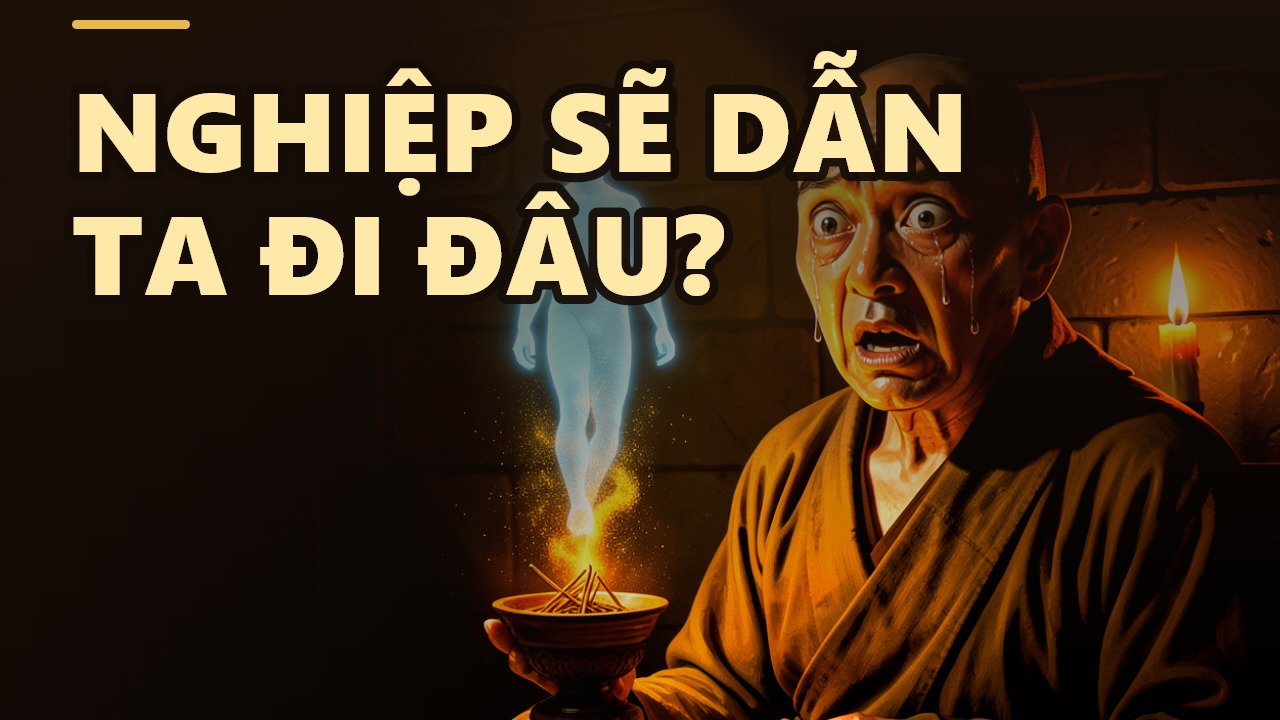
**Summary:** Understanding the two extreme views on death – annihilationism and eternalism – and the Buddha's Middle Way teaching on rebirth and the law of cause and effect.
We often hear questions like: “Does the departed still exist? Is there truly a soul?” In society, some believe death is the absolute end, while others believe in an immortal soul. Yet the Buddha presented a profound and distinct middle path. Today, through the teachings of Venerable Thích Chân Quang, let us explore these two perspectives and how Buddhism views life and death.
**Annihilationism and Eternalism – The Two Extremes**
Annihilationism holds that when a person dies, everything ends, and nothing remains. Eternalism, on the other hand, affirms that a soul exists forever and is never destroyed. Venerable Chân Quang points out that these are conflicting views throughout history, and they remain relevant to this day.
“Annihilationism is the view that death is the end. Eternalism is the view that death is not the end, and the soul will exist forever afterwards.”
Those who follow annihilationism often think that when the physical body dissolves, all ceases. They remember the deceased only as a memory, or worse, forget their kindness entirely. Conversely, those who follow eternalism believe in phenomena like visitation dreams, making offerings, or sacred signs indicating the dead are still present, watching over their descendants.
**The Buddha's Teaching: The Middle Way Beyond Both Views**
The Buddha disagreed with both. He taught about rebirth and samsara – death is not the absolute end, but neither is there an unchanging soul that lasts forever. What creates continuity between lives is karma.
“How is it that death is not the end? Because karma remains.”
At death, the body perishes, but the karma of good and evil one has created remains intact. This karma leads us to rebirth. However, the sense of self, the old name and form, are completely erased. Therefore, one cannot say the person now and the person from the past are one, nor can one say they are two.
**Why Are Both Views Skewed from the Truth?**
Venerable Chân Quang recounted cases of extremely evil beings taken by demons, extremely virtuous ones escorted to heaven by celestial beings, and ordinary beings who must await their conditions. During this waiting period before rebirth, that being still carries the old name and sense of self, giving us the impression of an immortal soul. But upon rebirth, all traces of that vanish: “the human form of Nguyễn Thị Bê is completely erased.”
“That period where the soul exists for a time before rebirth gives us what impression? That the soul exists forever.”
This also explains why some practitioners who recall past lives only see human lives and thus deny higher realms. Others, with deeper meditative concentration, may see heavenly realms, hells, or hungry ghosts. But all are personal experiences, not the essence of truth. The Buddha thoroughly understood the three realms and six destinies, so we should trust his words.
**Seeing It as Me, Yet No Longer Me**
In the conclusion of his talk, Venerable Chân Quang said: “Seeing it as me, yet no longer me.” This is an incredibly subtle answer that does not fall into either extreme.
“Seeing it as me, yet no longer me. Such a few words answer it correctly.”
Recall the story of the general from a thousand years ago: “After samsara of several thousand years, today I return to visit myself.” He knew who he was, but his current life circumstance is completely different. Cause and effect (karmic law) is also like this; it is not so simple that doing good immediately brings blessings in the next life. Some wholesome conditions must pass through many lives before the right conditions ripen to bear fruit. Therefore, do not rush to conclusions with our limited intellect.
**The Task of the Dharma Teacher: Neither Adding to nor Subtracting from the Buddha's Words**
In a world with many differing viewpoints, Venerable Chân Quang emphasized the crucial principle: we must be faithful to the Buddha's teachings and not fabricate new doctrines.
“The task of all patriarchs, masters, lecturers, and dharma teachers in later times is solely to make the Buddha's teachings clearer in our modern era. We must not foolishly create something new that the Buddha did not speak of, for that too falls into wrong views.”
Hearing this, we suddenly feel lighter. Life and death are not things to be feared. What matters is how we live, what karma we create in our smallest actions. Let us practice the Buddha's teachings – for peace in body and mind, with clear understanding of cause and effect, and without attachment to the two extremes. Right now, let us pause for one breath and feel the life that is present within us.
AI-assisted translation from the Vietnamese original.
Read in Vietnamese →