
The Five-Word Mantra That Can Save Your Entire Life: "It Is Still Not Enough"
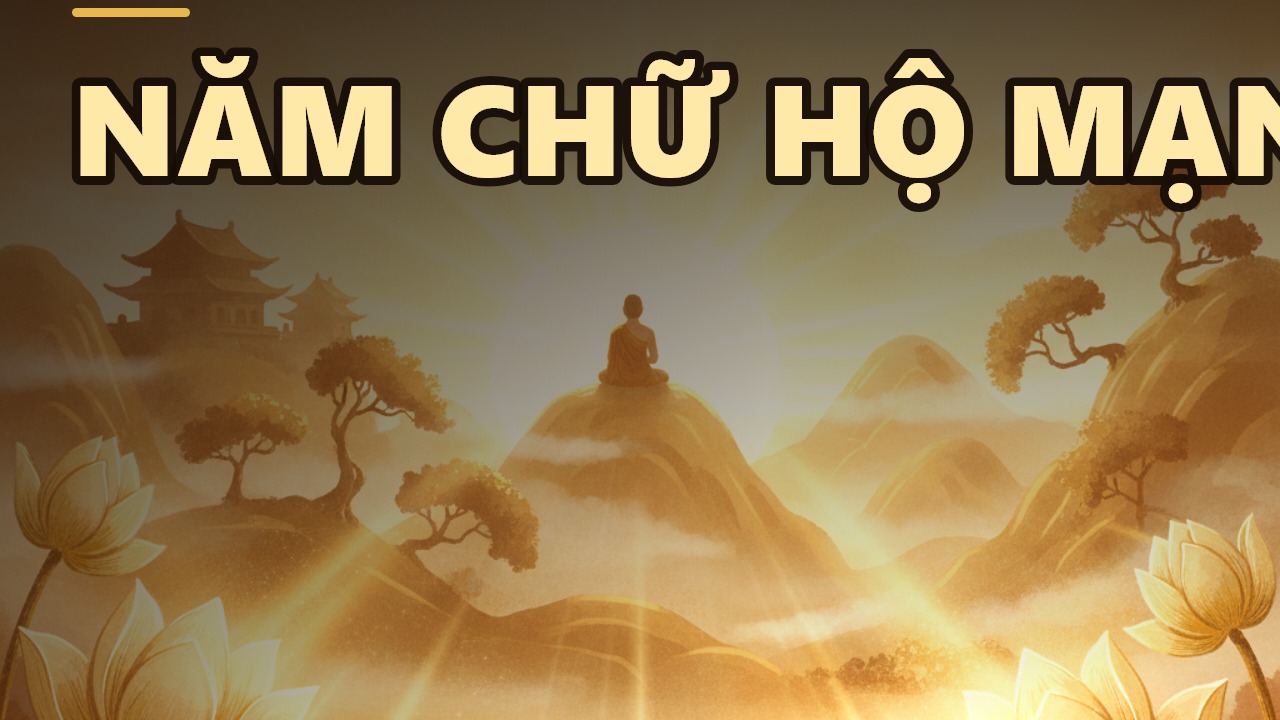
A simple phrase has the power to change your destiny, helping you avoid complacency and danger while advancing on the spiritual path.
Is Visiting the Temple During Tet Enough?
On the first day of the new year, everyone hopes for a peaceful beginning. Many choose to visit the temple to pay respects to the Buddha and pray, leaving with a light heart, believing they have done a good deed. However, Venerable Thich Chan Quang poses a question that demands our reflection. He teaches that simply lighting incense, bowing, praying briefly, and then leaving is a mistake if we think it is sufficient. As he wisely states, "it is still not enough."
Visiting the temple requires listening to the dharma talk and making noble vows on New Year's Day to guide one’s entire life.
Complacency – The Silent Enemy
In daily life, we easily become satisfied with what we achieve. A person who visits the temple once a month may label themselves a devout Buddhist follower. Someone who lives kindly without harming others might think, "this is enough." But the teacher clarifies that a complacent mind causes us to stop moving forward. When we stand still, we slowly decline. Complacency not only hinders progress but also causes us to miss better opportunities.
We believe something is sufficient because our wisdom has not yet expanded. If our wisdom were greater, we would realize that our current state is still not enough.
Why Are Practitioners More Prone to Complacency Than Ordinary People?
The teacher shares an interesting analogy. In secular education, students have clear grades and levels, so even excellent students know they must advance to higher classes. In spiritual practice, without clear stages, practitioners can fall into the illusion that they have already attained enlightenment. Some sit in meditation, experience a quiet mind, and claim to have realized their true Buddha nature. In reality, this is far from sufficient. Beware of teachers who encourage lofty ideas or make you feel equal to the Buddhas and Patriarchs; such guidance can ruin your spiritual life.
The more you practice, the more you should feel inferior to even a speck of dust beneath the feet of the Buddha. Only those who maintain this humility will endure on the path.
The Protective Five-Word Mantra
The teacher offers a simple yet miraculous mantra: "It is still not enough." These five words, kept close to the heart, remind us to remain humble and strive endlessly. Remarkably, this phrase can also save us in dangerous situations. Sometimes during accidents, when we forget to pray to the Buddha, we instinctively say, "it is still not enough," and suddenly the danger passes. This is real protection. Because we use this phrase to remind ourselves to practice, celestial beings offer their guardianship.
Every time we speak these words, we resonate with heaven and earth, touching the celestial beings. It becomes a protective mantra for our safety.
Humility Is the Truth
Many people prefer hearing profound teachings, but the teacher advises that lowliness is the truth, while high-mindedness risks error. Begin with absolute reverence for the Buddha, seeing yourself as a mere speck of dust. Do not rush to claim understanding of Prajna wisdom or attainment of meditative concentration. Always remind yourself: "We do not need to be high; we only need to be correct."
If anyone knows the mantra "it is still not enough," it will save them from many pitfalls in life.
Begin the new year with a humble mind, constantly striving upward. Whenever you are praised or accomplish something good, tell yourself, "It is still not enough." This is not self-denial, but motivation to go further on the path to enlightenment. Wishing you a peaceful and diligent new year!
AI-assisted translation from the Vietnamese original.
Read in Vietnamese →