
The Resonance of Devotion: A Familiar Verse That No One Truly Understands
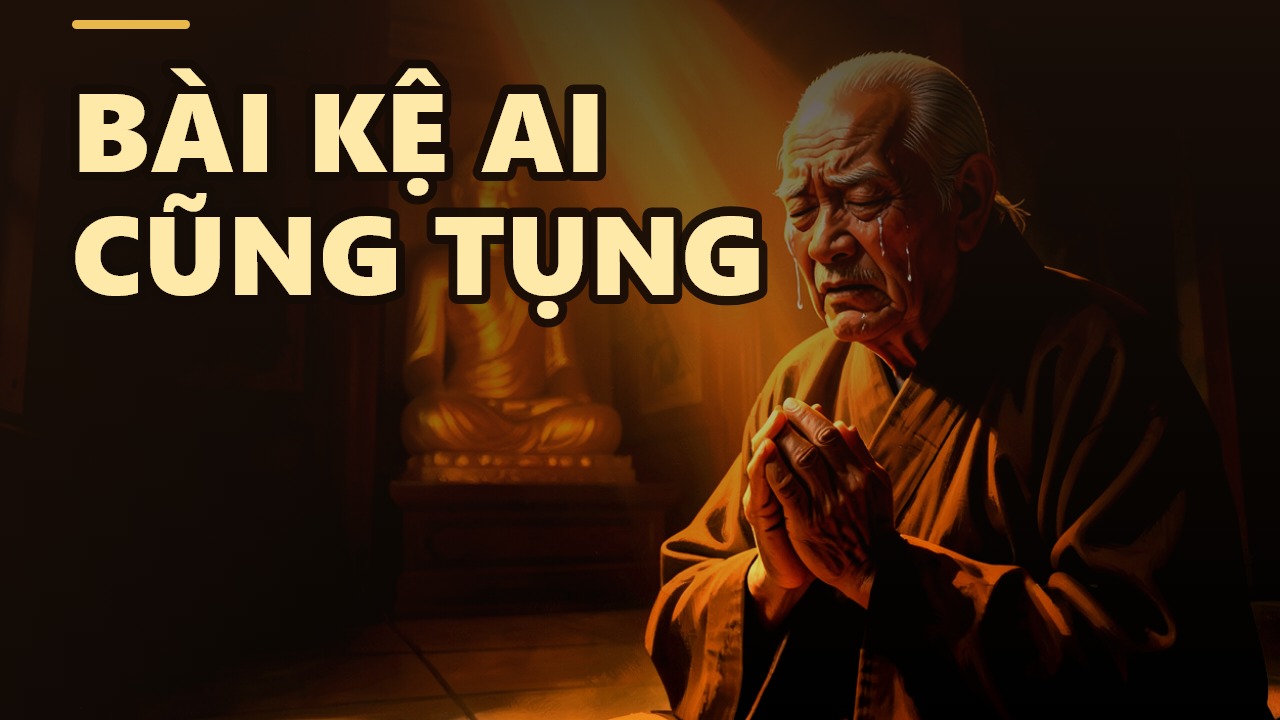
You may have visited the temple since childhood, reciting the verse "The nature of the one who bows and the one who is bowed to is empty and still; their resonance and communion are inconceivable..." Yet, have you ever asked yourself if you truly understand its meaning? After more than thirty years of practice, Venerable Thich Chan Quang boldly admitted, "I never understood that verse." Perhaps he is not alone. Many of us have chanted these words without ever touching their profound significance.
## A Verse Everyone Recites, Yet No One Understands
The verse on "Resonance and Communion" is traditionally recited before sutra chanting sessions in Northern tradition temples. Since we were young, we have repeated it until it flowed like water, assuming we already knew what it meant. In reality, many of us misunderstand even the very first line.
"The one who bows refers to the person performing the prostration. The one who is bowed to is the recipient of the reverence. Who is being revered? It is the Buddha. Who is bowing? It is ourselves, sentient beings. 'Empty and still' refers to the essential nature of both, which is void and quiet."
The teacher pointed out that many people misinterpret the phrase "The nature of Buddhas and sentient beings is always empty and still" as meaning they are equal to the Buddha, leading to arrogance. In truth, this is a verse that can only be fully comprehended by those who have attained enlightenment.
## Three Levels of Feeling: Sensation, Empathy, and Resonance
In daily life, we often use the word "feeling" in various contexts. The teacher distinguished them clearly: sensation or intuition belongs to direct perception and wisdom; empathy belongs to love and compassion; and resonance is the realm of the saints.
He shared an example of sitting with a friend who seemed normal, yet you sensed they were hiding something. That is intuition. Or consider a business owner who can discern who has blessings from merit and who is sincere when hiring staff. Empathy goes deeper—it involves placing yourself in another’s position to understand them without criticism.
"Empathy means standing in the shoes of that Buddhist practitioner. By placing yourself in their position, you refrain from judging them."
For instance, imagine someone who committed murder coming to the temple to confess. A wise teacher does not merely judge but empathizes with their karmic debts from past lives, advising repentance and surrender to authorities. Through such empathy and guidance, that person became a model prisoner. This is the power of compassion.
## Sincere Hearts Create Resonance: Just Need Genuine Faith
When we kneel before the Buddha with complete sincerity, a miraculous connection arises. The teacher calls this "resonance born from sincerity." It is not full divine communion, but it is the first step toward receiving protection and grace.
"When we come before the Buddha and bow with deep reverence, at that very moment, a resonance appears between us and the Buddha."
The key is genuine sincerity. If we pray earnestly to the Buddhas, holy beings will offer their support. However, if we seek selfish or harmful outcomes, we may be led astray by negative forces. Therefore, we must keep our minds pure and intentions clean.
## The Wi-Fi Network of the Buddhas: The Temple as Indra’s Net
The verse states, "My temple here is like Indra’s net of jewels." The teacher used the image of the internet as an analogy: when we connect to the network, we link with the entire world. Similarly, there is a "holy network" covering the universe. When our mind reaches a state of purity, we connect with all the Buddhas of the ten directions.
"My temple here is like the jeweled net of Lord Indra."
This is the realm of Arhats and Bodhisattvas, who can manifest as sentient beings to fully understand their entire cycle of rebirth. Ordinary practitioners like us begin simply by calming the mind and trying to understand others from their perspective. This requires gradual practice.
## Living in the World: Understanding and Loving
The teacher’s talk is not just for monastics. We lay Buddhists can apply this immediately in our daily lives. Cultivate intuition to understand others better, but do not judge. Instead, practice empathy and find ways to help them transform.
"Do not hate; instead, empathize and seek to teach gently. This is the path of Buddhism."
When we understand and love, we become part of the Buddhas’ net. We do not need supernatural powers to experience resonance. All we need is sincerity, an open heart, and persistent practice. Everything begins with a view filled with compassion.
On the first day of the Lunar New Year, hearing this teaching serves as a reminder for new beginnings. Try sitting quietly, calming your mind, and feeling the presence of the Buddha in each breath. Perhaps a small spark of resonance will enter your soul, making your spiritual journey deeper and more peaceful.
AI-assisted translation from the Vietnamese original.
Read in Vietnamese →