
The Bodhisattva’s Dilemma: When Meditative Concentration and Compassion Pull in Opposite Directions
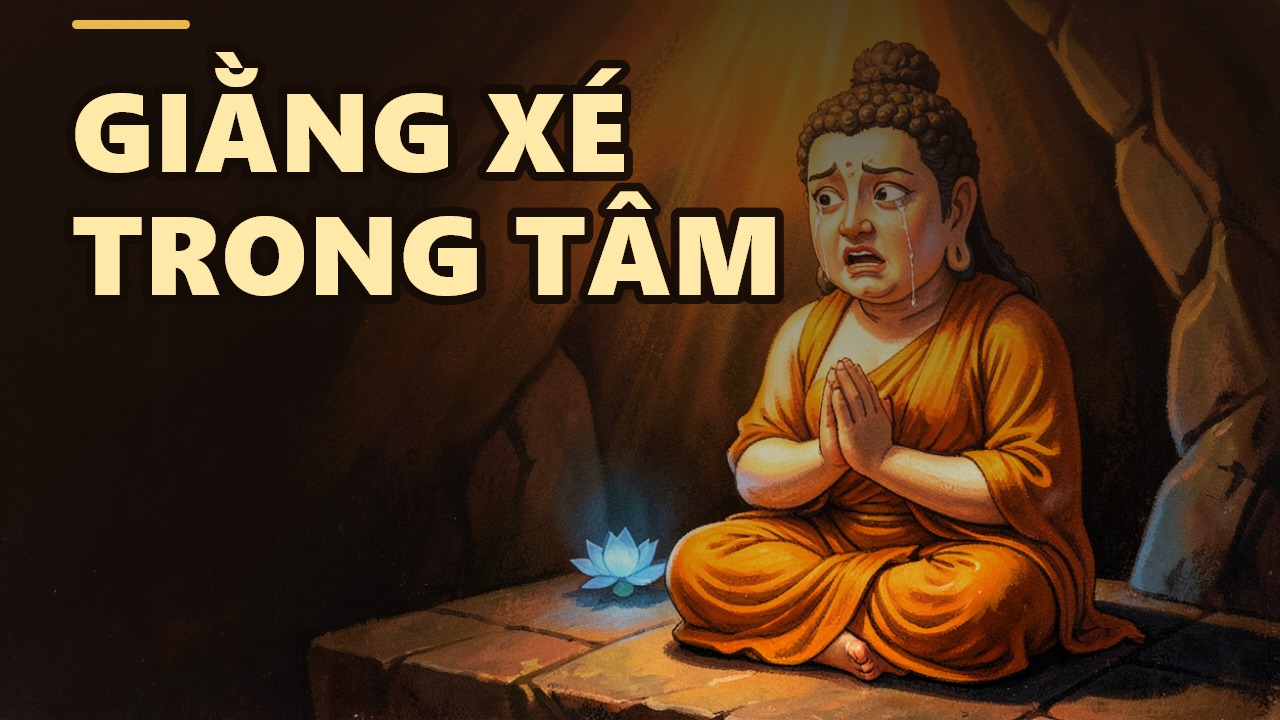
Bodhisattvas do not practice alone. They carry the ideal of enlightenment and the vow to save all beings, yet they simultaneously feel a powerful pull toward meditative concentration. This dharma talk by Master Chan Quang guides us to understand and balance these two aspects.
Have you ever felt torn between wanting to rest and find inner peace, and wanting to help others? If so, you have touched upon part of the “Bodhisattva’s dilemma.” This is a spiritual journey full of challenges that not everyone has the courage to undertake.
### Who Is a Bodhisattva?
A bodhisattva is not a deity flying through the sky. A bodhisattva is a sentient being who holds the ideal of enlightenment and possesses intense compassion. They do not wish only for their own liberation from suffering; they desire that all sentient beings attain enlightenment as well. It is like a doctor who does not merely treat their own illness but hopes many others will learn to heal themselves and help the world. That is what we call a bodhisattva doctor.
As the teaching states, “A bodhisattva is a sentient being, but one with the ideal of enlightenment. Within that ideal, this person is driven by a deep urge to help many others awaken alongside them.”
### Inner Conflict: Meditative Concentration Versus Saving Beings
Once we make the bodhisattva vow, we cannot walk the path alone. However, walking with many people brings countless entanglements. There is an invisible attraction from meditative concentration that makes practitioners want to let go of everything and retreat into quiet mountains. Conversely, compassion urges us to step out and serve the world. This tension is the greatest test.
The master explains, “When the power of meditation draws a person in, it feels as though they must abandon everything, focusing solely on practice to enter samadhi and achieve immediate liberation. This creates a very difficult dual challenge.”
He shares the story of a Korean nun who attained realization and then stopped cooking for her temple, choosing to practice alone. Later, she found she could no longer teach the dharma because she had abandoned her merit. This serves as a lesson on the importance of balance.
### The Vow That Holds Us Back from the Current
In the flow of life, when our mind is sucked into the whirlpool of meditative concentration, all delusions vanish. If we simply drift away with this current, we become Shravakas—those who seek liberation only for themselves. But a bodhisattva is held back by their daily vow to save beings, continuing to accompany all sentient beings.
“The impulse of meditation constantly makes us want to let go of everything to practice. Yet, the vow to save beings keeps us concerned, urging us to do something to guide and educate sentient beings.”
This vow, repeated every day, becomes our nature and our strength. It prevents us from sinking too deeply into silence and forgetting a world that desperately needs help.
### Invisible Guidance – The Buddha Always Leads by the Hand
Many people believe that coming to the temple to hear the dharma is entirely their own choice. However, the master teaches that it is actually the Buddha leading us there. Arhats and Buddhas in nirvana do not appear in physical form, but they guide invisibly through teachers who have the conditions to spread the true dharma.
“If a person opens their heart toward goodness, toward ideals, and toward practicing for enlightenment, remember that the Buddha is holding your hand, guiding you forward immediately.”
This brings great confidence. It is not by chance that we are here listening to the teachings. Each time we turn toward virtue, our mind resonates with the Buddha, and we are led by an unseen hand.
### Buddhism Must Benefit the World
While invisible guidance is wonderful, it has its limits. Therefore, the Buddhas and Arhats entrust the continuation of their work to those who are present in the world. Buddhism must also be practical. It should not only receive support but also contribute to society. The master emphasizes the karmic law regarding temples:
“When a temple becomes a black hole that absorbs wealth, where people keep making offerings excessively without the temple returning any spiritual or moral benefit to the community, it is certain that the temple will collapse. That is how the law of cause and effect works.”
A temple that lacks spiritual and moral benefit for the community becomes cold and alienating. People may still believe in the Buddha and the Dharma, but they no longer wish to visit the temple. Therefore, anyone studying the bodhisattva path must remember that the happiness of practice lies not only in the meditation hall but also in transforming life and bringing peace to society.
Embrace both sides: strive diligently in meditative concentration while keeping your heart wide open with compassion. This is the path of the bodhisattva—a path leading to complete enlightenment, not just for oneself, but for all beings.
AI-assisted translation from the Vietnamese original.
Read in Vietnamese →