
The Shared and the Personal: Why Is Your Karma Also the Karma of Others?
This dharma talk by Venerable Thích Chân Quang helps us realize that shared karma and personal karma are never truly separate, leading us to understand privacy, our duties to community, and the path of voluntary morality.
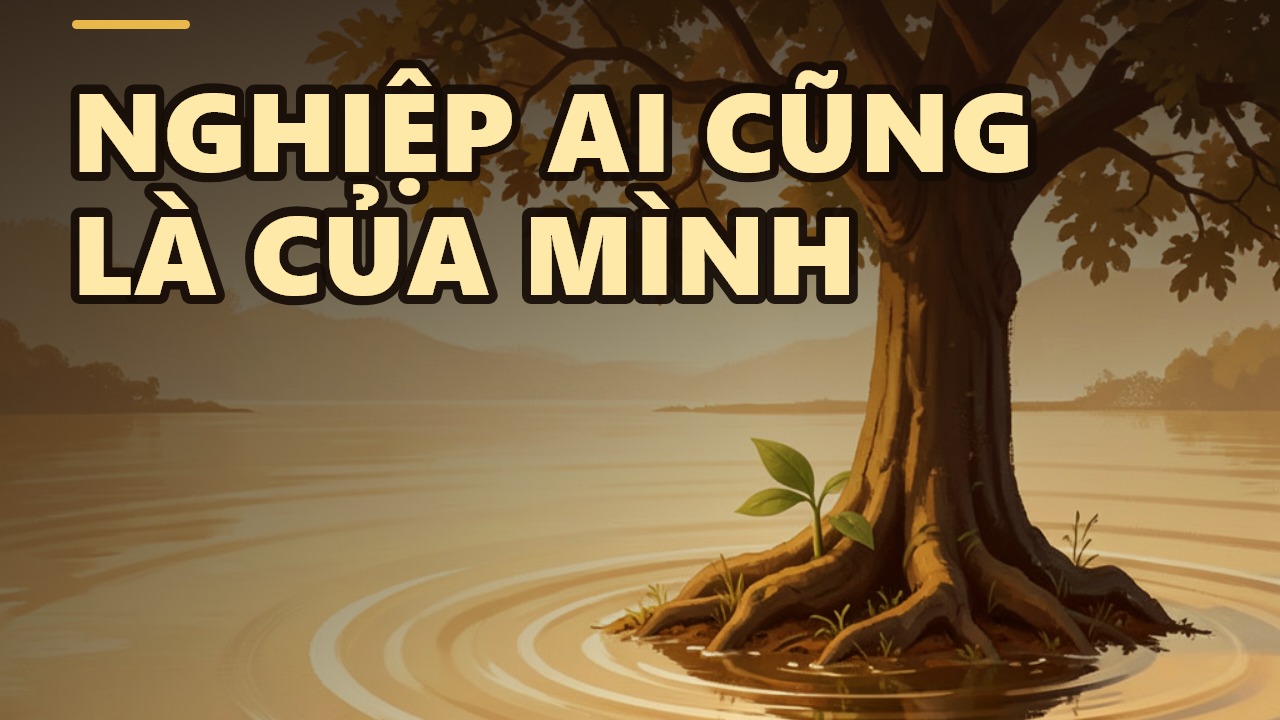
Have you ever wondered why, when a bus overturns, five people die and seventeen are injured? Is it all due to shared karma? Or is each person repaying their own personal karma? This dharma talk by Venerable Thích Chân Quang on "The Shared and the Personal" helps us see the fascinating interplay between these two concepts.
Shared Karma and Personal Karma: Not as Separate as We Think
In Buddhism, the Buddha divided karma into two types: shared karma and personal karma. Personal karma is the result belonging to one individual alone, in which others have no part. Shared karma is received together within the same time and space. However, Venerable Chân Quang emphasizes that they are not entirely separate.
"Personal karma is easy to understand, because we say that whoever creates a cause must bear its result."
For example, when a child commits a wrongdoing, the parents may bear a portion of that fault. This is because the child is the product of the parents—a product of their flesh and blood, of their care and upbringing. Thus, within the personal, the shared is always hidden.
"Within the personal, the shared is always mixed in: when a child creates blessings from merit or commits wrongdoing, the parents bear one tenth or one seventh of that fault or that merit."
Privacy: Deserving Respect, But Don't Let It Feed Selfishness
Every person has their own preferences, possessions, and private thoughts. The law protects the right to privacy: letters must not be read secretly, doctors must keep medical conditions confidential, banks must protect account information. This is the right to be a human being.
"Speaking objectively, this privacy is like the right of a human being—the right to be a person."
However, if we nurture privacy too much, a person becomes selfish, and selfishness is the root of evil.
When the Shared Is Lost, the Personal No Longer Exists
We have a duty to contribute to the shared good: paying taxes, protecting the environment, preserving good customs, reporting crimes. Because if the nation is lost, the environment destroyed, and traffic in chaos, then each person's private life is also harmed.
"If the shared is lost, then the personal cannot exist either."
When the Personal Is Lost: Slave or Saint?
There are two cases in which the personal is lost. If it is taken by force, one becomes a slave, losing one's rights as a citizen, becoming a machine. But if one voluntarily gives up the personal, living openly and honestly with nothing to hide, then that is a saint. The more one lets go of attachment to self, the closer one comes to becoming an Arhat.
"If it is voluntary, this person immediately becomes a saint, with no more privacy. ... But if it is forced, this person becomes a machine."
True Morality Is Voluntarily Turning Toward the Shared
The law protects the personal, but morality encourages us to turn toward the shared. A person who lives for the shared good is a person of virtue. If we exalt the personal too much, we become selfish and prone to evil. Both liberalism and socialism have their imperfections. The final solution is education—the path of the Buddha's teachings (Dharma): voluntarily letting go of the personal to turn toward the shared.
"A person who guards their own privacy and lives only for themselves is a person of low virtue. But if a person lives for the shared good, with little concern for the personal, leaning toward the shared, then that person is a person of virtue."
Dear Buddhist friends, amid the bustle of life, let us look back and ask ourselves: does the way we live lean toward the shared or the personal? Do not let the notion of "privacy" become a shield for selfishness. Let us voluntarily open our hearts, share, and contribute. It is precisely when we let go of our small, personal selves that we receive the vast peace that comes from the shared.
May each of us always live openly and honestly, cherishing what is personal while striving to cultivate what is shared.
AI-assisted translation from the Vietnamese original.
Read in Vietnamese →