
A Whole Family Goes Forth: The Mystery Behind the Buddha's Praise
The story of Elder Damik, whose whole family left home for the monastic life, and five situations faced by the Buddha's disciples caught between the worldly life and the Dharma. This article explores the meaning of the verse on morality and wisdom, wealth, family, and the Buddha's words of praise.
Have you ever felt your heart torn in two? On one side are worldly aspirations: wealth, family, successful children. On the other is the ideal of enlightenment and liberation that the Buddha planted in your soul. The story of Elder Damik in the Dhammapada will help us look deeply at ourselves today.
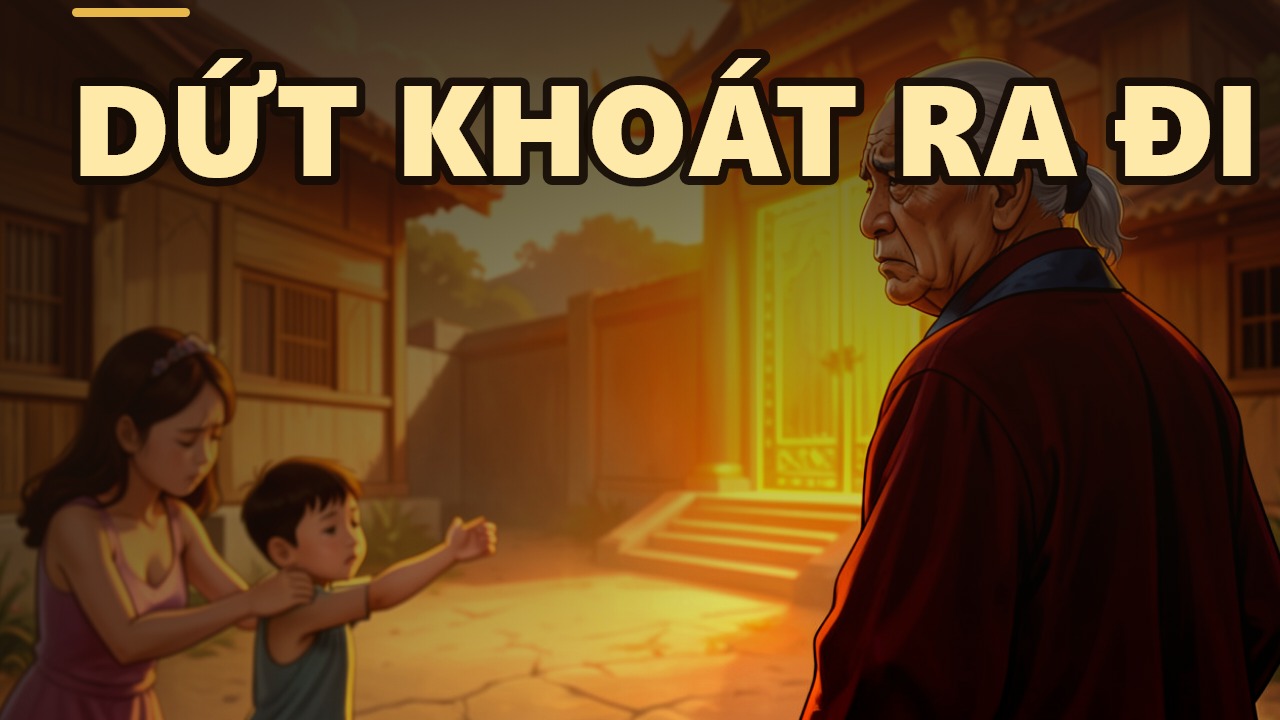
Elder Damik was originally a devout layperson. He wished to leave home for the monastic life, but his wife said, "Wait until we have a child." After the child was born, his wife said again, "Wait until the child is grown and can look after the property." Recognizing his wife's intentions, he resolutely departed. Twenty years later, he returned and guided both his wife and his child to go forth. The Buddha praised him with this verse: "One should not take what is unrighteous to benefit anyone, nor long for children or for wealth and kingdom. Such a one lives by righteousness, morality and wisdom, and reaches the goal."
The Inner Tearing of a Disciple of the Buddha
When we sincerely walk the Buddhist path, we feel torn between two opposing forces. One is worldly aspiration: wealth, a happy family, successful children. The other is the ideal of enlightenment and liberation, letting everything go to return to the spiritual life. These two pull against each other, yet they coexist within our mind/heart. Thầy Thích Chân Quang once said that this very inner tearing is the sign of someone who is sincere about the Buddha's teachings (Dharma).
"This tearing is the mark of a person who is sincere in the Dharma."
Not a few people come to Buddhism merely as a kind of decoration, doing charity for fun, or even to polish their image. They feel no tearing at all. But whoever truly loves the Dharma always feels a restlessness in the heart. They cannot turn their back on the path, yet worldly ties remain. That is why every disciple of the Buddha must often ask: where do I stand on the path of practice?
Five Situations on the Path of Practice
According to Thầy Thích Chân Quang, there are five situations, based on two factors: the aspiration to practice within the heart, and outward circumstances.
Situation one: the aspiration to practice is strong and circumstances are favorable — one goes forth.
Situation two: the aspiration is strong but circumstances are not yet favorable (for example, if one leaves, others will go hungry) — one should remain.
Situation three: the aspiration is weak but circumstances are favorable (the family supports it) — one still should not go forth.
Situation four: the aspiration is weak and circumstances are unfavorable — one stays at home.
Situation five (special): the aspiration is strong and circumstances are favorable, yet one chooses to remain a layperson in order to fulfill a worthy vow.
In this fifth situation, though outwardly still in the world, their way of life and inner spirit are no different from one who has gone forth. They keep a lifelong vegetarian diet, sit in meditation, bow to the Buddha, live a life of virtue and devoted self-sacrifice. These are the laypeople whom Thầy Thích Chân Quang cherished most deeply, for they were fully capable of going forth, yet out of duty to the Buddha's teachings (Dharma) they accepted life as householders.
"Though outwardly still in the world, their way of life and inner spirit are no different from one who has gone forth."
Buddha-izing the Family: Avoiding the Fault of Stinginess
The next lesson is that we must bring the Buddha into our family. If we see that the Buddha's teachings (Dharma) are a sublime truth, we have no right to enjoy them alone. Whoever enjoys them alone commits the fault of stinginess, and that fault ripens in a future life, causing us to meet the Dharma late. Some people do not encounter the path until they are sixty years old, and then lament, "If only I had found this at twenty!"
"If we love the Buddha's way, if we know that the Buddha's teachings (Dharma) are righteous and sublime, are the truth, then we have no right to enjoy them alone."
So share good dharma talks and profound verses with relatives and neighbors. This is how we plant wholesome conditions (dependent origination), helping others come to know the Dharma sooner and live with greater peace and joy.
Not Longing for Children or Wealth
In the verse, the Buddha teaches us not to long for children or wealth. This teaching fits the state of today's world, where population growth is causing a global crisis. But the deeper meaning is this: love for one's children is a natural human instinct. Only two kinds of people do not long for children: those who have renounced all worldly desires, and the immoral and irresponsible. A true disciple of the Buddha belongs to the first kind.
As for wealth, it is an illusion of pleasure. A person of wisdom, upon gaining great riches, feels weary instead, burdened by the need to spend it correctly. Thầy Thích Chân Quang once said:
"Whoever suddenly finds themselves with great wealth and feels not joy but worry — that person has the quality of a noble one."
Morality and Wisdom: Two Wings of One Bird
The final line of the verse emphasizes that morality and wisdom support each other. Wisdom helps us know right from wrong; morality turns that knowing into right action. In the first thirteen years, the Buddha established no monastic rules, because his noble disciples had wisdom of their own and naturally avoided wrongdoing. Only later, when someone not yet realized committed a transgression, did the Buddha establish the precepts. Thus morality and wisdom always go hand in hand.
"Morality and wisdom support each other. Though two, they are one: a person of wisdom must have morality, and one who keeps the precepts must have wisdom."
Let us devote ourselves to practicing the true Dharma so as to reach the far shore, as the Buddha teaches in the following verse: "Few among humankind reach the far shore; the many remain circling on this shore. But those who devote themselves to practicing the true Dharma will reach the far shore, escaping the dangerous net of Mara."
Each of us stands before a choice between the world and the Dharma. We may not leave home for the monastic life, but we can live with the heart of one who has gone forth. Let us begin today: keep the precepts, cultivate wisdom, and share the Dharma with our families and everyone around us. That is how we reach the far shore within this very life.
AI-assisted translation from the Vietnamese original.
Read in Vietnamese →