
Letting Go of the Past, Releasing the Future, Living Fully in the Present – Lessons from the Sutra of One Excellent Night
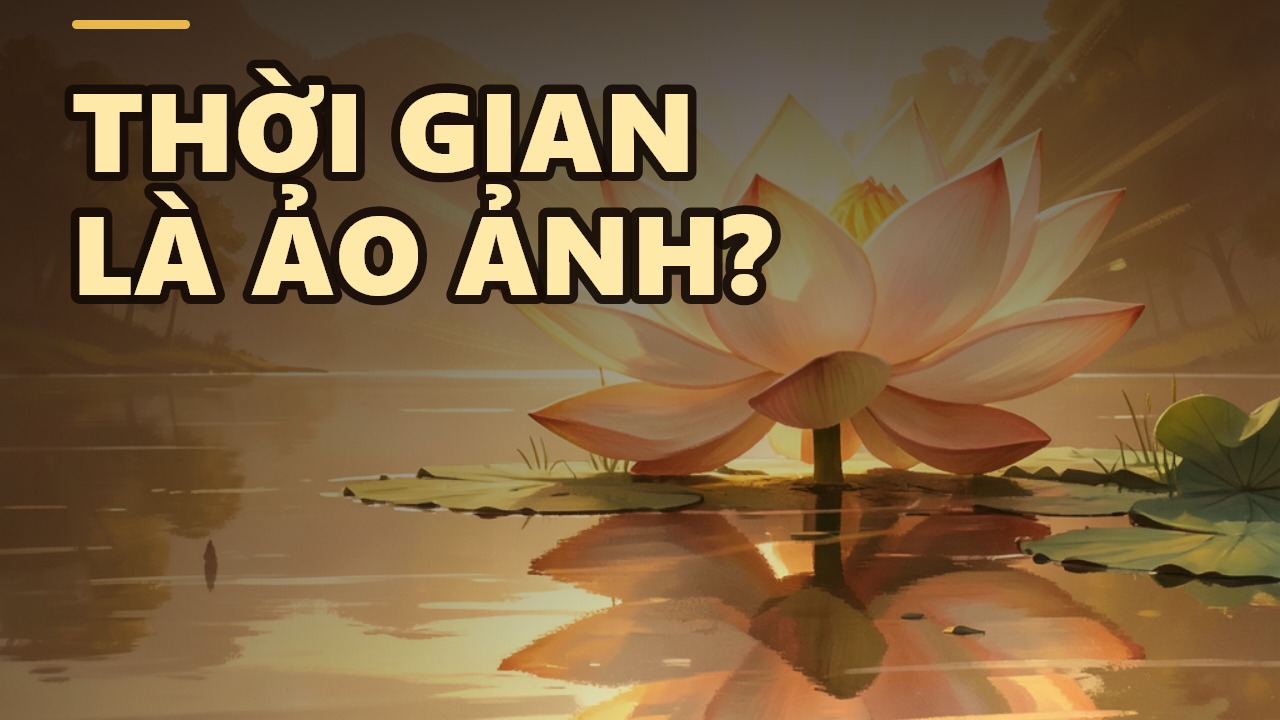
In his commentary on the Sutra of One Excellent Night, Venerable Thích Chân Quang points out that time is created by deluded thoughts, and the secret to a peaceful life is letting go of the past, releasing future aspirations, to be wholly in the present – the place where wisdom contemplation clearly sees the mind in each instant.
Have you ever stood under the midday sun, drenched in sweat, feeling time drag on endlessly? Or in a moment of happiness, wished time would stop? Perhaps you have wondered: "What is time?" – a question that even scientists have not fully answered. But in his discourse on the Sutra of One Excellent Night, Venerable Thích Chân Quang offered an answer that is both profound and practical.
**The past has ceased, the future has not yet arrived – so how do we live?**
When the World-Honored One taught, "Do not pursue the past, do not long for the future," He was not telling us to erase our memories or abandon all plans. He was pointing out that as long as the mind chases after what has passed or what is yet to come, we lose the fullness of life in the present. A person who laments events of years gone by, or worries about tomorrow, is truly "living alone" – isolated in the river of time, because their mind finds no true anchor.
"Do not pursue the past, do not long for the future. The past has ceased, the future has not yet arrived. There is only the dharma of the present moment. Wisdom contemplation is here."
But then, if only the present exists, what is the present? This is the question Venerable Thích Chân Quang posed to his listeners. And his answer surprised us all.
**What is time? – It turns out to be merely the change of deluded thoughts**
We always think time is something that truly exists. But according to the teachings of the Venerable Nāgārjuna and Buddhist understanding, time is not real. Venerable Thích Chân Quang explains:
"Time is not real. We see the change of things and create the concept of time. For example, seeing a newborn baby, seeing that person grow up, grow old, and then die – we immediately think that time exists."
Because our deluded thoughts change continuously, we feel the passage of time. The more agitated the mind, the more endless time seems. In meditative concentration, however, when the mind becomes still, the concept of time fades and then vanishes. He says:
"When the mind is gathered, the concept of time seems to gradually disappear."
This explains why a person in suffering feels time stands still, while a joyful person feels it flies by like the wind. In the end, time is merely the movement of the mind itself.
**Where is the present? – Searching until you can no longer find it**
So, where is the "present" we are to dwell in? When he asked the entire assembly, one person replied: "The present is sitting here listening to the teaching, living in this moment." Another said: "The present is not thinking." But the Venerable said: Try to define the present! If someone says "the present is all of today," their mind is still open to the past and future. The more settled one becomes, the more "the present" shrinks – to an hour, a minute, a split second – and then it completely vanishes.
When the present vanishes, where do we abide? This is the crucial point. He teaches:
"As the time of the present narrows, narrows... until you look directly at the present and see it is no longer there, then there is no object, no topic for the mind to think about. That is when the mind becomes pure."
The secret is this: we do not need to find the present to lean on, but to let the "seeking" mind stop. Strangely, when there is no more time, the mind becomes pure and all objects vanish. This is the state of "no time" – the foundation of all meditative concentration.
**Wisdom contemplation is here – Seeing one’s own mind in every instant**
The most wonderful thing the sutra offers, according to Venerable Thích Chân Quang, is "wisdom contemplation is here" – that is, clearly seeing one’s own mind in each instant. All methods of practice, whether chanting the Buddha’s name, contemplating the breath, or investigating a meditation phrase, must ultimately return to this point. He affirms:
"True spiritual experience never goes beyond this point: knowing one’s own mind clearly. Whatever the practice, in the end, this wisdom contemplation must appear: seeing one’s own mind in each instant."
Only such a person can see the subtleties of the inner mind. For example, when someone pushes you to the back to sit, you might think you are not irritated. But looking deeply, you may find a stir of ego-clinging. It is precisely by seeing these subtleties that a practitioner can transform habitual tendencies and give rise to true virtue, rather than stopping at external forms.
**Why must we let go of the past and future? – Because they are burdens on the mind**
Someone asked: "What is wrong with the past and future that we should avoid them?" In truth, there is nothing wrong with them, but if we cling to them, our mind will never be at peace. The past is a storehouse of regret, the future a vessel filled with anxiety. Both are waves that cause us to sway. Therefore, the Buddha teaches us to pause and see reality clearly. When the mind is pure, we can look back at the past and turn toward the future with lucid serenity, no longer swept away.
**Conclusion**
The commentary on the Sutra of One Excellent Night is a gentle reminder: do not live perpetually in the past, do not grasp at the future. Let each moment become an invitation to awakening. Following the Venerable’s teaching, we can begin today: sit down, breathe, and observe our mind in each second. In just one minute, you will feel a deep peace – no more time, only the present, only a tranquil mind.
AI-assisted translation from the Vietnamese original.
Read in Vietnamese →