
The Four Hearts: The Secret to Living a Meaningful Life
Thầy Thích Chân Quang teaches about the four hearts: morality, wisdom, stability, and enlightenment — the foundation for a meaningful life and contribution to the community.
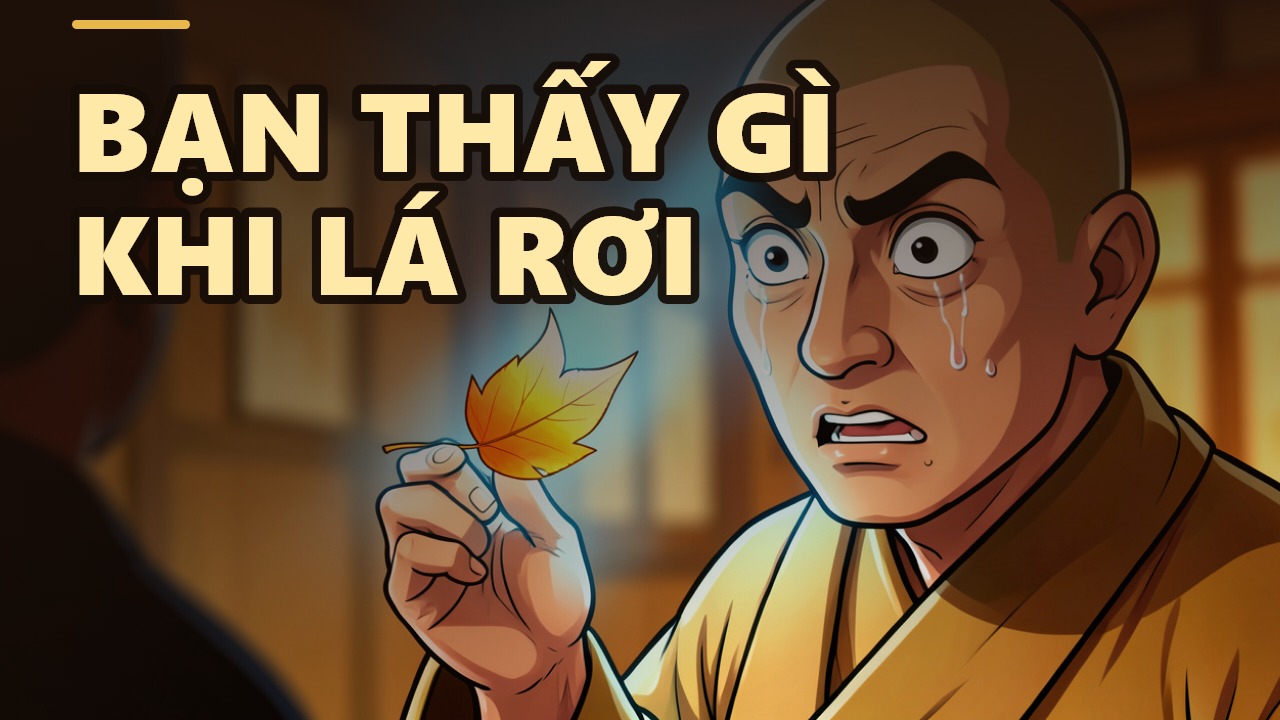
What do you see when a leaf falls? If you see nothing more than a dry leaf, perhaps your soul is barren. But if you see the whole cycle of birth and death, see the fragility of impermanence (anicca), see an entire philosophy of living — then you have a moral soul.
In a meditation retreat, Thầy Thích Chân Quang posed this question to awaken the consciousness of his listeners. He taught that to live a meaningful life, we need to cultivate four hearts: a moral heart, an intelligent mind, a stable psychology, and an enlightened spirit. A person who possesses all four of these will become someone who contributes to the community and to the nation.
The Four Hearts — The Foundation of a Contributing Person
Thầy Chân Quang affirmed: "A human being consists of these four things, these four hearts — listen carefully." And he listed them:
First: a moral heart.
Second: an intelligent mind.
Third: a positive and stable psychology.
Fourth: an enlightened spirit.
A person who has these four hearts will contribute to the community and to their nation.
But these four hearts do not come naturally. We need to practice every day, so that the soul grows, the mind brightens, the psychology becomes steady, and the spirit opens up.
A Moral Heart: Seeing the Whole World in a Falling Leaf
A moral heart begins with sensitivity. A person with soul knows how to be moved by beauty, by the suffering (dukkha) of others. Walking past a river, they do not only see the surface of the water; they see the alluvial soil that nourishes countless people, the boats traveling up and down, and the river finally merging into the sea. Seeing a poor father pedaling a bicycle carrying his child, they do not only see two figures; they see the love between father and child, a lesson about sacrifice and gratitude.
When we look at a falling leaf and see so much within it, only then can we say we have a great soul — loving, sensitive, and moral.
Conversely, if we see a falling leaf and only think about sweeping it away, or see someone pedaling a bicycle without any feeling, then our soul has become as barren as gravel and stone. Practice, therefore, is to open the soul, so that every small detail of life becomes a great lesson.
An Intelligent Mind: Practicing to Become Clearer
Meditative concentration does not only bring peace; it also opens up wisdom. Thầy Chân Quang emphasized: "When our mind is pure, we become intelligent." A turbulent, scattered mind cannot concentrate, cannot absorb the lessons. But when the mind is still, we see through everything and handle our work with sharper clarity.
When our mind is pure, we become intelligent. That is the principle. But if our mind is agitated, chaotic, wandering, thinking wildly, unable to concentrate, then surely we will become dull.
Thầy taught that if a child learns to bow to the Buddha, chant sutras, and sit in meditation, within just three months their academic results will improve noticeably. For adults, work also becomes smoother, more thorough, and more effective. So whoever wishes to be intelligent and clear-minded should begin with the practice of meditation.
A Stable Psychology: No Negative Thoughts, No Troubling Others
A stable psychology means we no longer harbor negative thoughts, no longer love to speculate, no longer feel jealousy or competitiveness. A person with an unstable psychology might see someone entering a temple and think: "This person must have come to look for food, not to practice." But in truth, that person has only come out of curiosity, not yet understanding anything.
And if our psychology is unstable, if everything we think is negative and inappropriate, if we speculate wrongly about everything, what does that become? It becomes a burden on everyone around us.
When our psychology is steady, we live at ease, without judgment, without suffering (dukkha) over small things. We become a peaceful friend to everyone around us.
An Enlightened Spirit: Rising Above Ourselves
The last of the four hearts is the enlightened spirit — the highest level of practice. This is when we no longer cling to non-self (anatta) as an idea, no longer entangled in gossip and disputes. We see ourselves as one with the universe, and see that all beings possess Buddha nature. To attain an enlightened spirit, we must pass through the first three hearts: morality, wisdom, and stability. Only then can we face the mysterious and the transcendent, and move toward liberation.
Thầy Chân Quang once compared it this way: if we do not have sufficient depth of soul, mind, and psychology, then our own spirituality is merely superstition. Only by practicing in the right direction can we speak of enlightenment.
Let Us Begin Today
The four hearts are not found somewhere far away. They are right here in every breath, every step, every moment of mindfulness. When we return to the temple, beneath the shadow of the Buddha, we begin to build a moral heart, an intelligent mind, a stable psychology, and an enlightened spirit. Let us take pride that each of us, through practice, is contributing to our country and our community. Come to meditation, to the Buddha's teachings (Dharma), so that each day of living becomes meaningful.
"There is no need to do anything else — simply following the Buddha's path is already a contribution to protecting the nation." Live with these four hearts, and you will be a shining lamp in the midst of life.
AI-assisted translation from the Vietnamese original.
Read in Vietnamese →