
The Perfection of Generosity: Why Do Some Risk Their Lives to Save Others?
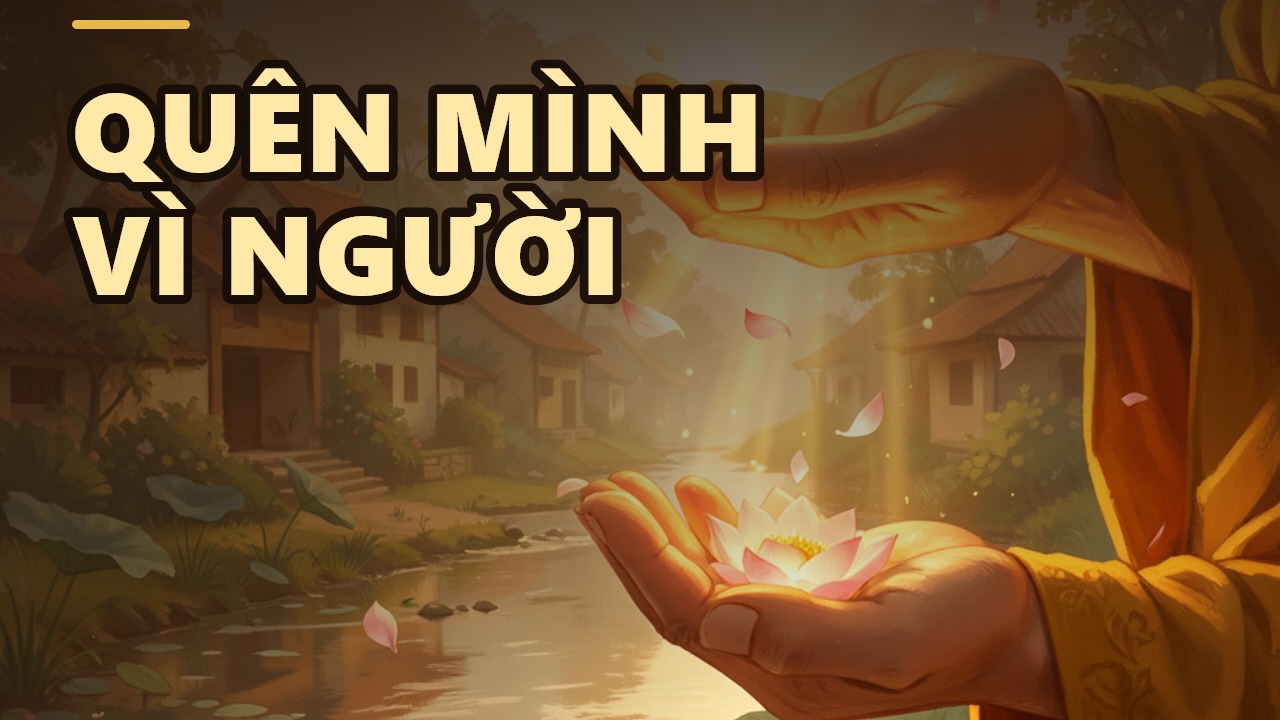
The perfection of generosity is not merely about giving money. It encompasses helping others and sacrificing for their sake. Venerable Thich Chan Quang explains how a selfless way of life transforms ordinary beings into bodhisattvas.
Have you ever heard the story of a soldier who willingly threw his body onto a grenade to save children? That action was not a momentary impulse, but the result of a soul that had long lived solely for others. Today, let us explore the perfection of generosity — the supreme practice that guides humans from being ordinary beings to becoming bodhisattvas.
### Generosity Is More Than Material Wealth
Many people think that making offerings or practicing generosity means only giving money or gifts. In truth, the meaning is far broader. When you help a neighbor build a house, when you comfort someone in sorrow, or when you share knowledge with others, all of these are acts of generosity.
Therefore, the term generosity here means offering assistance through money, actions, words, or even your insights. These are all forms of giving.
Thus, everyone can practice generosity every day, even without much wealth. What matters most is the heart’s readiness to give.
### The Gift of Fearlessness: Saving Those in Danger
There is a more noble form of generosity called the gift of fearlessness. This involves giving away fear itself. When we encounter someone in danger, we help them overcome their terror. In urgent moments, there is no time for deliberation; only an inherently altruistic nature enables us to act swiftly.
In such critical situations, one practices the perfection of the gift of fearlessness. There is simply no time to weigh options carefully.
Examples of sacrifice, like the soldier mentioned earlier, or the Buddha in past lives who offered his body to a starving tiger, show that such souls were cultivated over a long period. Each of us can practice the gift of fearlessness by helping others immediately when needed, even if it is just with a word of encouragement.
### Living Selflessly: Transforming Ordinary Beings into Bodhisattvas
The same action can lead down different paths depending on its intention. If you eat only to satisfy your own hunger, you remain an ordinary being. But if you eat to maintain health so you can serve others, you are walking the path of a bodhisattva.
You still eat, but if you think only of filling yourself, you are an ordinary person. However, if you eat to gain strength for benefiting the world, for spiritual practice, and for supporting the Buddha's teachings (Dharma), then that simple act becomes the perfection of a bodhisattva.
By shifting our mindset from self-centeredness to other-centeredness, we step onto the bodhisattva path. This is the profound message of the perfection of generosity.
### The Emptiness of the Three Realms: Letting Go of Attachment to Merit
When practicing generosity, do not cling to the idea that you are the giver, that another is the receiver, or that the object given is truly real. Reflect on the fact that all phenomena are illusory. By doing so, you cease to attach to merit and stop calculating gains and losses.
When you give something to anyone, remember that the giver does not exist as a solid entity, the receiver does not exist as a solid entity, the item given does not exist as a solid entity, and the future blessings from merit also do not exist as solid entities.
This is true letting go; this is wisdom. Acting without claiming credit, giving without expecting rewards — this alone constitutes the perfection.
### Sowing Good Causes, Guiding People to the Path
A bodhisattva’s generosity does not stop at material aid. They create conditions (dependent origination) to later guide people toward morality and enlightenment. Some individuals feel indebted to those who helped them and listen to their guidance. Others awaken naturally, without needing such karmic ties.
A bodhisattva skillfully uses the act of helping sentient beings to gently guide them toward moral conduct and enlightenment.
Therefore, the perfection of generosity is not just about giving; it is an art of teaching. Help first, speak the Dharma later, guided by compassion and wisdom.
The perfection of generosity is not distant. It exists in every word, every action, and every selfless thought. Begin practicing right now: help someone in need, comfort someone suffering, share something wholesome. Gradually, you will find that you are no longer an ordinary person. With three years, three months, or even three days of persistent practice, your mind will transform. You will become a bodhisattva amidst daily life, bringing light to those around you. Start today.
AI-assisted translation from the Vietnamese original.
Read in Vietnamese →