
The Bodhisattva with a "Bad Temper": The Truth About Contrarian Practice in Buddhism
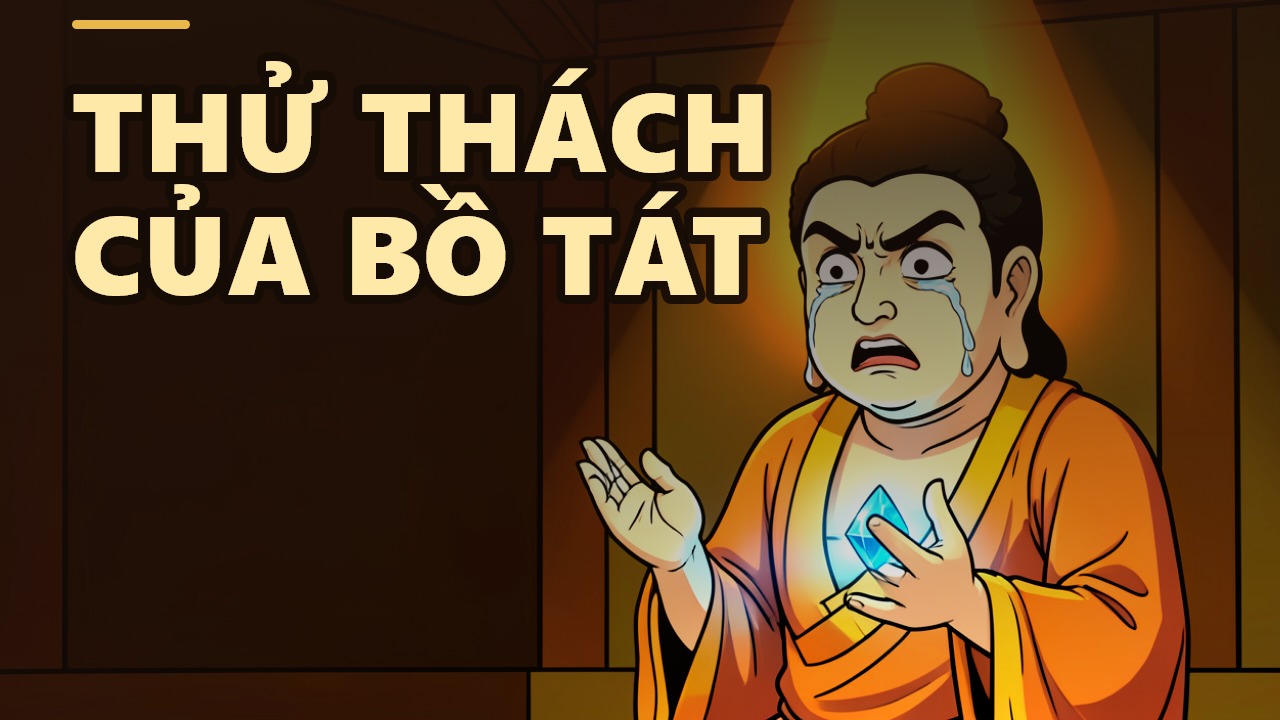
Bodhisattvas are not always gentle. There exists a path of contrarian practice, characterized by harshness, testing, and even deception to uncover the hidden negative tendencies within us. This is known as contrarian conduct.
Have you ever felt that despite your kindness toward someone, they remain unchanged? You offer gentle advice and analyze right from wrong, yet they continue their mischievous ways without care. Sometimes you might think, “If only I had spoken more sternly.” In Mahayana Buddhism, there is a specific practice undertaken by Bodhisattvas called contrarian conduct. It is essentially speaking sternly, but rooted entirely in compassion.
### Why Does Contrarian Conduct Exist?
According to the teachings of Venerable Thich Chan Quang, Bodhisattvas come into the world to educate sentient beings. But which beings are easy to teach? Each of us possesses some degree of stubbornness, rigidity, ignorance, and attachment to our own views. Consequently, there are individuals who cannot be transformed through sweet words alone; they require a powerful shock. A Bodhisattva must employ every possible method, even using persuasion to plant the seeds of connection. Only once faith becomes solid can stronger measures be applied.
Without initial persuasion, people may never form a karmic connection. One must first attract them to establish that link.
### Two Paths to Liberation: Harmonious and Contrarian Practices
Harmonious practice involves using kindness and gentle guidance. Consider a wife who sees her husband being unfaithful. She waits for him in the rain, simply offering an umbrella and saying, “I was afraid you would get wet.” This approach awakens love. However, if three attempts fail to bring change, a Bodhisattva might resort to grabbing him by the collar to deliver a lesson. Venerable Chan Quang tells of another wife who also waited at the door, but this time holding a cleaver. An unfaithful man might fear such a reaction and abandon his bad habits. While it sounds humorous, this is precisely contrarian conduct: using fear to pull people back toward goodness.
Contrarian conduct makes sentient beings fearful enough to refrain from doing evil.
### When the Bodhisattva Turns Harsh
Some ask why a Bodhisattva would become angry. The teacher explains: “When people do not yet know the Dharma, we speak kindly. But when we see that they have deeply understood the teachings, accumulated much merit, and their faith in the Dharma has become irreversible, then we earn the right to turn harsh.” In spiritual training, certain masters specialize in contrarian methods. They test disciples with sarcastic remarks or even false accusations. Yet, the purpose is not to humiliate, but to expose hidden anger and greed.
Every Bodhisattva is an expert in skillful means of attraction.
### Painful Tests to Purify the Mind
We may believe we have practiced well, free from greed and hatred. However, the teacher points out that a subtle, secret greed often remains deep within. For example, suppose someone promises to give you three hundred billion dong to perform charitable acts. You think you are not greedy for money, so you accept. But when they delay payment repeatedly, you become irritated. That irritation reveals that greed still exists. At that moment, a “contrarian Bodhisattva” may appear to reveal the truth: “You just experienced anger arising, which means you still harbor greed.” They did not actually possess the money; it was merely a test.
“You just experienced anger arising, which means you still harbor greed.”
### Mara: The Greatest Contrarian Teacher
Venerable Chan Quang emphasizes: “Without the opposition of Mara, one absolutely cannot attain enlightenment.” Mara is the most excellent contrarian teacher, helping us clearly see our own limitations. If, while facing slander, gossip, or obstruction, we maintain humility, then our mind has truly grown large.
“Without the opposition of Mara, one absolutely cannot attain enlightenment.”
Therefore, the next time you encounter someone who irritates you or treats you unfairly, try viewing them through the eyes of a practitioner. Perhaps they are a contrarian Bodhisattva drawing out the last bits of dust so that your mind may become pure. Thank them, for because of them, you are moving closer to the shore of enlightenment.
AI-assisted translation from the Vietnamese original.
Read in Vietnamese →