
How Do Bodhisattvas Teach Us to Love Others?
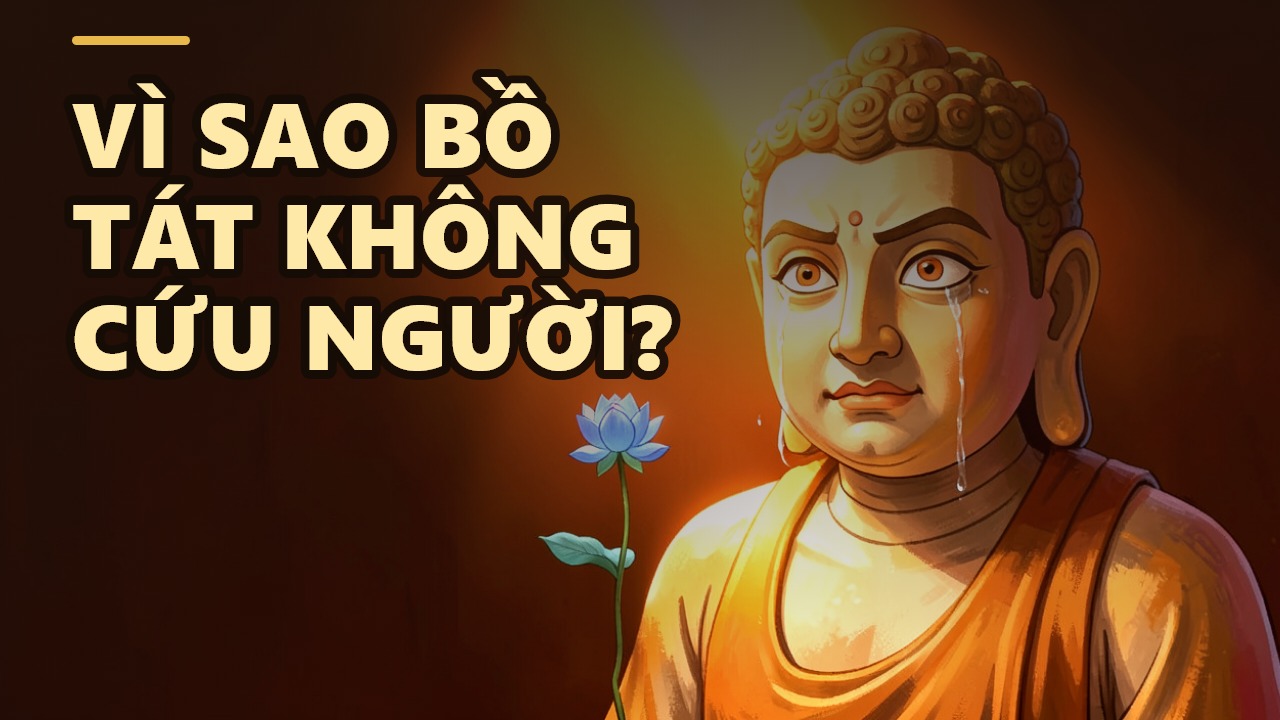
Have you ever wondered: If a bodhisattva possesses supernatural powers, why do they not simply use magic to instantly transform all beings into good people? In his dharma talk on the Great Vehicle bodhisattvas, Venerable Thich Chan Quang explains that the answer lies in a profound principle: cause and effect (karmic law).
### Bodhisattvas Have Powers But Never Depart from Cause and Effect
In many religions, deities are often seen as having the power to change human destiny. However, in Buddhism, this is not the case. Venerable Thich Chan Quang emphasizes that everything must rely on cause and effect (karmic law). Even if a bodhisattva uses supernatural powers, their actions are always calculated based on karmic law; they never depart from it.
He offers an example: if a person falls into a river and is about to die, chanting the Buddha’s name, the Buddha might use spiritual power to push them to shore. Yet, this does not mean the matter is completely resolved. Before saving them, one must consider how much merit they have accumulated and whether they have sufficient conditions (dependent origination) to continue practicing. After being saved, the person must repay this kindness through diligent practice. This is not arbitrary rescue, but a wise calculation of cause and effect (karmic law).
### Cause and Effect Is the Foundation of the Universe
The teacher shares a thought-provoking insight: "Cause and effect (karmic law) is the universe. The universe is cause and effect (karmic law)." He explains that the universe is not merely stars and galaxies, but countless energy fields—gravitational, electromagnetic, biological, and spiritual. Above all these, serving as their foundation, is cause and effect (karmic law). A person who has realized enlightenment understands this deeply and therefore never acts recklessly, for reckless actions only bring destruction and disaster.
### How to Love Children Correctly? Lessons from the Bodhisattva Mind
Venerable Thich Chan Quang speaks of parents who love their children but do not understand cause and effect (karmic law). They force their children to enjoy luxuries, travel, and shop, causing the children to exhaust their blessings from merit. By age eighteen, when the parents lose their jobs, the children lack wisdom. Conversely, parents with a bodhisattva mind guide their children to create merit from a young age. They do not just give money; they awaken compassion within their children by showing them those in difficulty and engaging in charity together. This helps children form good habits, ensuring blessings follow them throughout their lives.
### Do Not Hate Evil People – Hate Evil Deeds Instead
The teacher explains a crucial teaching: when we see an evil person, we often feel hatred. But if we understand cause and effect (karmic law), we realize their behavior stems from causes across many lifetimes. Perhaps in a past life they were killed, so now they seek revenge. Or perhaps they lack wholesome conditions (dependent origination) and fall into bad circumstances. If we hate them, we ourselves risk becoming evil in the future. Therefore, the Buddha teaches us to hate evil deeds, but not to hate evil people.
Sometimes, people fall into states of bad character or actions. The truth is not that they are inherently bad, but rather that they have criticized and hated others excessively.
### Seven Stages of Growth on the Spiritual Path
From these examples, the teacher outlines levels of spiritual evolution. First is knowing the path, which means encountering the Buddha's teachings (Dharma). Second is loving the path, feeling affection and a desire to learn. Third is studying the path, involving deep research. Fourth is practicing the path, where one begins to live according to the teachings, guarding the mind/heart, making offerings, bowing to the Buddha, reciting sutras, and engaging in meditative concentration. Fifth is transforming the path, naturally spreading the influence of the Dharma through speech and action to help others. Sixth is protecting the path, consciously safeguarding the Buddha's teachings (Dharma).
Where do we stand? The teacher encourages us not to stop at studying the path, but to advance to practicing and transforming the path.
Bodhisattvas do not use magic to act independently; they always rely on the wisdom of cause and effect (karmic law). We should do the same. Every action, word, and thought must be weighed against merit and demerit. Let us begin today: create merit, live the path, and spread the Buddha's teachings (Dharma) with our own hearts. Do not wait until you become a bodhisattva to love others. Instead, learn to love others like a bodhisattva, with wisdom and compassion.
AI-assisted translation from the Vietnamese original.
Read in Vietnamese →