
Knowing How to Yield to Goodness: The First Gate on the Path of Practice
A dharma talk by TT. Thích Chân Quang tells the story of a bhikkhu who felt wounded by pride when the Buddha scolded him, and the lesson about knowing how to yield to goodness – overcoming the ego to open the gate to holiness.
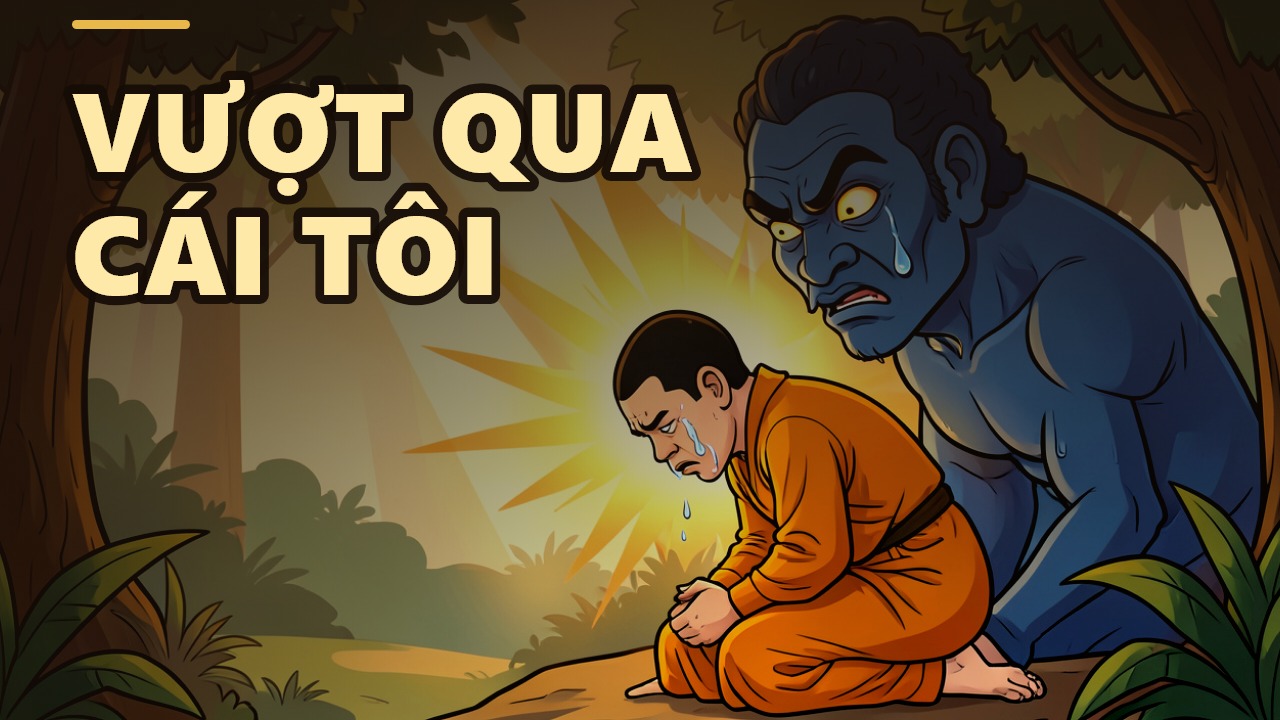
Have you ever felt irritated when criticized, even when the criticism came from a place of care? If so, you are facing one of the greatest obstacles on the path of practice – wounded pride. In his dharma talk on "Knowing How to Yield to Goodness" (the Dhammapada, verse forty-six), TT. Thích Chân Quang recounted a surprising story that reveals the first gate every practitioner must pass through.
When the Buddha scolded a bhikkhu
In the time of the Buddha, there was an elderly bhikkhu who had ordained only after already possessing wealth and property. Even after entering the monastery, he kept his assets, had his own private quarters, servants, and lived comfortably. The other bhikkhus took a dislike to him and brought him before the Buddha. The Buddha gently advised him to give away his wealth and live in harmony with the community. Yet the bhikkhu flew into a fit of wounded pride and stripped off his robes in front of the assembly. He was exactly like us when someone scolds us – even our own teacher – and we think, "He looks down on me, he hates me."
The Buddha was not angry. He simply said: "In the past, you were someone who knew how to yield to goodness. Why have you become like this now?" With that, he told a story from the past that astonished everyone.
The yaksha who knew how to yield to goodness
In a former life, there were three princes, sons of a king. The second queen, fearing that her son would not inherit the throne, conspired with officials to have them killed. The king discovered the plot and secretly sent his two elder sons to hide in the mountains. The youngest son, born of a different mother, out of love for his brothers, followed them. Along the way, the three brothers met a yaksha guarding a lake. The yaksha asked them about the way of the sages: whoever could answer would be spared; whoever could not would be eaten.
The eldest brother, Mahim Sasa, with wisdom and compassion, answered that a sage is one who has great love, a humble heart, and lives gently and agreeably. The yaksha was impressed, but when the brother asked that the youngest son be released instead of the middle brother, the yaksha rebuked him: "Just now you spoke of the way of the sages – why do you now act contrary to it?" The brother explained that because he did not wish to discriminate between mothers, he accepted having his full brother held captive in order to save his half-brother. Hearing this, the yaksha bowed in reverence, released all three brothers, and served them for the rest of his life.
The Buddha concluded: "In that life, Mahim Sasa was me; the yaksha who knew how to yield to goodness is the bhikkhu here today. In the past, the moment you heard me teach, you yielded to goodness. Why is it that today, with just one word of scolding, you feel wounded by pride?"
Wounded pride – the first obstacle of the practitioner
"Wounded pride is the first obstacle of the practitioner."
TT. Thích Chân Quang emphasized: whether layperson or monastic, if we feel sad, resentful, or full of grudges when scolded, the gate to holiness remains closed. When we come to the temple and our teacher so much as glances at us, we think "the teacher dislikes me" – that is wounded pride. The Buddha taught that even if one goes naked, endures hunger, sleeps on the ground, or sits crouched, if the heart still harbors doubt, afflictions (kleshas), and wounded pride, one is not a sage. If the mind/heart still holds doubt, all austerities remain merely external.
The Buddha's tests are not only material hardships; sometimes they are injustice, imprisonment, or losing everything. But among countless trials, overcoming wounded pride is the first gate. And it must be practiced, not merely understood as theory. Train yourself to hear words of abuse without wounded pride – that is how the gate opens.
The practice of repentance – "Cutting down the self"
In Buddhism, the formal practice of repentance is a wonderful medicine for cutting down the ego. When we have done wrong, we must bow to the assembly – to our peers – not to the Buddha or to the teacher. We bow to the assembly to apologize, to repent. According to the Teacher:
"Nothing brings happiness like bowing to our brothers and sisters to apologize, to repent, so that our ego dissolves completely."
He told the story of a cook who unknowingly put a snake's head into the soup. The abbot lifted the snake's head out without saying a word. The cook snatched it and put it straight into his mouth and chewed. That is "eating the words of blame" – accepting fault without excuse, without argument. In the meditation hall, this beauty makes the mind/heart light and pure.
Living with the spirit of yielding to goodness every day
We can begin today. When someone offers us feedback, instead of arguing back, let us see it as a chance to examine ourselves. When our teacher scolds us, let us not rush to think "the teacher hates me," but accept it as a lesson. Let us practice repentance in daily life: daring to admit our faults in front of those we have troubled. Each time we endure a criticism without wounded pride, we are chipping away one small brick from the wall of the ego.
As the Buddha taught: one who knows how to yield to goodness is one with wisdom. When the yaksha yielded to goodness, it was no longer a demon but became a dharma protector. Likewise, each of us, when we overcome wounded pride, can transform much that is unwholesome, opening a life of peace and holiness.
Remember: the gate to holiness stands ajar. The one striving to overcome wounded pride is the one pushing that gate open. The force of pride may run deep, but through yielding to goodness, through reverence, through knowing how to bow to our brothers and sisters, we will find our true selves again. As Thích Chân Quang reminds us: "You must seek many opportunities to hear words of abuse without wounded pride." Let us begin today with the smallest reminders.
AI-assisted translation from the Vietnamese original.
Read in Vietnamese →