
Knowing Right from Wrong: The Wisdom Key That Few Truly Possess
**Summary:** Explore the profound meaning of "knowing right from wrong" – the foundation of wisdom in Buddhism – and how to practice it to overcome bias and live more mindfully in daily life.
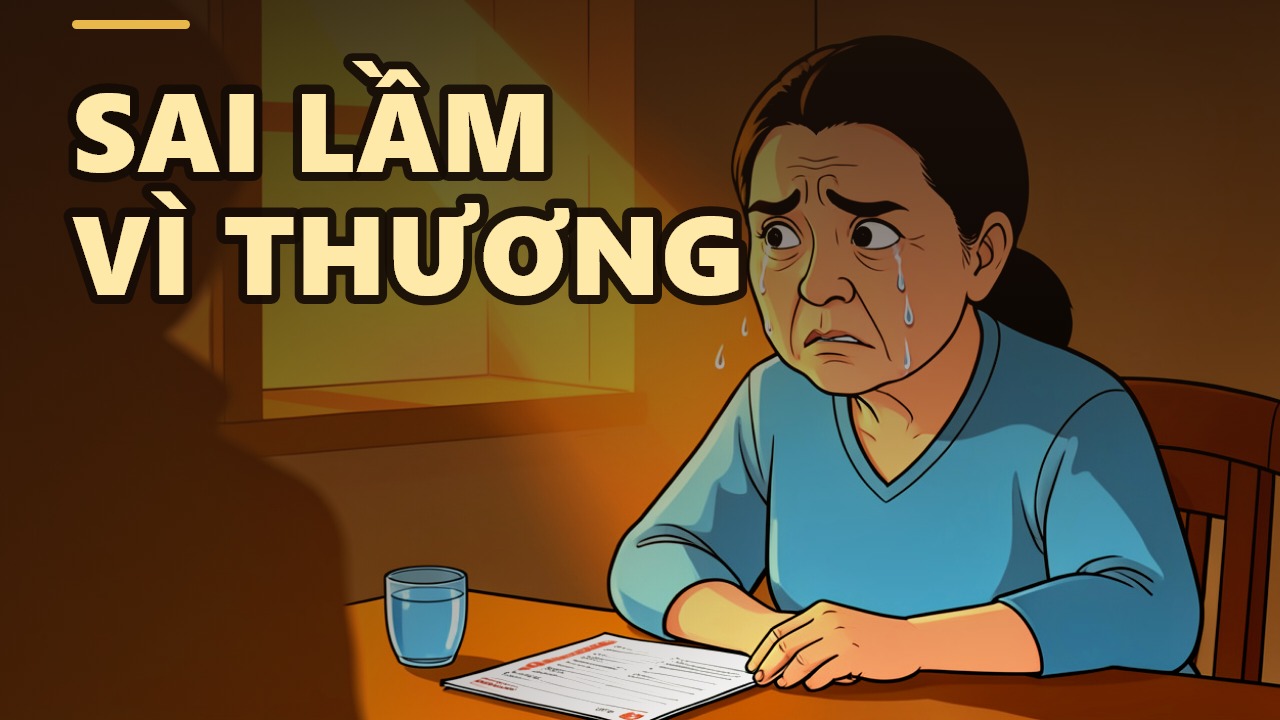
That morning, my mother returned from a parents' meeting, her face heavy with disappointment. The neighbor's child had received an award, but I had not. Seeing her sadness, I asked, and she said, "That child just got lucky. You're more capable, but the teachers favor them." At that age, her words were a comfort. But as I grew older, I understood that my mother had been viewing the truth through a lens of love and bias. I suddenly realized: knowing right from wrong is, in fact, not easy at all.
**Knowing Right from Wrong – Seems Easy, But Is Difficult**
In life, everyone claims to know what is right and what is wrong. Yet in reality, we often see the world through the eyes of our emotions, our ego, our attachments and aversions. When we love our own child more than the neighbor's, we are willing to bend the truth to protect our own. We criticize, blame, and make excuses... all to soothe our own feelings. The Venerable Thích Chân Quang pointed this out clearly in his dharma talk "Knowing Right from Wrong":
"A sage sees a fact as just a fact. But for us, we cannot accept a fact because it is obscured by what? By our own emotions, by our own desires."
It is because of this obscuration that we believe we are right, when in truth we have chosen a mistaken path. And when we are mistaken, how much affliction and suffering follow.
**Why Do We Often Choose "Wrong" Without Knowing?**
The Venerable Thích Chân Quang tells a story about feeling angry when a teacher he respected was punished by the abbot. Upon hearing the news, anger rose within him. Initially, it was only in his mind, but then it came out in words, creating karma. It was a small but very ordinary event. Why do we so easily pass such faulty judgments? Because we follow our emotions, not the facts. We nurture our prejudices and protect what we like. This is the spiral of ignorance.
In Buddhism, wisdom is not something distant or esoteric; it is the ability to see reality clearly. As the teacher has taught:
"A person whose wisdom reaches the level of a Buddha knows in detail all the merits and faults of this world."
To know in such a way, we must begin by observing our own mind, clearly seeing our own biases, recognizing when we are being led by emotion. Simply identifying this is the first step of wisdom.
**What is Wisdom in Buddhism?**
When speaking of wisdom, people often think of something lofty. But the Venerable Thích Chân Quang explains it simply: knowing right, knowing wrong, knowing merit, knowing fault. In the Lotus Sutra, the Buddha sits aloft on a lotus throne, his light shining from the summit of Being down to the Avici Hell. This symbolizes an ultimate seeing of both merit and sin. Yet we, who live daily amidst countless biases, easily assume we already know.
Let us look at ourselves: when we feel resentful toward an abbot because we favor another teacher, when we blame a teacher for being unfair because our child was not praised... are we truly seeing with wisdom? Or is it merely the gaze of likes and dislikes?
Wisdom is accepting the truth, even when it is harsh. Wisdom is realizing that we ourselves can be wrong, that those we love may not be perfect, that our opponents may be worthy.
**Buddhism is a Path of Wisdom**
In this modern age, people need reason and clear explanations. If one merely preaches faith, it is difficult to touch the hearts of the young. The Venerable Thích Chân Quang emphasizes:
"Buddhism is a path of wisdom. Buddhism is a path of seeing things as they truly are, not a path that simply asks you to believe."
When we approach the Buddha's teachings (Dharma) with wisdom, through genuine inquiry, then nothing can sway us. If we believe blindly, a single breeze of rumor or criticism is enough to make us doubt and give up.
Therefore, beyond cultivating faith, we must cultivate wisdom – asking questions, studying the teachings, and testing them in our lives. This is how we transform the path into our own being.
**Preserving the Dharma is Preserving the Nation**
The talk also opens a profound historical perspective. The scholar Nguyễn Sinh Sắc, father of President Hồ Chí Minh, once said that reviving Buddhism was necessary to reclaim independence. This insight took nearly a century to be fully understood. The Venerable Thích Chân Quang affirms:
"Our spiritual path and our nation walk together. If we lose our nation, we will also lose our path; and if we lose our path, we will also lose our nation."
In a world of fierce competition, including in the realm of religion, if we are negligent in preserving and propagating the Dharma on our own homeland, we have lost a part of our nation. This may sound grand, but each of us can start with small things: maintaining the way of life in our temples, ensuring the path does not fade in our communities.
**Practicing Wisdom Starting Today**
Knowing right from wrong is a journey, not a destination. Each day, let us practice identifying moments when we are led by emotion. Let us practice smiling at our own ego, practice seeing events through the eyes of an outsider. Let us put ourselves in another's position before we judge. And let us remember that while the truth may cause a little pain, it is the foundation for our growth and happiness.
When wisdom shines, we step through the door of liberation. Every mindful step, every thoughtful word, plants the seed of a sage within our heart. Please, begin right from this very moment: look within yourself and choose the path of wisdom.
AI-assisted translation from the Vietnamese original.
Read in Vietnamese →