
The Secret of Vu Lan: Living with Gratitude to Save the World
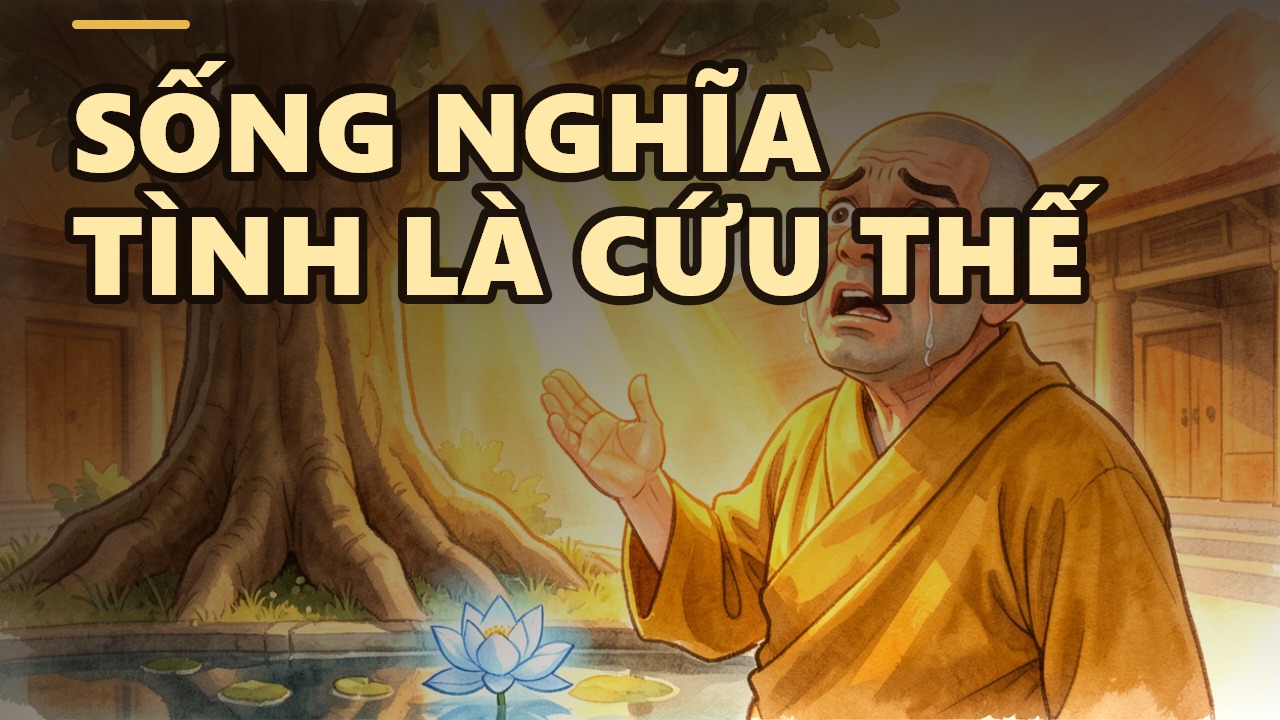
## Summary Vu Lan is not merely about filial piety. Through Master Chan Quang, we learn about gratitude, living with deep affection, and the power of prayer – the foundation of a life blessed by merit.
People often think that the Vu Lan Festival is simply a day to repay our parents’ kindness. But few realize that the message of Vu Lan is far broader. It is a lesson on gratitude and how to live with heartfelt connection toward everyone and everything that has contributed to our lives. Have you ever paused to remember an old vehicle that carried you through difficult times, or a small gift from a friend who has passed away? If so, you are beginning to touch the heart of Buddhism.
### Vu Lan – Two Profound Meanings
The Vu Lan Festival truly holds two meanings. First, it reflects the engaged nature of Buddhism. Buddhism is not a religion that abandons the world. To transcend worldly existence, a disciple of the Buddha must first live well within this life. Master Thich Chan Quang teaches:
"It is impossible for someone who has not lived well in this world to possess the capacity to escape from it."
The Buddha was both transcendent and actively constructive in building life. He did not look down upon the world but always acted for the benefit of all sentient beings. Therefore, the day of Vu Lan reminds every Buddhist child to strive to contribute to their country, society, and this planet.
### Monastics – Transcending Family Love to Embrace All
There is a paradox in Buddhism: monastics must not show favoritism toward their own families. They must love all sentient beings equally. However, for lay practitioners, devotion to one’s parents is the foundation of morality. Master Chan Quang explains that Vu Lan is an occasion to teach Buddhists about the ethics of gratitude. Buddhism has two wings like a bird: one wing is spiritual practice, and the other is active benevolence. Without one wing, the bird cannot fly.
"In human morality, gratitude is a profound virtue."
In the structure of ethics, parents are the root of gratitude. We can trust that those who honor their parents will be good and reliable people.
### Gratitude Means Preserving Memories
Life is a flowing stream. We always look toward the future, yet moral people keep their affections rooted in the past. We remember the kindness of our parents, grandparents, teachers, friends, and fallen heroes. We also cherish places and objects that have nourished our souls. The Buddha set an example: after attaining enlightenment under the Bodhi tree during forty-nine days of meditation, he turned back to gaze at the tree for seven days to express his gratitude before departing forever. Yet, to this day, we have not fully learned this lesson.
"Eyes look toward the future, but feelings remain anchored in the past. This balance, this harmony, is the beauty of the soul of a moral person."
### Do Not Turn All Things into Waste
There is a cruelty in the modern world: when something is no longer useful, we call it "waste." Master Chan Quang calls this "the malice of humans." Objects that pass through our lives deserve respect. If we despise them, discard them, or trample them, we lack gratitude. But if we preserve and reuse them, we accumulate blessings. People still tell the story of a man who kept driving his battered old car even after becoming wealthy, because it had accompanied him since his impoverished youth. That is a person of deep loyalty and affection.
"Because they are no longer used, we despise them, ignore them, trample them, and throw them away. That is the malice of humans."
We need to learn how to sort waste, keeping it clean and dry for recycling. The Master also mentions the "pig pot," a beautiful cultural trait in Vietnam where leftover food is repurposed for pigs. Do not let everything become trash; give these items a new life.
### Blessings from Prayer
Today’s world, despite scientific progress, remains full of hatred and division. Therefore, Buddhists must join hands in prayer for world peace. The Master recounts a story of a super typhoon with winds reaching three hundred seventy-eight kilometers per hour threatening central Vietnam. When the entire nation prayed together, the storm suddenly changed direction by ninety degrees and did not make landfall. This is the power of spirituality, where faith and practice can transform karma. When a whole country prays together, war recedes.
"The power of spirituality, morality, and practice can change heaven and earth."
Thus, during this Vu Lan season, beyond honoring your parents, add a prayer for world peace. Consider adopting a vegetarian diet as a way to lighten the karmic burden of suffering in the world.
### Conclusion
Living with heartfelt connection is the pinnacle of morality. From parents, to the nation, to the smallest objects, every word of gratitude and every act of care is a brick building happiness. Let this Vu Lan season mark the beginning of a life filled with meaning and affection, a life without waste or ingratitude. For whoever lives with deep loyalty and love possesses great blessings.
AI-assisted translation from the Vietnamese original.
Read in Vietnamese →