
The Secret of Why Buddhists Love the Temple: It Is Not the Building, but the Heart of the People
A dharma talk by Venerable Thích Chân Quang explaining why Buddhists come to the temple in great numbers: not because of the facilities, but because of love, trust, respect, and hope.
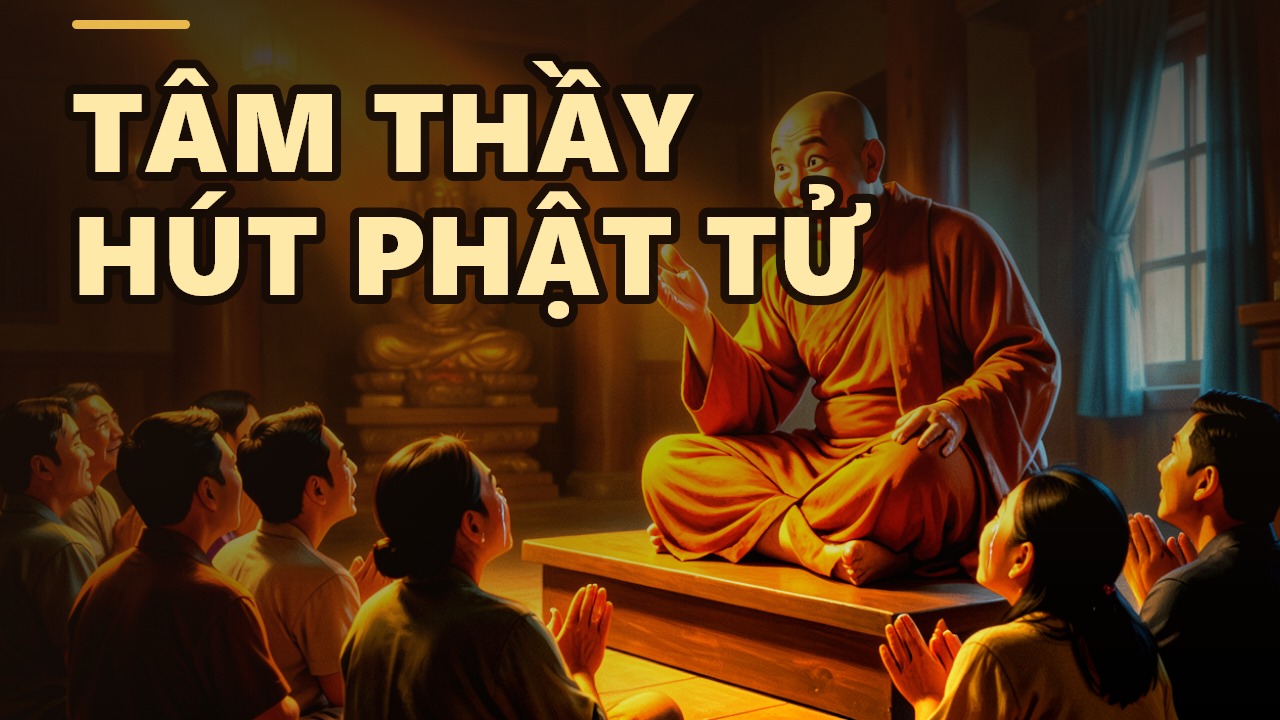
Have you ever wondered why you keep returning to the temple and cannot bear to leave? Some say it is because the abbot is endearing, others say it is the peaceful atmosphere, and still others simply smile and say, "Because at the temple, we get to eat a lot!" But here is something interesting: hardly anyone mentions a grand and beautiful temple building or modern amenities. All the answers revolve around people — the teachers, the moral examples they set.
The responsibility of a temple: Attracting Buddhists is a duty
During one meeting, Thầy Nhật Từ asked Thầy Chân Quang: how did he manage to attract so many Buddhists to his temple? Thầy Chân Quang honestly replied that he had no secret at all. But in principle, a temple must strive to draw people to come and practice, because that is a responsibility to the Dharma and to the nation.
"We must never let our temple stand deserted. To let a temple stand deserted is to carry a fault."
Building a temple is a great act of merit, but if no one comes after it is built, then the money contributed by so many people becomes a waste. A successful temple is not a large and beautiful one, but one that people return to and cannot bear to leave. Then, each person naturally invites others to come as well, forming a close-knit community.
Why do Buddhists love the temple? Answers from the Buddhists themselves
When Thầy Chân Quang asked the assembly, many Buddhists shared sincerely. Some said they loved the temple because of the benefits they received, and because of the moral example of those who practice. Others spoke of feeling treated like children of the family by the teachers and monks, with everyone united like siblings. One young Buddhist said playfully, "When I come to the temple, I get to eat so much!" — a remark that made the whole assembly laugh warmly.
What is remarkable is that no one mentioned the buildings or facilities, yet everyone spoke of the heart of the teacher. They loved the temple because the abbot was full of compassion, because the chanting stirred deep emotion in their hearts. It is this virtuous heart that is the true, steady refuge.
Four reasons in the heart that make Buddhists love the temple
After listening to everyone, Thầy Chân Quang concluded that there are four reasons in the heart that draw Buddhists to the temple and keep them there: love, trust, respect, and hope.
Love: This is the natural affection one feels upon meeting a teacher with whom one shares past conditions, or upon recognizing the teacher's compassion. It may stem from conditions in a previous life — as good officials, kind physicians, or even kings who loved their people — now reborn as monastics, so that others are naturally drawn to cherish them.
Trust: When people see a teacher upholding the precepts, keeping a disciplined practice, and striving diligently on the path, they feel at peace and able to take refuge.
Respect: The moral example of those who practice inspires Buddhists to follow, to learn to let go of the ego, and to live with more compassion.
Hope: Chants such as "With bowed head I pray to the Buddhas of the ten directions, please compassionately deliver our land of Lạc Hồng" touch the heart, creating faith and hope for a better life.
No "secret" — only wholesome conditions and virtue
Thầy Chân Quang said frankly that he had no secret for attracting Buddhists, because he never set that as a goal. The only thing he did was to live fully the responsibility of one who has left home for the monastic life.
"In the Buddha's teachings (Dharma), there is no privacy, no ego, no 'this is my teacher, not your teacher.'"
Love for the temple and for the teacher cannot be created through tricks or advertising. It comes from conditions of past lives and from sincere practice in this life. When an abbot is full of compassion, it naturally radiates outward, drawing others to come. But most importantly, Buddhists do not belong to any one person — they are disciples of the Three Jewels, of the entire church.
Beware of "false masters" and the spirit of unity
Thầy Chân Quang also warned about so-called "false masters" who use shady tricks, such as creating fake halos with lighting or applying medicine to the faces of the deceased to deceive the public. They attract followers and then isolate them, requiring disciples to look only to them, forming a separate faction that breaks the unity of the church. That is a fault against the Buddha's teachings (Dharma) and against the nation.
On the contrary, the spirit of the Buddha's way is harmony without discrimination. Whether you take refuge with this teacher or that one, you are still a disciple of the Sangha of the ten directions. It is precisely this unity that has allowed the Buddha's teachings (Dharma) to endure. As the teacher said, we need to be united to overcome difficulties, and to carry on the work of spreading the Dharma and benefiting beings.
Remember that each visit to the temple is an opportunity to refine our heart and to learn from the compassionate example of those who practice. And if you feel love for the temple and for the teacher, that is a wholesome condition. Nurture that condition by living ethically, living with awareness, and bringing joy to others. When our heart is pure, we ourselves become a flower that beautifies the temple within the heart.
AI-assisted translation from the Vietnamese original.
Read in Vietnamese →