
The Heart Sutra: Why the "Dangerous" Passage on Emptiness Is a Skillful Means
Listen to Thượng tọa Thích Chân Quang explain the most important passage of the Heart Sutra: emptiness is a skillful means that helps us transcend attachment to attain wisdom and perfect merit.
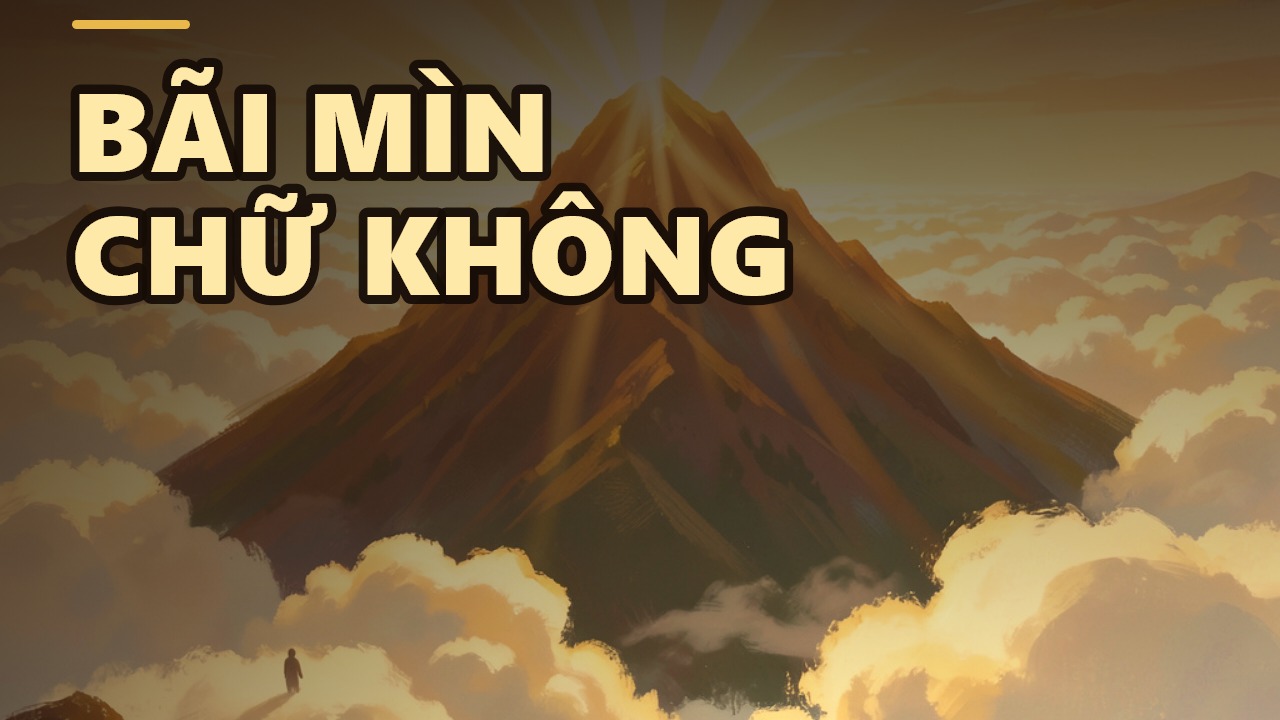
Have you ever wondered why the Heart Sutra says, "there is no form, no feeling, perception, mental formations, or consciousness; no eye, ear, nose, tongue, body, or mind..."? If so, you are not alone. This is a passage that has been misunderstood for countless centuries, causing people to lose their blessings from merit and their wholesome roots without knowing why. Thượng tọa Thích Chân Quang once called it a "minefield" — if we lose our way, we may fall into a void, but if we cross over it, we will touch a radiant horizon.
The Most "Dangerous" Passage
In his dharma talk, Thượng tọa Thích Chân Quang emphasized that this passage is the most difficult, the most profound, and also the most dangerous. Reading it literally, it seems as if the Buddha denies everything: the five aggregates, the eighteen realms, the twelve links of dependent origination, and even the Four Noble Truths. If we get stuck here, we will misunderstand that "practice means self-denial" and "there is nothing to attain," and then live carelessly, losing our merit.
Whoever gets caught in the literal words will perish right there. But whoever has enough heart to pierce through that net of the word "emptiness" will see, behind it, a vast horizon filled with all that is beautiful and sublime.
Not a Denial, but a Skillful Means
So what is the true essence of this passage? Thượng tọa made it clear: this is precisely a method for teaching and transforming sentient beings. When a bodhisattva enters samsara (cycle of rebirth), at ease amid all turbulence, they need skillful means to guide others. And that means is using the word "emptiness" as a filtering net. The word "emptiness" is a tool for piercing through attachment, not an assertion that everything is lost.
Think of a bouquet of flowers: the shape of the bouquet is form, something concrete. But the love within the bouquet is something abstract. A person of wisdom does not stop at the outward appearance of the bouquet, but recognizes the affection hidden within. The Buddha's teachings (Dharma) are the same. The five aggregates, the eighteen realms, the twelve links of dependent origination — these are bouquets, vessels that shelter sentient beings, but they are not the final destination.
Understanding the Five Aggregates and the Eighteen Realms
To grasp the depth of this passage, we need a brief look at the categories the sutra mentions. The five aggregates are form, feeling, perception, mental formations, and consciousness — the structure of body and mind. Understanding the five aggregates helps us understand ourselves and avoid mistakes in practice. For example, some people recite the Buddha's name so intensely, without balancing body and mind, that they end up losing their sanity. This comes from misusing a practice method without understanding one's own makeup.
The eighteen realms consist of the six sense faculties, the six sense objects, and the six corresponding consciousnesses. This is the network of perception through which sentient beings see, hear, and experience the world. Thượng tọa emphasized that even when we reach a state of "pure mind, free of thought," that is still only the aggregate of consciousness, not yet the supreme. Because of this understanding, we do not become complacent or arrogant, but continue to advance in our practice.
Skillful Means: Awakening Through Denial
When the Heart Sutra says "no ignorance, no aging and death... no suffering, no origin, no cessation, no path," it is not erasing the teachings, but negating the rigid views we have pasted onto them. Sentient beings often cling tightly to concepts, believing them to be real. The bodhisattva uses the word "emptiness" to untie these layers of bondage, so that we may see the selfless nature of all phenomena.
Thus this Prajna sutra is a deadly trap. But whoever crosses this minefield and understands the true essence of the passage will, in the future, become a great bodhisattva.
Living with the Wisdom of Prajna
To understand this passage correctly is to understand that all phenomena arise from conditions (dependent origination) and have no fixed self-nature. We study Prajna not to become pessimists, but to live with letting go, at ease and free. Applied to daily life: when facing difficulty, we do not "paste" ourselves onto the difficulty, but see that it is subject to impermanence (anicca); when helping someone, we do not seek fame or gain. This is precisely the spirit of skillful means.
Thượng tọa Thích Chân Quang's dharma talk opened a door: do not read the Prajna with the eye of literal words, but read it with the eye of the heart. Practice gently — meditative concentration, reciting the Buddha's name — with right understanding, so that each day we draw closer to awakening. For when we cross the minefield of literal words, we will see the whole beautiful sky behind it.
May you find peace in every breath, and may that horizon appear within your body and mind, amid this busy life.
AI-assisted translation from the Vietnamese original.
Read in Vietnamese →