
What Do You Live For? Emotions Are the Driving Force of Life
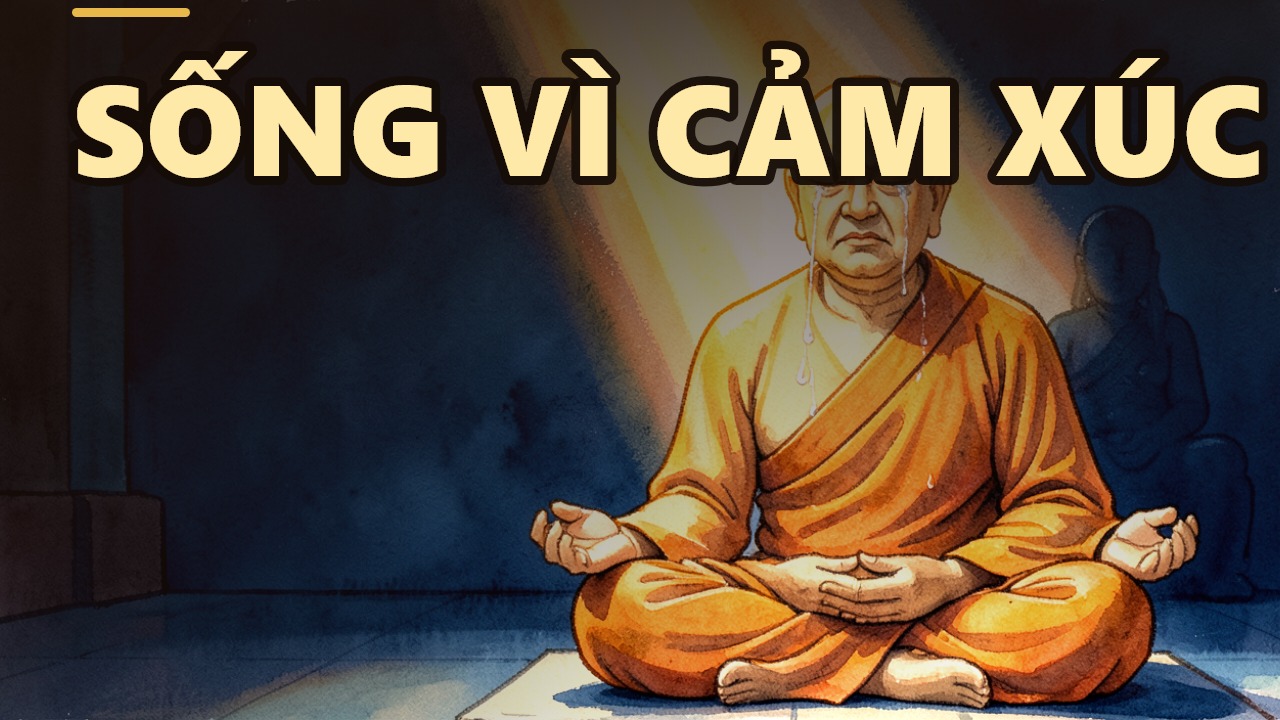
Have you ever asked yourself: What do I live for? Some might say we live for food, money, air, or knowledge. However, the Buddha revealed a deeper truth: We live for our emotions. Emotions nourish our will to live, and through them, our lives find meaning.
### The Invisible Force Guiding Our Lives
In the teaching of the twelve links of dependent origination, the Buddha explained that ignorance gives rise to attachment to self. From this attachment arises intention, and within that intention lies feeling—emotion. It is emotion that fuels our drive to live. Teacher Thich Chan Quang asks, “Why are we here today? What pushed us to come?”
“We truly live because we have emotions. Because we love, because we hate, we begin this life.”
People may think they need money to survive, but without the desire to live or the fear of death—those profound emotions—money holds no significance. It is love and fear that propel us through our daily struggles.
### Love and Hate: Two Sides of the Same Stream
Whether it is love or hate, both can guide human beings. Consider the story of a poor student helped by a temple teacher. This act awakened gratitude and respect—a beautiful form of love that inspired him to remain a good person throughout his life. Conversely, a person consumed by hatred lives only for revenge, turning their entire existence into a dark path.
“Remember, therefore, that we live for love and for hate.”
The crucial point is knowing which emotions to nurture. A negative emotion can lead us into wrongdoing, while a positive one elevates our spirit.
### Cultivate Subtle and Refined Emotions
Those with sensitive, refined, and ethical hearts perceive beauty in small things: a flower petal falling on one’s shoulder, the sound of a temple bell in the deep night, or the smile of a child. These emotions enrich life and give it depth.
“Only those with sensitive souls, wisdom, refinement, and ethics can learn to love what others might overlook.”
When we listen to the temple bell, we suddenly grasp the message of compassion, peace, and tranquility. When we hear children laughing, we become aware of the cycle of life and our own responsibilities. Such subtle emotions help us slow down and feel more deeply.
### The Three Most Profound Emotions in Buddhism
Teacher Thich Chan Quang shares that there are three supreme emotions in Buddhism that we must cultivate. These are being moved by the Buddha—the ultimate holy one; being moved by the Dharma—the Buddha’s teachings; and being moved by the Sangha—the genuine practitioners. These three emotions nourish our spirituality and help us grow on the path of practice.
“In Buddhism, there are three most wonderful emotions. First, our emotional response to the absolute holy one, the Buddha. Second, our emotional response to the Buddha’s teachings. Third, our emotional response to the wise ones and true practitioners who exist in this world.”
When our hearts tremble before these noble values, our morality and wisdom increase. On the other hand, if our hearts remain cold toward sacred things, we drift away from the right path.
This life is woven together by emotions. Choose feelings of love, gratitude, and respect to nourish your heart each day. When we live with positive emotions, we discover how meaningful and happy life can be. From a falling leaf to the sound of a temple bell, everything offers an opportunity to awaken sacred emotion within us. Practice this starting today.
AI-assisted translation from the Vietnamese original.
Read in Vietnamese →