
What Are You Believing In? The Thing That Determines the Direction of Your Entire Life
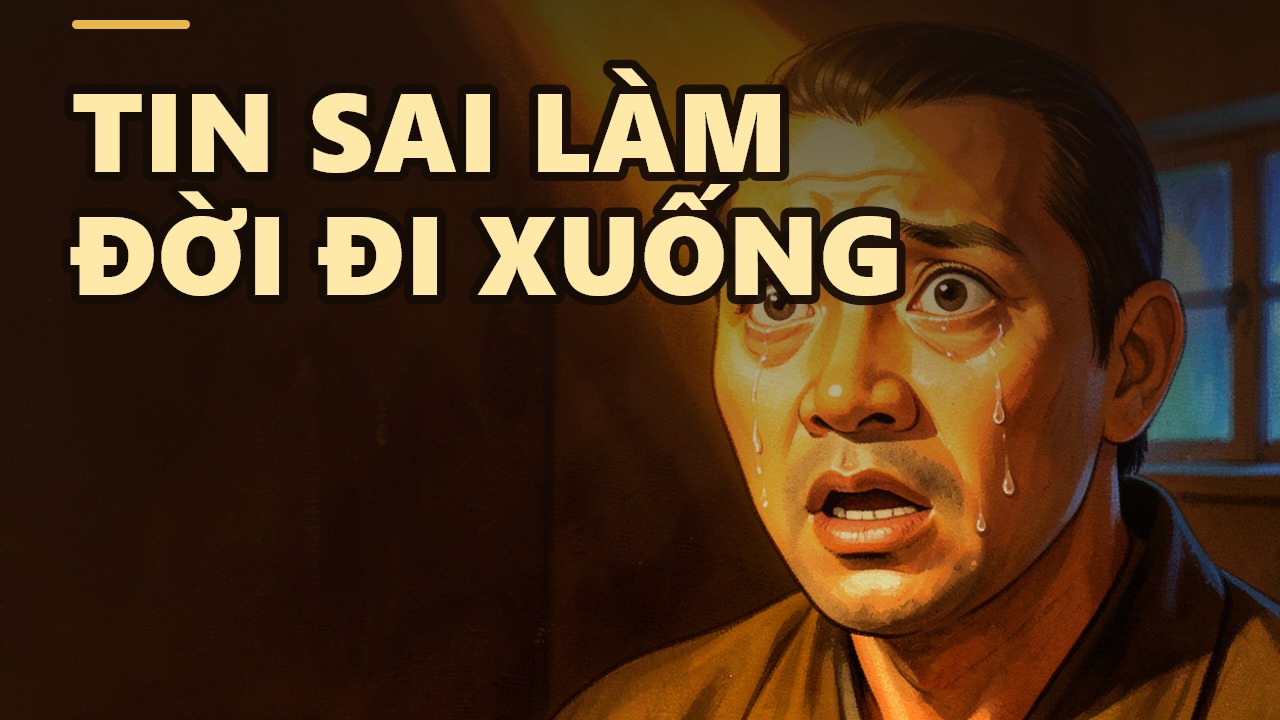
**Summary:** A Dharma talk by Venerable Thich Chan Quang helps you identify four types of beliefs that can easily lead you astray and how to build a right view.
Do you instantly believe something when someone tells it to you? Most of us have been there. But have you ever wondered: if my belief is mistaken, where will it lead my life?
**Belief – The Blind Spot on Life’s Path**
Venerable Thich Chan Quang begins his talk on belief with a simple definition: "Belief means we accept something as true." But the important question is whether that "truth" is actually true or not. He says:
"If we believe in a teaching that is wrong, then indeed our life will walk into the wrong alley."
Belief is not just an emotion; it is a compass for our attitudes and actions. With right belief, life ascends. With wrong belief, life can descend into the hells. Therefore, learning how to believe is a vital skill.
**Four Things We Often Believe That Aren’t Necessarily True**
According to the Venerable, there are four common types of belief we easily get swept into:
* **Believing stories we are told** – Like the story of Princess Ngoc Han, which was "seasoned with extra salt and fish sauce" through many retellers, until historians found the truth had been distorted. Even within Buddhism, many ancient stories are only parables, not absolute truths. * **Believing in someone’s character** – We easily trust someone based on the good stories they tell about themselves, without having witnessed it. But the teacher reminds us: "Believing in a person’s character based only on their own words, without having witnessed it, is a mistake." * **Believing in theories** – Economic, political, or physical theories like evolution or the Big Bang are still hypotheses not completely proven. He shares his personal conviction: "I challenge, I challenge until the day they successfully prove it, I believe that will never happen." * **Believing in doctrinal tenets** – If one believes in cause and effect (karmic law) and samsara (cycle of rebirth), life becomes ethical. But if one believes in heretical doctrines, one can fall into extremely dangerous wrong views.
**The Disease of Gullibility – The Colored Lens of the Mind**
He calls someone who believes easily without investigation "gullible." This is not honesty, but a disease lacking in fortitude and wisdom. He humorously tells stories of neighborhood gossip: if you want news to spread fast, just tell people "don’t tell anyone." But by the next day, the whole market knows.
"Just listen, but don’t believe."
So how can we distinguish truth from falsehood? The Venerable teaches: we must have discernment. For example, if someone runs in panicking saying there is killing in the street, we observe the others running in after them. If they remain calm, the story is fabricated. Similarly, when hearing a story about someone, we should ask: what am I basing my belief on? If we have not witnessed it firsthand or have no evidence, we should maintain a space of mindful awareness.
**Right Belief Will Change How You Care for Others**
Belief doesn’t stop at perception; it creates behavior. The Venerable compares: if you believe humans originate from apes, you will look at everyone with contempt and treat them like objects. But if you believe the Buddha’s teaching that "all sentient beings possess the Buddha-nature," then you will see every face before you as a potential Buddha, and your heart will naturally be filled with respect and love.
This is the power of belief. A belief with right view will transform your heart into the heart of a bodhisattva, turning every action into a wholesome deed.
**Practice – Cultivating Belief with Wisdom**
So what do we need to do? We should train ourselves in an attitude of "listening to understand, not believing hastily." When encountering any information, we should:
* Pause for a moment, without reacting or believing immediately. * Observe, verify, and investigate the source. * Believe according to discernment based on wisdom and experience. * With the teachings of the Buddha, believe and practice to verify for ourselves.
The Venerable reminds us: "We must have discernment, not believe whatever anyone says." Remember, belief is not the destination, but a path. Let us walk it with eyes of mindful awareness.
Dear friends, please take the time to reflect upon your own beliefs. What is leading you? If it is a right and true belief, it will guide you to the shore of peace and joy. If not, have the courage to change. For this life has only one direction to move, and belief is the guide.
AI-assisted translation from the Vietnamese original.
Read in Vietnamese →