
Are You Asking the Wrong Questions? The Malunkyaputta Sutra Reveals What Truly Matters
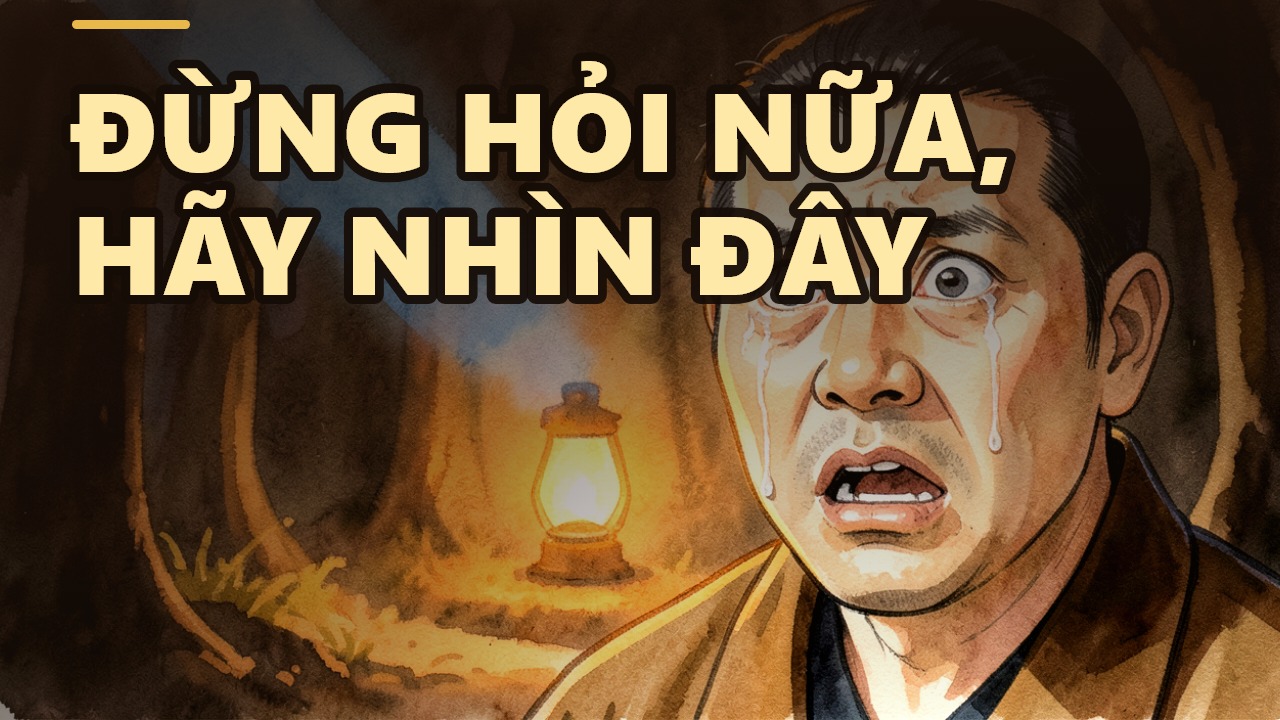
The Buddha taught that we should not waste time on illusory questions, but instead focus on recognizing and ending suffering right now. The Malunkyaputta Sutra offers a lesson to help us release anxiety and live in peace. Have you ever lain awake all night with questions like: Who created this universe? Does life have meaning? Where do we go after death? These inquiries cause many people unrest, insomnia, and even crises of faith. More than two thousand five hundred years ago, a monk approached the Buddha with similar questions, and His answer surprised us all. This is the story found in the Malunkyaputta Sutra, a short text whose thought is considered the backbone of Theravada Buddhism.
The Story of a Monk Who Wanted to Leave the Monastic Life
Venerable Malunkyaputta was an intelligent monk who carried great doubts within his heart. While in solitary retreat, he suddenly raised a series of questions: Is this universe permanent or impermanent (anicca)? Is the world finite or infinite? Are life and body one or two? Does the Tathagata exist after passing away? If the Buddha did not answer satisfactorily, he would abandon the practice and return to lay life.
When presenting these issues to the Buddha, Malunkyaputta’s attitude was somewhat disrespectful. He said, “If the World-Honored One does not know, please frankly say that I do not know.” He even set a condition: if there were no answers, he would cease practicing. This was a challenge lacking in trust.
“O Malia, when you first came to me to ordain and learn the path, did I ever promise you that I would answer or speak about those matters?”
The Buddha did not scold him, but gently pointed out that He had never promised to resolve such metaphysical problems. To illustrate this, He told the parable of the poisoned arrow.
The Parable of the Poisoned Arrow
A man struck by a poison-tipped arrow had relatives immediately call for a physician. But the wounded man refused treatment until he knew who shot him. He asked, “What is the shooter’s name? Is he tall or short? Is his skin yellow or black? Was the bow made of wood or iron? Was the string made of animal hide or hemp?” He wanted to know everything before allowing treatment, while the poison slowly spread through his body.
“O Malia, if anyone says they will live the holy life under the World-Honored One only after He answers whether the world is permanent or impermanent, or whether the Tathagata exists or does not exist, that person will die waiting without ever hearing the answer.”
That person would die knowing nothing. The Buddha meant that if we constantly wait for answers to distant questions, we miss the opportunity for immediate healing. Cosmological questions do not help us eradicate suffering (dukkha); they are merely escapes.
Why Did the Buddha Not Answer?
The Buddha did not say He did not know; He said He did not answer. Why?
“Because it is not connected to the goal. It is not fundamental to the holy life. It does not lead to disenchantment, dispassion, cessation, calm, higher knowledge, enlightenment, or nirvana. Therefore, I do not answer it.”
The Buddha refused to answer with arrogance or authority. He cared only for one thing: suffering and the end of suffering.
“I teach only this, O Malunkyaputta. Why? Because it is connected to the goal. It is fundamental to the holy life. It leads to disenchantment, dispassion, cessation, calm, higher knowledge, enlightenment, and nirvana.”
He taught: This is suffering (dukkha), this is the origin of suffering, this is the cessation of suffering, and this is the path leading to the cessation of suffering. This is enough for a practitioner to achieve liberation, without needing to know if the universe is finite or infinite.
Do Not Fall into the Trap of Distant Questions
In truth, humanity shares a common ailment: a craving to understand the unknown. Yet often, we ask the wrong questions. For example, other religions once answered that the universe was created by a Supreme God. They offered hasty, shallow answers to soothe human curiosity. But as we investigate further, we find contradictions: If God loves humans, why create so much suffering? If He is omnipotent, why is He powerless against this pain? If He does not love, He is unworthy of worship. These rushed answers lead to dead ends, causing people to invent more gods to fill new voids.
The Buddha did not do this. His silence was sharp as a sword, cutting away unnecessary curiosity. He brought students back to the present moment, to what is happening right now in body and mind. It is like rain: regardless of whether we know its cause, the rain still cools the fields and waters the flowers. Live in reality; do not wander in endless speculation.
Lessons for Modern People
We live in an age flooded with information. The more we know, the more we realize how little we know. Questions about immortality, the infinite universe, or the ultimate purpose of life can keep us awake at night. But the Buddha teaches us not to let them steal our peace. Return to your breath, return to sensation, return to this present moment. Recognize your pain and find ways to transform it. This is the practical path the Buddha showed.
The second lesson is compassion. The Buddha refused to answer irrelevant questions, yet He was always ready to teach what reduces human suffering. We should do likewise. In daily life, focus on what can be changed and what brings benefit, rather than worrying about unsolvable issues. Let that silence be a lesson in wisdom: knowing clearly what needs to be said and what should remain unspoken.
Today, when you find yourself struggling with unanswered questions, remember Malunkyaputta. Instead of demanding absolute answers, practice living peacefully with yourself. Each breath, each step, each present moment is an opportunity for letting go, loving, and awakening. The Buddha did not answer because He wanted us to find the answer within our own minds—when we stop worrying and begin to truly live.
May all practitioners remain serene and free, living in reality and diligently walking the path of transforming suffering.
AI-assisted translation from the Vietnamese original.
Read in Vietnamese →