
Where Are You on the Path of Meditation?
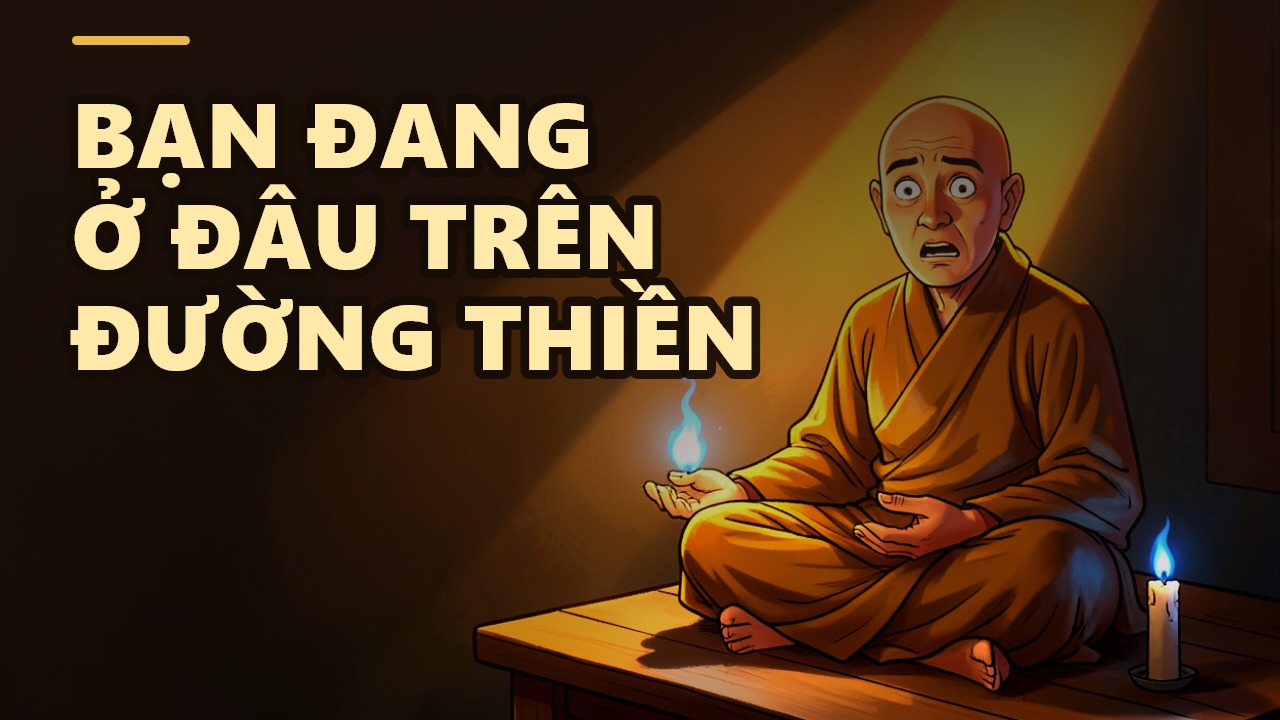
Have you ever wondered where you stand on your spiritual journey? Perhaps there was a moment when you sat in meditation, felt your mind settle, and suddenly believed you had attained some profound realization. If so, listen closely as Venerable Thich Chan Quang clarifies the stages of meditation. This guidance helps us understand our current position and prevents us from being deceived by our own intellectual understanding.
## Meditative Concentration is the Core of Buddhism
In his dharma talk titled "The Stages of Meditation" at Phat Ngoc Xa Loi Pagoda, Venerable Thich Chan Quang emphasized that meditative concentration is not merely an auxiliary practice but the very heart of Buddhism. He taught that while all paths lead to enlightenment, meditation remains the golden thread running through them all.
Meditation is the pinnacle of practice; it is the core of cultivation.
The teacher also noted that monastics possess the wisdom and determination to pursue deep meditative concentration, whereas lay Buddhists often practice by emulating their teachers. Nevertheless, meditation is a path that everyone must eventually walk.
## Do Not Let Intellectual Understanding Deceive You
Venerable Thich Chan Quang warned of a dangerous trap in meditation: our conceptual knowledge can far exceed our actual level of realization. It is like a barber commenting on world affairs as if he were ruling the globe, while in reality, he only cuts hair. Similarly, many practitioners experience a slight sense of peace and immediately assume they have attained sainthood.
Intellectual understanding always precedes one’s true level of realization.
He taught that believing oneself to be at a high level while actually remaining at a low level constitutes the error of overestimating one’s attainment, which carries severe karmic consequences. Therefore, we must remain humble and clearly know where we stand.
## The First Stage: Ethics
Ethics is the foundational stage of meditation. The teacher explained that ethics is not just about keeping precepts, but living with subtlety in every thought, word, and action. A sneer of contempt toward another person or leaving rice uneaten in a bowl can create unforeseen karmic results.
Recognize the danger in even the smallest faults.
The Buddha referred to this as three thousand dignified behaviors and eighty thousand subtle practices. The teacher said that perfecting ethics might take thirty kalpas. Yet, do not lose heart, for we begin today.
## The Second Stage: Merit
After establishing ethics, we must cultivate merit. Making blessings from merit is never enough. The teacher instructed us to serve sentient beings and the Three Jewels. Even small good deeds, no matter how tiny as a mustard seed, should not be overlooked. Specifically, help others in their practice and encourage them when they feel discouraged.
Serve sentient beings and serve the Three Jewels.
The teacher stated that having a burning desire to help the world is a quality of a Stream-Enterer. We may not have attained this yet, but we should train ourselves to let this fire ignite within our hearts.
## The Third Stage: Qigong
Hearing about qigong surprises many, but the teacher explained that it strongly supports meditative concentration. Health is a form of ethics, because only with health can we effectively serve others. Yin-yang qigong helps maintain physical strength and mental clarity. He shared that after practicing for just three days, many people found relief from back pain and insomnia.
Cultivating health is also an act of ethics.
Therefore, do not view qigong practice as a waste of time. It is an essential part of the equipment for the journey.
## The Fourth Stage: Sitting Meditation
Once we have established ethics, merit, and health through qigong, we enter sitting meditation. Sit correctly in the full lotus posture, unifying body and mind. The Buddha described the levels of meditation through states of the body, not just states of the mind. This indicates that the Buddha valued direct realization over theoretical reasoning.
The Buddha described the realized states of various meditation levels through bodily conditions.
The teacher reminded us that the Buddha’s path is the optimal path. We must transcend sectarian prejudices to rediscover the original path of the Buddha.
Knowing where you are is the first step to walking the right path. Be persistent, taking it one stage at a time: ethics, merit, qigong, and sitting meditation. Do not let mere understanding deceive you. The Buddha’s path has been clearly shown; today, let us walk upon it together.
AI-assisted translation from the Vietnamese original.
Read in Vietnamese →