
Nature and Environment: Why Is Each Person a Separate Universe?
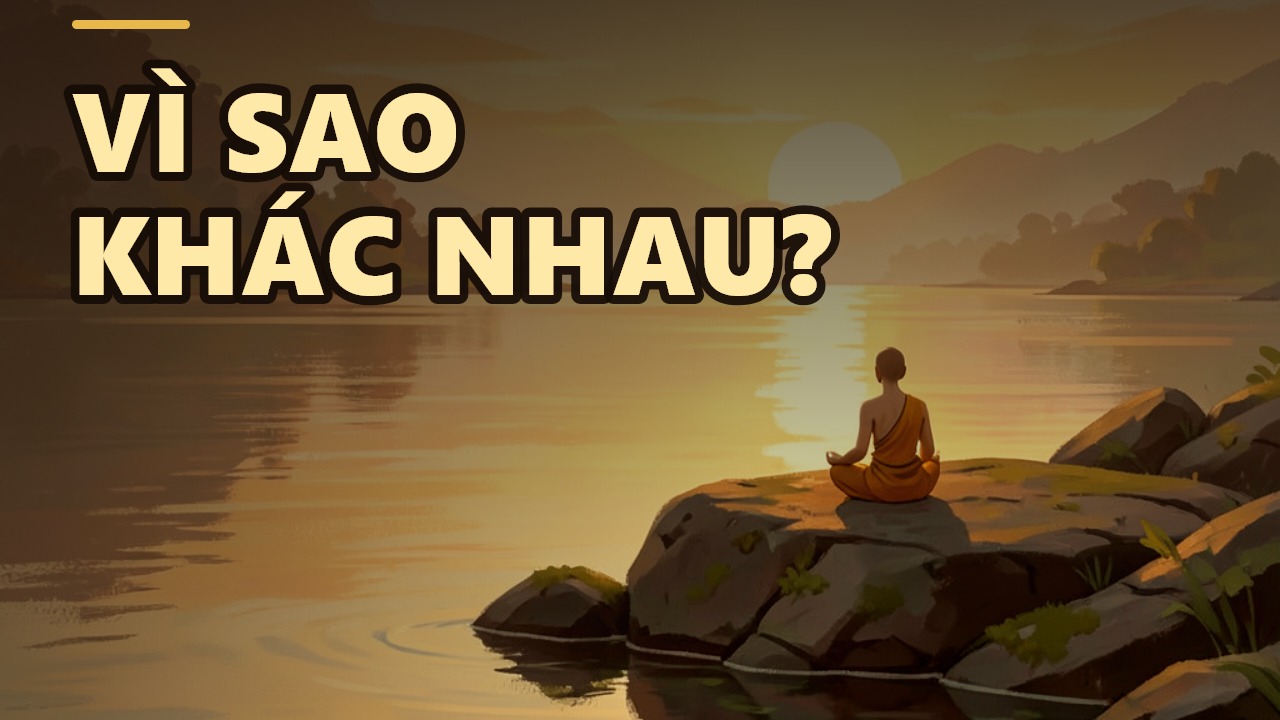
Have you ever wondered why siblings, born to the same parents and raised in the same environment, can have such vastly different temperaments? Some children are born gentle and rarely cry; others are stubborn and hot-tempered from the start. What creates these differences? In his dharma talk "Nature and Environment," Venerable Thich Chan Quang offers a profound perspective, helping us understand ourselves and our responsibility in this life.
**The Hardware and Software of the Mind**
Venerable Thich Chan Quang uses the image of a computer to describe the human mind. The "hardware" refers to the capacities and abilities determined by brain structure—such as intelligence, aptitude for language, music, or painting. The "software" is our temperament, tendencies, preferences, and life perspectives—like patriotism, love of music, affinity for Buddhism, or being hot-tempered or gentle. Together, these two aspects form a complete person.
**Each Child Is Born as an Independent Individual**
Many believe children are born as a blank slate, with only the "hardware" of brain structure, while their temperament is shaped entirely by their environment. However, Venerable Chan Quang clarifies this is not the case:
"The truth is that when a child is first born, it already possesses both parts. That is, the brain and its structure determine its capacities, and within that very brain at birth, the temperament for its future life is already predetermined."
This is why gentle parents may have a rebellious child, or people living in the same family may have opposing personalities. Each person is a separate universe; no two are exactly alike.
**Storehouse Consciousness or the Law of Cause and Effect?**
To explain these differences, Mahayana Buddhism presents the theory of the "storehouse consciousness"—a repository of mental tendencies carried from one life to the next. However, Venerable Chan Quang suggests this theory is not entirely accurate, as it borders on "eternalism"—the belief that things are fixed and unchanging. In contrast, the Buddhist teaching on cause and effect (karmic law) is more powerful:
"Each sentient being is a completely independent entity. Even if they may be identical in genetics and brain structure, their temperaments still differ. There may be a correlation because sharing genes likely indicates a very strong karmic link from past lives, yet their temperaments still differ."
If someone was intelligent but arrogant in a past life, they may be less gifted in this life. If they were poor in ability but often helped others, their abilities will gradually improve. This is the law of cause and effect, not a fixed state within a storehouse consciousness.
**Environment Shapes the Soul, but Does Not Erase the Core Nature**
Although each person has a unique core nature, the surrounding cultural environment still profoundly influences the soul. For example, people from Southern Vietnam often live freely and casually because nature has been generous; those from Central Vietnam are industrious and frugal due to a harsher life; and people from the North tend to be polite and formal, a reflection of the region's thousand-year-old cultural refinement. However, there are also cases where someone from the South is frugal, or someone from Central Vietnam is carefree—this may be due to habits carried over from past lives.
Venerable Chan Quang offers this analogy:
"With each step in the cycle of rebirth, we add another brick to our mind and heart, building the structure of our temperament and personality."
These bricks can be love, altruism, and humility—constructing a radiant castle. Or they can be greed, selfishness, and scheming—forming a dark, dangerous cave.
**Building the Soul with the Bricks of Moral Truth**
Each lifetime is an opportunity to build up our soul. If we live with compassion, wisdom, and benefit for the nation, the people, and the Dharma, those bricks will gradually create a beautiful, bright palace. Conversely, if we allow greed, hatred, and delusion to dominate us, we will dig ourselves deeper into a narrow, confined cave. Let us choose good and wholesome bricks for ourselves.
**The Responsibility of a Child of the Buddha**
Understanding our core nature and our environment, we see our responsibility clearly. We must not only care for our own souls but also contribute to building a wholesome environment for our families, descendants, and community. Every action, word, and thought of ours today will impact future generations. Therefore, let us live with clarity and compassion, so that with each rebirth, our mind and heart are further enriched with the bricks of love and wisdom.
AI-assisted translation from the Vietnamese original.
Read in Vietnamese →